Berlin eyes up to 250 MW of geothermal heat by 2045

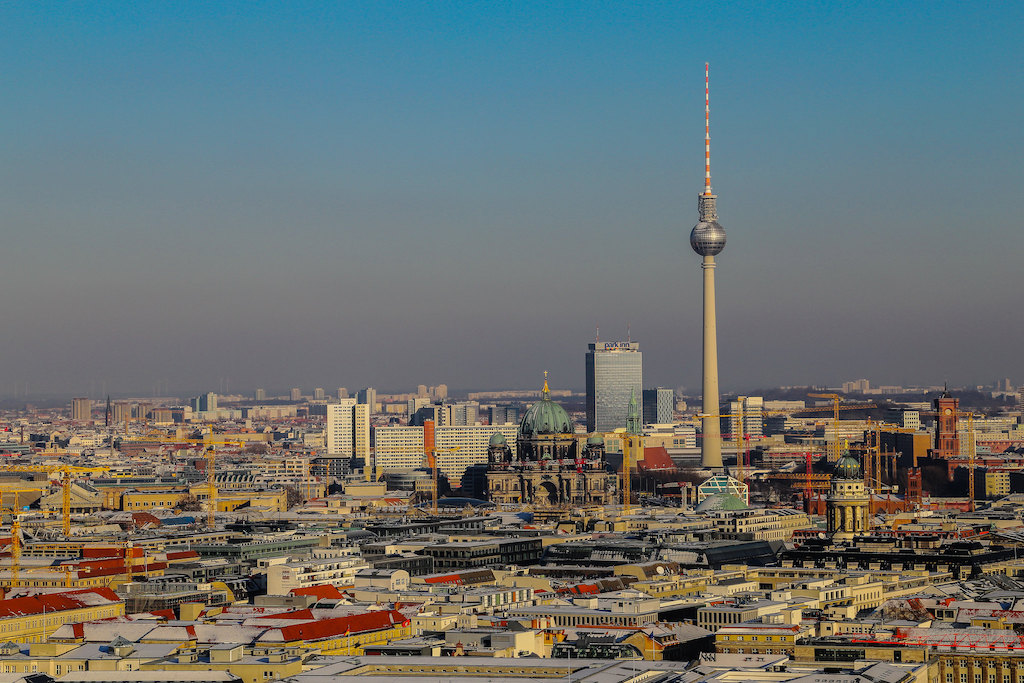
Berlin’s district heating utility sees geothermal becoming a major renewable heat source, targeting 70 MWth by 2035 and up to 250 MWth by 2045.
The district heating utility of Berlin, Germany, BEW Berliner Energie und Wärme has outlined an ambitious role for geothermal energy in its long-term heat decarbonisation strategy, with a pathway that could see geothermal capacity reach up to 250 MWth by 2045.
The plans form part of BEW’s updated decarbonisation roadmap, which charts how Germany’s largest district heating network will transition away from coal and fossil fuels. While geothermal remains subject to exploration success, the technology has emerged as one of the utility’s most important local renewable heat options.
Serving around 700,000 households and thousands of commercial and public buildings, BEW plans to invest approximately EUR 3.5 billion by 2030 to transform Berlin’s heat supply.
Geothermal becomes a strategic part of Berlin’s heat transition
Within the roadmap, geothermal energy is identified alongside wastewater heat, river-water heat, wastewater treatment plant heat, and data-centre waste heat as one of the key local sources that can support Berlin’s transition to climate-neutral district heating.
BEW aims to increase the share of renewable and unavoidable heat sources to at least 40% by 2030, 50% by 2035, and 80% by 2040. Geothermal is expected to contribute to all three milestones as part of a diversified heat portfolio that also includes large heat pumps, thermal storage, power-to-heat facilities, and biomass.
The utility describes geothermal as particularly attractive because of its ability to provide reliable baseload heat with low operating costs once developed.
Focus on moderate-depth resources and large heat pumps
Unlike many geothermal projects elsewhere in Germany that target deeper and hotter reservoirs, BEW’s current assessment focuses on geological formations between approximately 500 and 2,000 metres depth.
The utility expects temperatures in the range of 30°C to 70°C and plans to combine geothermal production with large-scale heat pumps to raise temperatures to district heating requirements. Direct hydrothermal utilisation from depths of two to three kilometres is currently considered unlikely in Berlin.
Under current assumptions, individual geothermal developments could provide up to around 20 MWth of thermal capacity. Reaching larger deployment volumes would therefore require multiple projects distributed across the city.
Exploration campaign to determine future potential
The next several years will focus on reducing geological uncertainty.
The State of Berlin is planning a city-wide 3D seismic survey, with initial results expected around mid-2028. In parallel, BEW plans exploratory drilling at four locations, with first indications of temperature and reservoir productivity expected from 2027 onwards.
The exploration programme is intended to determine the commercial viability of geothermal resources and reduce investment risk before larger-scale deployment decisions are made.
70 MWth by 2035, potentially 250 MWth by 2045
BEW’s roadmap foresees around 70 MWth of geothermal capacity by 2035, enough to provide roughly 5% of the district heating supplied through the network.
Beyond that, the utility sees significantly larger potential. Based on current studies and under favourable exploration outcomes, geothermal deployment could grow to approximately 250 MWth by 2045. Such a scenario would likely require around 15 geothermal sites distributed across Berlin.
Even before reaching that level, BEW estimates that more than 100 MWth of geothermal capacity could be developed if suitable sites beyond existing power plant locations can be secured.
Urban challenges remain
The roadmap identifies several key conditions for success. These include sufficient reservoir productivity, access to suitable drilling sites, electricity grid capacity for large heat pumps, permitting efficiency, and the availability of drilling rigs and specialised personnel.
Site availability is expected to be one of the biggest challenges. BEW notes that geothermal projects require adequate space for drilling operations, proximity to district heating infrastructure, and appropriate separation from residential areas. The utility plans to work closely with Berlin districts and public landowners to identify suitable locations.
While the ultimate scale of geothermal development will depend on the results of the ongoing exploration programme, the roadmap signals that geothermal energy has moved from a future option to a planned component of Berlin’s strategy for climate-neutral district heating.