
Carbfix achieves 99.6% capture of CO2 and H2S from geothermal power plant in Iceland

#image_title
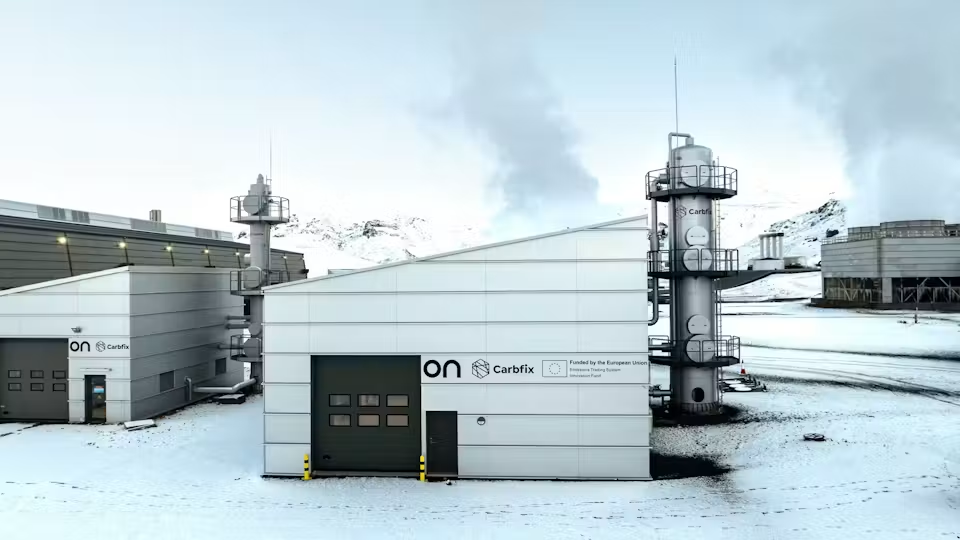
Over a year of operations, Carbfix has reported success in capturing 99.6% of CO2 and 100% of H2S that has entered its Steingerður facility in Iceland.
Carbfix has announced that 99.6% of the CO2 and all of the H2S that has entered its Steingerður air purification plant at the premises of the Hellisheidi geothermal power plant in Iceland has been dissolved in water and sent for permanent storage in the bedrock. This was demonstrated over the period starting from 1 July 2025 to 30 June 2026, resulting in more than 120,000 tones of CO2 and over 50,000 tones of H2S bound in rock.
With this milestone, Carbfix has demonstrated the high efficiency of the capture technology and confirmed its effectiveness in long-term, continuous operations. It also sets the Hellisheidi power plant, operated by ON Power, as a global leader in reducing emissions from geothermal energy production.
Opened in June 2025, the design and construction of the Steingerður is part of the Silfurberg project, an innovation project funded with almost EUR 3.9 million by the European Union’s Innovation Fund. The support has been instrumental in the development and expansion of the technology, as well as developing the know-how to reduce greenhouse gas emissions.
The Carbfix method mimics the natural carbon cycle that takes millennia. However, the Carbfix technology binds the carbon dioxide immediately into the water at Steingerður and transforms it into new minerals within two years by injecting the carbonated water into the rock layers in the area.
In this way, the operation reduces the climate impact of geothermal energy production and also contributes to the safe and economical handling of hydrogen sulfide. During the period, over 19,000 tons of CO? were injected through older geothermal wells that are now used for re-injection.
Source: Carbfix