
Colombia approves exploration phase of Nereidas geothermal project

#image_title
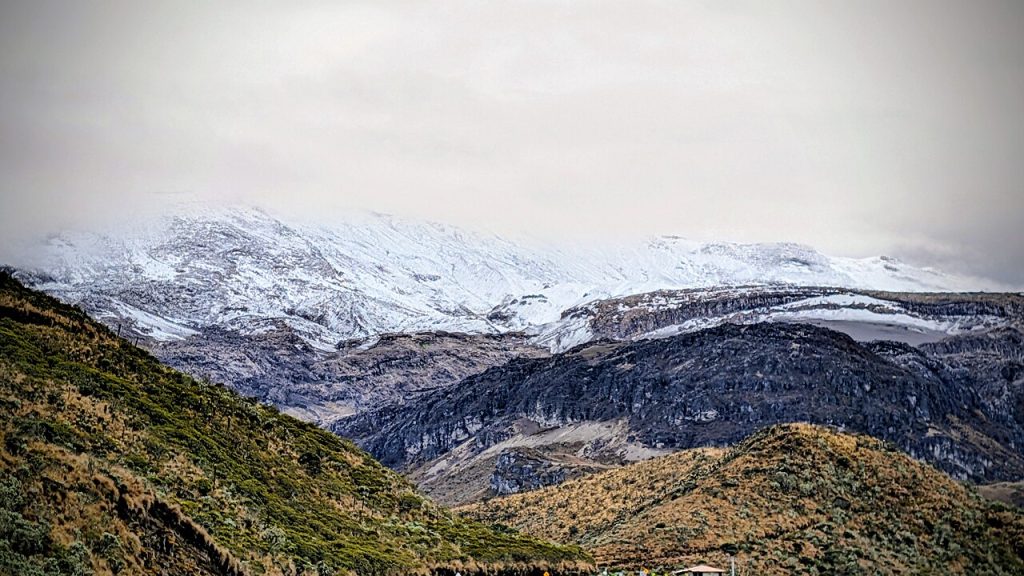
Colombia has published new environmental safeguards along with the approval of geothermal exploration at the Nereidas site in the Ruiz volcano massif.
The Government of Colombia, through the Ministry of Environment and Sustainable Development, has announced the environmental viability of the exploration phase of the Nereidas geothermal project in the Ruiz Volcano Massif in Caldas province. This represents the first major geothermal exploration initiative in Colombia and is a good signal of government support for the sector.
In 2023, a memorandum of understanding was signed between Ecopetrol, Baker Hughes, and Grupo EPM’s Caldas Hydroelectric Power Plant (CHEC) to evaluate the feasibility of a geothermal energy project in the Nereidas Valley. The site has been a hotbed of geothermal exploration since 1997, when the Nereidas 1 well was drilled. The well helped in confirming a high-temperature geothermal reservoir, with a thermal gradient of 127 ºC/km, and hydrothermal alteration minerals identified at >1000 meters depth (2000, Alfaro et al.).
According to the Ministry’s statement, the approval comes with a partial and conditional carve-out from a protected forest reserve area (as prescribed by Law 2 of 1959) that will be assigned for geothermal exploration work. This area is still subject to environmental safeguards, ecological restoration, and water management requirements.
A clear framework for environmental protection
The Ministry emphasizes that regulations on environmental protection will still be implemented alongside the approval of the geothermal exploration activity. With this, the Ministry issued resolutions that establish new environmental terms of reference for geothermal energy exploration and exploitation projects in Colombia. These provide a clear framework that define the technical, social, and environmental rules that geothermal projects in Colombia must comply with.
Furthermore, geothermal projects will not be permitted in high-altitude moorlands or protected areas. Developers must also establish measures for water protection, ecological restoration, climate risk management, and community participation.
“We are building clear environmental rules to advance towards a clean, renewable, and highly reliable energy source, capable of generating low-emission energy 24 hours a day, without depending on the sun, wind, or rain. These are concrete achievements to strengthen the country’s energy sovereignty and security,” stated the acting Minister of Environment and Sustainable Development, Irene Vélez Torres.
“While the world faces extreme weather events and energy crises, Colombia is making progress in diversifying its energy mix with reliable renewable sources such as geothermal energy. This is a historic step toward ensuring energy security, decarbonization, and territorial development with environmental justice,” added the Minister of Mines and Energy, Edwin Palma Egea.