
Drilling of new geothermal well launched to augment heating capacity in Meaux, France

#image_title
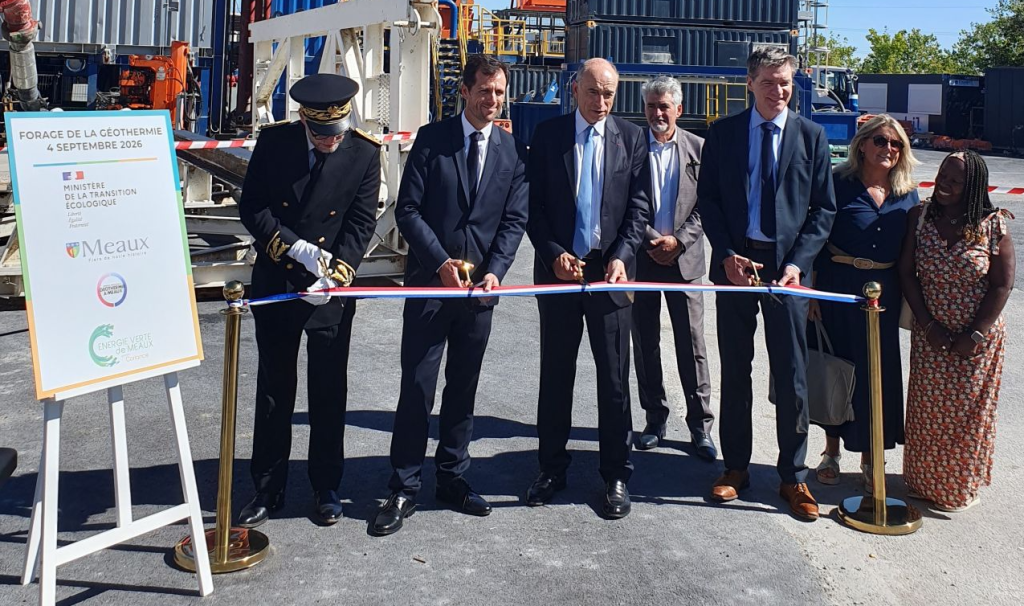
A new geothermal well is being drilled in the commune of Meaux in Seine-et-Marne, France to increase geothermal supply in its legacy heating work.
The drilling of a new geothermal well has officially started in the commune of Meaux in the Seine-et-Marne department of the Ile-de-France region in France. Drilling is targeted to a depth of 2000 meters and will augment the already significant geothermal heat supply in Meaux.
The new well is being drilled to further increase the geothermal contribution to Meaux’s district heating supply and to ensure the long-term production of renewable heat. There is also a plan to reline one of the existing wells to ensure its integrity. Production from the new well is expected by late 2026 or early 2027.
Prior to geothermal, the heat network in Meaux was supplied by a heavy fuel oil boiler. Geothermal heat development in Meaux dates back to 1984, when the first four geothermal doublets were drilled by the Joint Syndicate for Geothermal Energy of Meaux (Syndicat Mixte pour la Géothermie de Meaux / SMGM). In 1998, the operation of the district heating network and the construction of two cogeneration units were awarded as a public service delegation contract to the Coriance Group through a dedicated subsidiary, Energie Meaux. Additional wells were drilled from 2013 to 2014.
In 2019, the heat network of Meaux was awarded with the distinction “Ecoréseau de chaleur” by the National Association of local authorities and professionals for the management of waste, energ, heat networks and the environment on the occasion of the renewable heat week.
In 2024, the public service delegation contract with Coriance was renewed through a new 100% owned subsidiary, Energie Verte de Meaux.

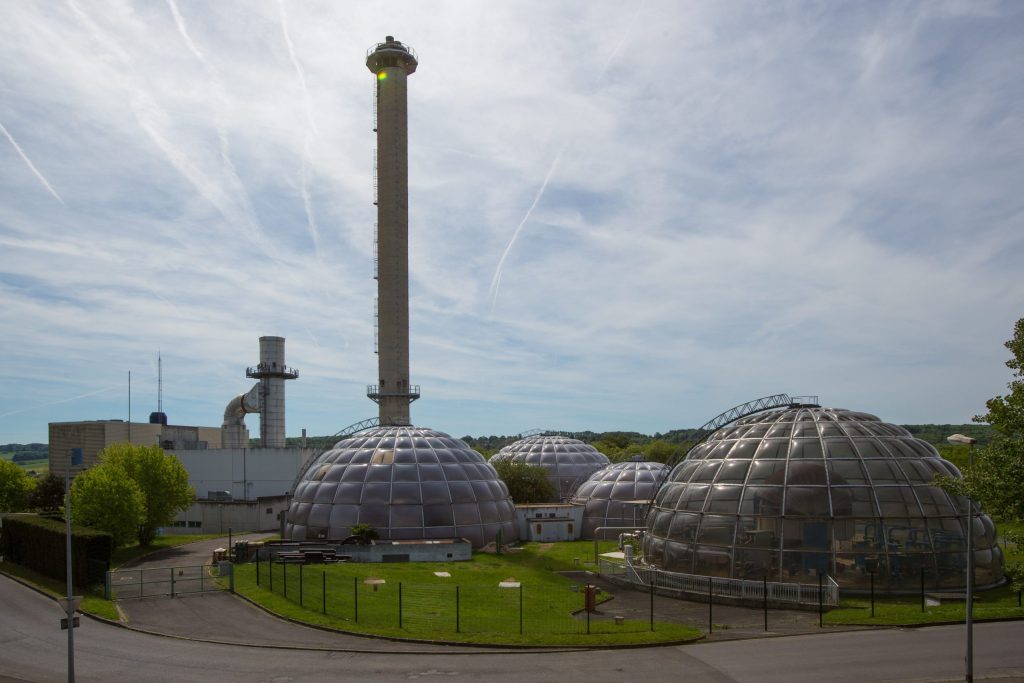
Today, Meaux has one of the largest geothermal heating systems in Europe, serviced by 11 geothermal wells across four sites. The 34.8-kilometer network serves more than 18,000 households with 156 MW of thermal capacity. The cogeneration units are augmented with natural gas as a supplementary energy source. With about 86% of its heating supply coming from renewable energy sources, the heating network avoids the equivalent emissions of 15,417 vehicles per year.
Source: Groupe Coriance via LinkedIn and Energie Verte de Meaux