
Dubrovnik Declaration proposes regional framework for geothermal in Central & Eastern Europe

#image_title
The newly published Dubrovnik Geothermal Declaration sets financial and political commitments to accelerate geothermal growth in the Three Seas region.
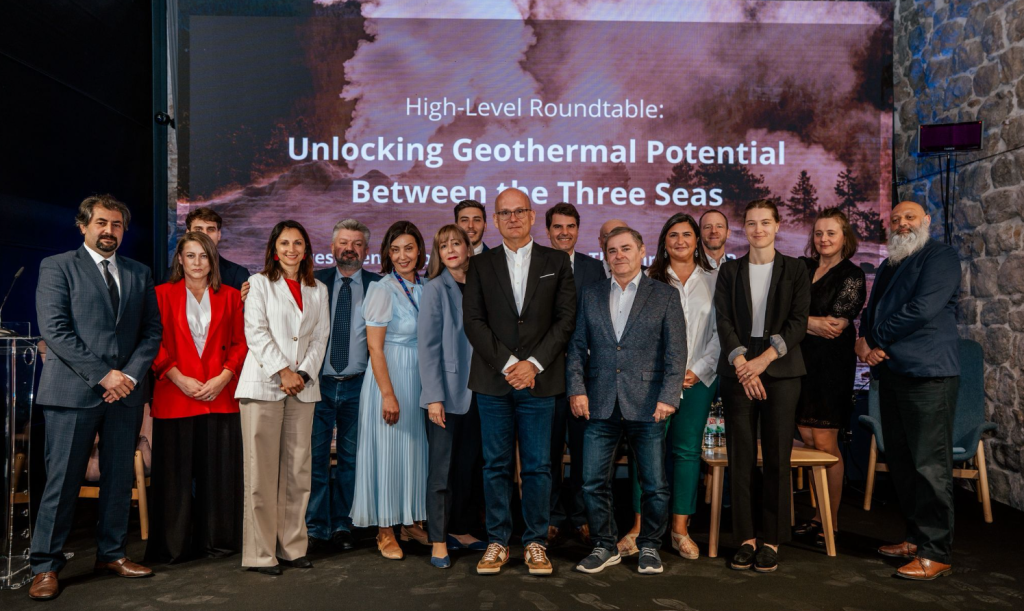
As part of the recently held Three Seas Business Forum held in Dubrovnik, Croatia, a high-level roundtable was convened to facilitate discussions on developing geothermal energy as a strategic resource for the Three Seas region.
At the conclusion of the roundtable, the participating countries endorsed the “Dubrovnik Geothermal Declaration” that proposes a regional framework to accelerate investment, reduce project risks, and harmonize permitting procedures to ultimately turn the geothermal potential in the Three Seas region into a bankable infrastructure pipeline.
Translating geothermal potential to concrete projects
Convened by the Clean Air Task Force (CATF) and attended by representatives from government ministries, international financial institutions, and industry leaders, the “Unlocking Geothermal Potential Between the Three Seas” roundtable framed geothermal as a strategic, baseload infrastructure asset for the Central and Eastern European (CEE) region. It is a resource that can provide energy security, firm electricity and heating and cooling supply, industrial competitiveness, local jobs, strengthened European supply chains, and reduced dependence on fossil fuels.
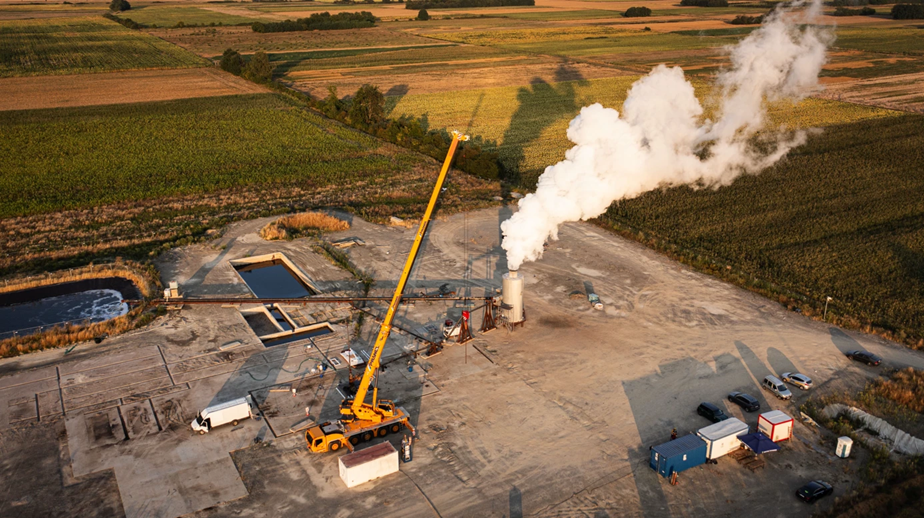
The region also has huge geothermal potential primarily in the Pannonian Basin. This is further reinforced by the existence of established heating networks and significant industrial and municipal heat demand. However, substantial work is still needed to translate this potential to coordinated projects, offtake contracts, and financing structures.
A key CEE-specific takeaway was that geothermal must move beyond small municipal, pilot, or recreational uses and become part of the region’s baseload energy system. The next practical step is to map geothermal resources, match them with heat demand, and develop national roadmaps aligned with EU policy and local heating and cooling plans.

Synergizing geothermal plans across regions, countries, and municipalities
For the Three Seas countries, the discussion made clear that geothermal should become a regional cooperation agenda, not only a collection of national project pipelines.
Julije Domac, Special Advisor on Energy and Climate to the President of Croatia, stressed that the Three Seas geothermal benchmark cannot rest on one country’s ambition alone. Croatia, Hungary, Slovakia, Poland, and other countries across the region all have relevant resources, projects, and policy experience to contribute. The practical ask was for Three Seas countries to work together on common project models, including standardised heat purchase agreements, municipal offtake contracts, permitting approaches, and cross-border “learning by doing” exchanges.
Another important point was that national plans alone will not be enough. Geothermal targets in national energy and climate plans (NECPs) must be matched by municipal and regional heat plans, because real deployment will happen at the city level – in places such as Karlovac, Miskolc, Cluj, and other municipalities with heat demand and geothermal potential.
National funding programs set the pace
The financing discussion was clear: international banks and financial institutions have an important role to play, but public money, risk-sharing mechanisms, and national prioritisation must come first. The European Investment Bank (EIB) can provide long-term loans on favourable terms, which is particularly relevant for geothermal because projects are capital-intensive, long-lived, and infrastructure-heavy. EIB also brings experience from financing geothermal projects in Europe and beyond, and can help tailor instruments for both mature projects and more innovative early-stage developments.
However, member states ultimately decide whether geothermal becomes a national funding priority. This means governments must create the right frameworks so that development banks, international financial institutions, and private investors can step in with confidence.
The most important financial takeaway was the call for dedicated geothermal funding windows. It was argued that although Three Seas countries are eligible for support through instruments such as the EU Modernisation Fund, geothermal has not yet benefited meaningfully from these sources in the region. TSI countries should replicate programme-level geothermal funding models, such as Portugal’s approach, rather than relying on isolated one-off project support.
Going forward, international banks, national development banks, and regional investment platforms should support geothermal through dedicated financial schemes, including exploration-risk insurance, concessional loans, project-preparation facilities, blended finance, and support for municipal heat offtake structures. These instruments would help move geothermal from a promising resource to a bankable regional infrastructure pipeline.

The Dubrovnik Geothermal Declaration
The centerpiece of the roundtable was the Dubrovnik Geothermal Declaration, which established binding political and financial commitments to scale the geothermal industry. The key strategic commitments are as follows:
- The “TSI Next 10 GEO” Pipeline: A commitment to double national geothermal investments by 2030 and formally support a standardized, bankable pipeline of priority projects suitable for development-bank financing, targeting commissioning by 2032-2035.
- Regulatory Harmonization: A commitment to fast-track licensing and approvals across the region, using Croatia’s successful model of issuing over 30 exploration concessions as a regional template, by ending preferential treatment for fossil gas and biomass, and providing long-term heat offtake agreements.
- Transatlantic Innovation: Support for advancing a flagship transatlantic geothermal pilot project by 2029, emphasizing advanced drilling or enhanced systems, co-financed by the TSI Innovation Fund.
- Valuing Geothermal Correctly: Broad consensus that current energy cost comparisons overlook geothermal’s true system value, including its 50-plus-year asset life, minimal land footprint, grid flexibility, and domestic European supply-chain value.
The Dubrovnik Geothermal Declaration is expected to be endorsed by the Croatian TSI Presidency and passed on to Slovakia as the next host of the TSI Presidency. The organizers will send this and the conclusions of the roundtable to the European Parliament and European Commission as input for the forthcoming EU Geothermal Action Plan.
Source: Email correspondence