
Fervo Energy, NVIDIA, PNNL to collaborate on digital twin platform for enhanced geothermal

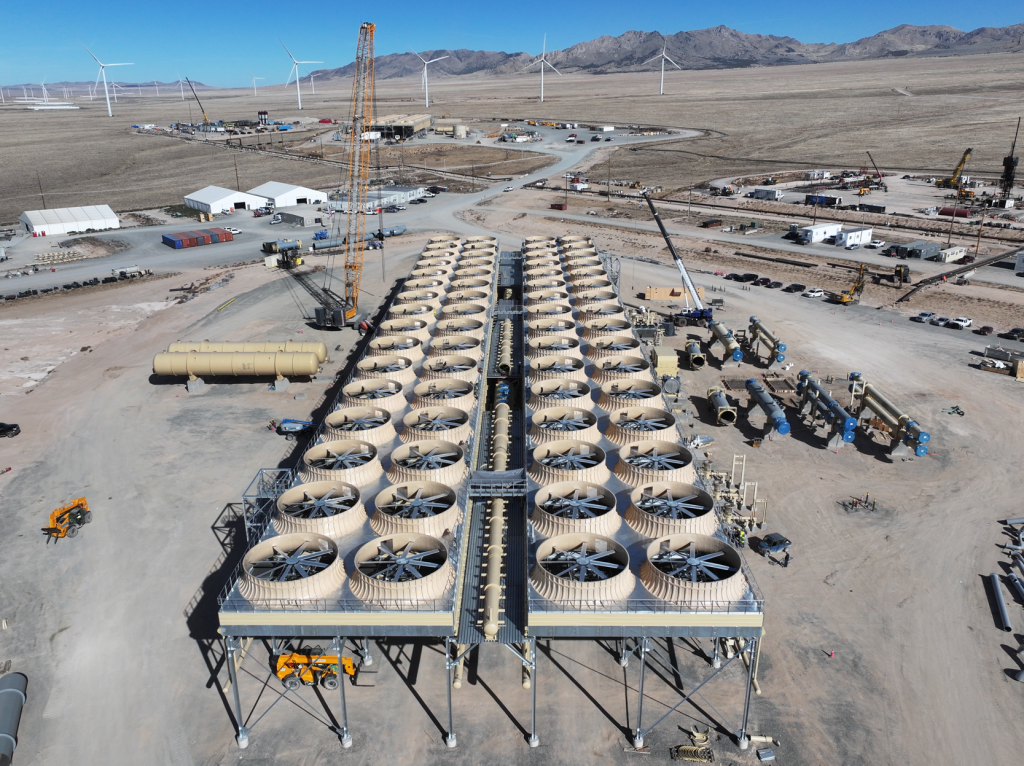
Fervo Energy, PNNL, and NVIDIA are working together to create a digital twin platform to support optimization and growth of enhanced geothermal systems.
Fervo Energy, NVIDIA, and the Pacific Northwest National Laboratory (PNNL) have announced an agreement to develop a digital twin platform for Enhanced Geothermal Systems (EGS) technology, known as EGS-Twin. The platform aims to integrate real-time field data with physics-based modeling and AI to maximize power generation and advance critical geothermal infrastructure.
To build EGS-Twin, PNNL researchers will use field data from Fervo’s operations to train scalable AI models on NVIDIA AI infrastructure. The trained AI models will then be integrated into the NVIDIA Omniverse libraries to help operators more quickly identify and respond to subsurface changes. This could help optimize power generation and reinforce the scalability of enhanced geothermal systems (EGS).
PNNL will develop the workflows and data pipelines, leveraging high-performance computing, including U.S. Department of Energy supercomputing resources, to run large-scale simulations.
The PNNL team will begin training the digital twin immediate based on Fervo’s field data from the Nevada and Utah sites. The model will be refined continuously as production data comes online. The platform is scheduled for implementation by 2029.
“We believe that digital twins will expedite the learning curve for geothermal development as we build and operate our GeoBlock assets,” said Fervo’s CTO and co-founder, Jack Norbeck. “Integrating high-fidelity physics-based models with AI-driven forecasting has the potential to reshape reservoir management, improve heat recovery, and enhance system reliability.”
Fervo Energy is continuing work at the Cape Station site in Utah, which is expected to start generating geothermal power from the initial 100-MW facility by 2026 or 2027. The company is maintaining a very large pipeline of upcoming projects, having signed supply agreements for capacities of up to 1.7 GW. The digital twin initiative could prove valuable in processing data and insights from existing data, thus providing a platform for recursive learning and continuous improvement as the company seeks to prove that enhanced geothermal systems can be grow to the scale of multiple GW.
Source: Fervo Energy