
Fraunhofer IEG developing method for scale removal in deep geothermal wells

#image_title
Fraunhofer IEG is developing a method and technology for scale removal in deep geothermal boreholes that is economically viable and reduces downtime.
Germany-based research institute Fraunhofer Institute for Energy Infrastructures and Geotechnologies (Fraunhofer IEG) is currently developing a method for removing scales from geothermal boreholes with minimal downtime. The ROSIGER (Removal of Scaling in deep geothermal wells without reservoir interference) project is being funded by the Ministry for Economic Affairs and Energy for three years with approximately EUR 3 million.
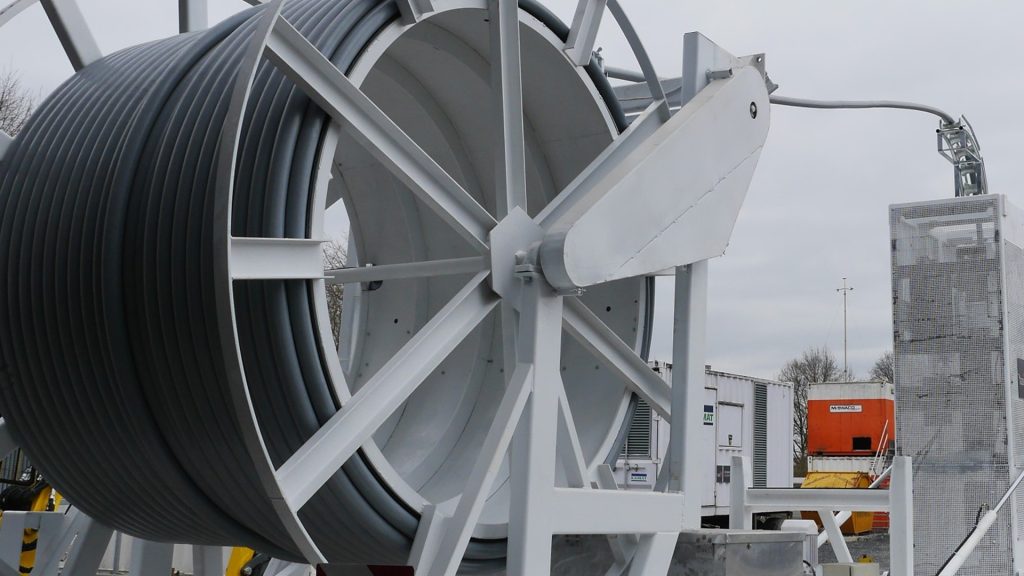
The goal of the ROSIGER project is to develop a continuous, safe, and economical process for removing mineral deposits from deep geothermal wells. A central component of the project is the use of coiled tubing technology, which can be used to position and operate tools within the borehole. This makes it possible to conduct scale removal operations even while the borehole is in operation. Compared to re-drilling the scales, the coiled tubing method is also less time-consuming, material-intensive, and labor-intensive.
“We aim to increase the efficiency of geothermal energy production through easy-to-use technology,” explains Volker Wittig, project manager at Fraunhofer IEG. “The reliable integration of geothermal energy into the European energy market helps to make value creation future-proof and regionally focused.”
The project identifies the most efficient and best-combined methods for removing and discharging mineral deposits and tests their compatibility with coiled tubing technology. Laboratory tests at the Fraunhofer IEG serve to evaluate and optimize individual components. The success of the overall process is then evaluated in deep geothermal boreholes through two successive field tests in geothermal production wells of project partner Stadtwerke München.
The method is being tested as an example in the geological subsurface of the Malm, a limestone layer in Bavaria, but can also be applied in all other geological formations.
This evaluation is based on a detailed analysis of borehole measurements and technical and economic indicators such as removal efficiency, cleaning time, reliability, and others, which will then be compared with the currently existing methods to assess the progress, effectiveness, and economic viability of the new process. In addition to removing mineral deposits from the pipe walls and in the borehole, the technology is also intended for future general maintenance work such as desanding boreholes, removing blockages caused by salt deposits, and other tasks.
Fraunhofer IEG is active in several research areas in the field of geothermal energy, such as reservoir simulation, near-surface geothermal, and the transition of former mining areas to geothermal. In 2025, Fraunhofer IEG secured EUR 52 million in funding to construct a “real-world laboratory” for geothermal energy research in Aachen.
Source: Fraunhofer IEG