
Geothermal in focus at EU tripartite agreement on energy storage


#image_title
The first-even EU tripartite agreement has been signed, paving the way for accelerated deployment of energy storage solutions in Europe.
The European Commission has led the signing of the first-ever EU tripartite agreement on energy storage, which aims to accelerate the deployment of energy storage to support renewable energy growth and strengthen electricity systems. As part of the signing of the agreement, the European Commission shared some examples of energy storage projects, including geothermal energy storage projects in Italy, Finland, and Luxembourg.
The agreement was signed between EU energy ministers, representatives of energy-consuming industries, energy storage developers and manufacturers, renewable energy developers, and financial institutions. A total of 22 EU Member States have committed to energy storage pledges over the next two years as part of the agreement. The European Geothermal Energy Council (EGEC) was also a signatory of the tripartite agreement as the representative of the European geothermal sector.
Geothermal storage, sometimes also referred to as Underground Thermal Energy Storage (UTES), uses the natural storage capacity of the subsurface to absorb and store surplus heat and cold to be used across different seasons. This helps stabilize heating and power systems that rely heavily on intermittent renewable energies, allowing for systems to be more reliable and efficient year-round.
RELATED: Underground Thermal Energy Storage – A key enabler of the energy transition

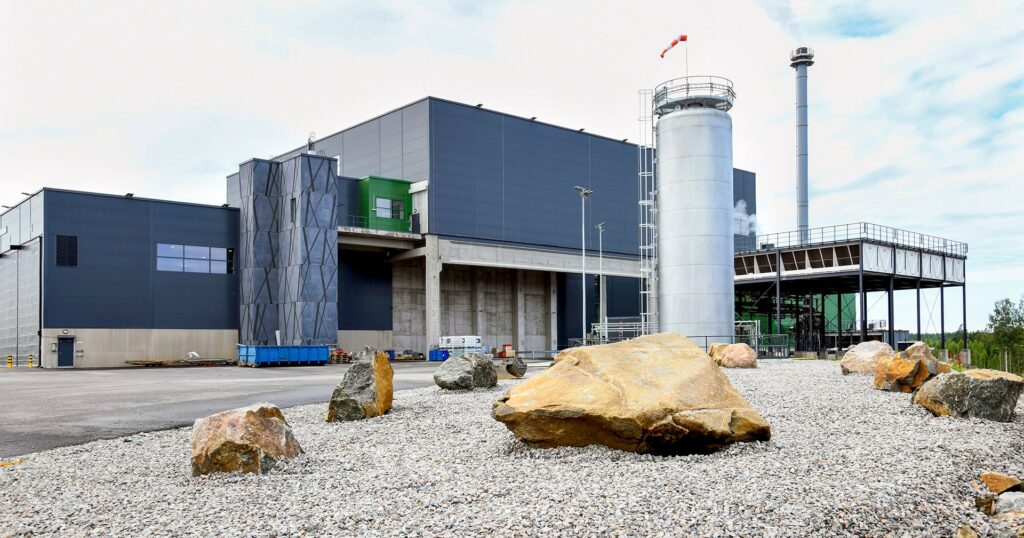
Among the examples shared by the European Commission are the following:
- The GESIIS Project operated by FRI-EL Geopower SRL in Ostellato in Emilia-Romagna, Italy provides a model for integrating geothermal energy with high-temperature aquifer thermal energy storage (HT-ATES) which supplies heat to hydroponic greenhouses.
- The Korvenmäki waste-to-energy plant in Salo, Finland, uses deep geothermal wells to store excess heat from waste incineration and then use it to supply to Salo’s district heating network. The plant is operated by Lounavoima and the wells were implemented by QHeat.
- The Kuebebierg district heating and cooling project developed by Karno in Luxembourg will combine 10 GWh of seasonal solar-to-ground thermal storage with photovoltaic thermal (PVT) panels, 800 geothermal boreholes, and a district energy network (developed by Karno).
EGEC has also provided the Commission with further examples of successful geothermal energy storage projects that have been or are being developed by Mijnwater (Netherlands), Geothermie Neubrandenburg GmbH (Germany), Vulcan Energy (Germany) and Lithium de France.
“Signing this Tripartite Agreement on energy storage is a proud moment for EGEC. The agreement brings together key players including storage solution providers, power and heat producers, energy consuming industries and the district heating and cooling sector, plus the banks who have a key role to play in financing energy storage projects,” commented Philippe Dumas, Secretary General of EGEC.
“With the strong backing and commitment from the European Commission and national governments, we are optimistic that this agreement will provide a platform for accelerating the deployment of underground thermal energy storage across the whole of the EU, as well as the supply of geothermal lithium for batteries. In this way we can continue to show how all kinds of geothermal storage solutions can contribute to achieving a more resilient, efficient and sustainable energy system.”
Source: EGEC and the European Commission