
Geothermal resource found at depth in Trzebnica, Poland after drilling

#image_title
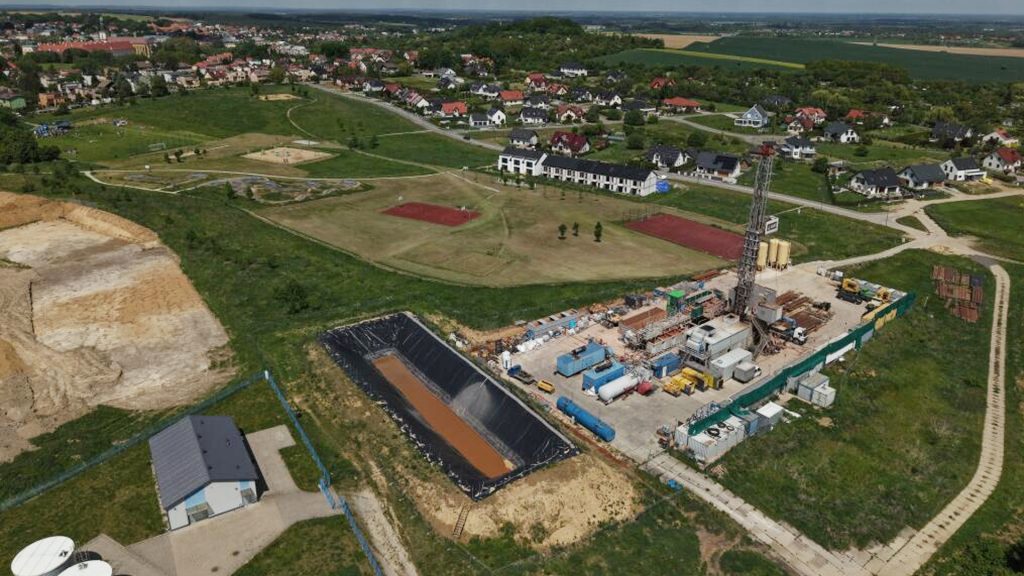
Drilling of an exploration geothermal well in Trzebnica, Poland has been completed, with early thermal water indicators supporting possible balneological use.
Two productive aquifers of thermal waters have been discovered in the commune of Trzebnica in the Lower Silesian Voivodeship in Poland following the drilling of an exploration geothermal well. The town is now evaluating options for the utilization of the thermal waters, with balneology seemingly emerging as a strong candidate.
A groundbreaking ceremony was held back in October 2025 signaling the start of preparatory work for the drilling of the well Jadwiga GT-1 on Czeresniowa Street in Trzebnica. ALGEO had been selected as the drilling service provider, and Multiconsult Polska acted as contract engineer. The investment was valued at PLN 22 million (approx. USD 5.75 million), of which PLN 17 million was provided by funding from the National Fund for Environmental Protection and Water Management as announced back in 2021.
During driling, three aquifers were identified:
- The Middle Triassic Muskelkalk layer was encountered at 660 to 910 meters depth, with thermal waters at 31.4 ºC, flowrate of 20 m3/h, and mineralization of 4.99 g/dm3.
- The Lower Triassic Buntsandstein layer was encountered at 1050 to 1350 meters depth, with thermal waters at 42.1 ºC, flowrate of 24m3/h, and total mineralization of 24.2 g/dm3.
- The Lower Permian Rotliegend layer was encountered at 1710 to 1880 meters. However, there was no stable flow of thermal waters into the well from this layer.
Earlier statements made by local officials indicated expectations of temperatures of up to 80 ºC from the well. While the measured temperatures are significantly lower, the town continues to explore possible utilization models.
Given the hydrogeological and physical parameters, the Buntsandstein horizon was recommended for extraction. It offers sufficient temperature and mineralization that would make it attractive for balneological use. The commune likens the discovered geothermal resource to that of of Mszczonow, where thermal waters at 40.5 to 42 ºC are being used for both heating and recreation.
Drilling also verified the assumptions regarding deeper geological layers. As predicted, slightly metamorphosed Palezoic sedimentary rocks were identified, including Carboniferous formations, where drilling was terminated. Aside from the well’s potential value as a source of thermal waters, the data collected from the well will also enrich the knowledge base available to the state and the relevant authorities. For the municipality, this means that further decisions can be made based on the actual conditions observed during drilling and well testing.
Detailed studies of the thermal water’s composition and properties will still need to be undertaken before the commune can decide on the direction of the geothermal project. Pumping tests will start this October for this purpose.
As explained by the contract engineer, the proposed balneological and recreational option would mean that no second well would have to be drilled. Further steps would involve obtaining the required decisions and licenses, as well as preparation of the hydrogeological documentation and infrastructure preparation.
Source: Commune Trzebnica