
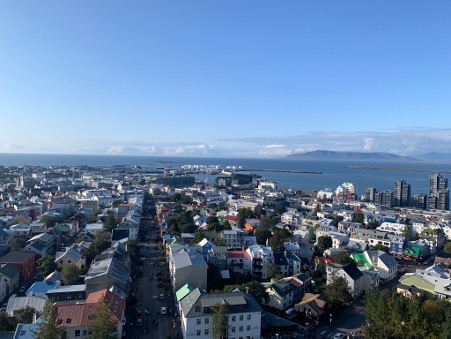
Geothermal heat is directly used for heating buildings, growing food, farming fish, and bathing. This chapter explores real-world applications of geothermal energy beyond electricity.
What is Direct Use of Geothermal Energy?
Direct use refers to utilizing geothermal heat directly, without converting it into electricity. This includes among others heating buildings, greenhouses, fish farms, and spas, as well as various industrial uses.
Typical direct use applications use low- to medium-temperature resources (20°C to 150°C / 68°F to 300°F). These systems are highly efficient, locally adaptable, and represent the only renewable energy source with limited to no carbon emissions. The Lindal diagram helps visualize how different temperatures suit different applications – from space heating to drying crops.
Figure: Lindal Diagram – Possible Geothermal applications by temperature
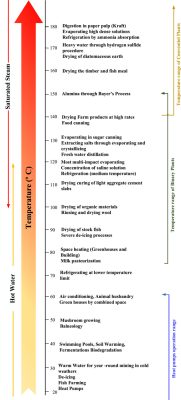

Source: McCoy-West AJ, Milicich S, Robinson T, Bignall G, Harvey CC. Geothermal resources in the Pacific Islands: the potential of power generation to benefit indigenous communities. Proceedings of the Thirty-Sixth Workshop on Geothermal Reservoir Engineering; 2011. Link: https://scijournals.onlinelibrary.wiley.com/cms/asset/22aab41a-15b8-4c05-a2a1-2be22bb556bf/ese31296-fig-0002-m.jpg
Historical and Cultural Context
The use of geothermal energy in the form of heat stretches back to ancient times. Romans and Greeks built baths around natural hot springs, while both vikings in Iceland and natives in North America are known to have frequented natural hot springs for bathing. The small village of Chaudes-Aigues in the Cantal region in south-central France launched what may be the first (documented) geothermal district heating system as early as 1332.
In the countries of Iceland, Japan, and New Zealand, bathing in geothermal water has an enduring cultural tradition. These early uses laid the foundation for today’s broader applications. Other examples of course can be found in Bath/ England, Baden-Baden/ Germany and elsewhere.
Main Applications of Direct Use
District Heating Systems/ Thermal Networks
District heating (or often referred to “thermal networks” in a North American context), as form of distributing heat across a wider area fed by a or more central heat sources is considered the most efficient way to distribute heat in cities. While still relatively small in scale in the greater picture, geothermal remains one of the most widespread and potentiallz impactful applications of geothermal energy use for heating. These systems provide hot water for space heating and domestic use via underground distribution networks. In Europe, the interest in geothermal district heating has been growing rapidly, particularly as countries seek alternatives to fossil fuels for energy security and climate goals.
For instance, Reykjavík, Iceland has long been a model, with today over 90% of homes supplied by geothermal heat in all of Iceland. In the Paris Basin, France, one of the world’s largest urban geothermal networks supplies more than 250,000 residents. China has seen significant growth in Tianjin and Xiong’an, reducing coal dependence by expanding geothermal capacity as part of a wider smoke-free cities initiative by the Chinese government.
In Germany, the city of Munich is moving ahead to become the first major city in the world heated primarily by geothermal district heating by 2040, and is today a model for many other cities in Germany. Across Eastern and Central Europe, governments and utilities are increasingly investing in geothermal as a secure, domestic heat source that supports decarbonization. Large heat pumps are also increasingly integrated into lower-temperature geothermal systems (40-80°C), enabling them to reach the standard 90-100°C temperature range required for many district heating networks.
- Reykjavík, Iceland – where over 90% of homes are heated with geothermal energy
- Paris Basin, France – one of the largest urban geothermal heating zones in Europe
- Sinopec, China – rapidly scaling geothermal heating to reduce coal dependence
- Munich, Germany – aiming for 100% geothermal heating by 2040
Greenhouse Heating
Geothermal energy is a game-changer for horticulture, particularly in cold or temperate regions. By providing a stable and renewable source of heat, geothermal systems enable year-round greenhouse cultivation – boosting local food production and reducing dependency on imported produce and fossil fuels.
Türkiye and the Netherlands lead Europe in the use of geothermal heat for greenhouses. In Türkiye, geothermal greenhouses have fueled rapid agricultural expansion in provinces like Aydin and Manisa. Kenya has developed geothermal-supported greenhouses in Naivasha to support flower exports, while in Iceland, geothermal heat supports sustainable domestic vegetable production – even in winter. The ability to grow fresh food close to population centers with a renewable heat source makes geothermal particularly attractive in an era of food security and energy efficiency.
- Türkiye – expanding tomato and vegetable production with geothermal heat
- The Netherlands – Europe’s leader in geothermal-heated horticulture
- Kenya – using geothermal steam and water for flower and vegetable growing
- Iceland – ensuring local year-round food supply
Aquaculture and Agro-Industry
The application of geothermal energy in aquaculture and agri-food processing is gaining attention globally. According to a 2019 IRENA analysis, geothermal heat is ideal for temperature-sensitive aquaculture systems, offering a clean and consistent thermal environment that improves fish growth and reduces disease.
Examples include land-based fish farming in Hungary and China, where geothermal heat is used to raise species like catfish and tilapia. In New Zealand, Huka Prawn Farm is using remaining hot water from geothermal power generation to heat in the production cycle. Details: https://hukaprawnpark.co.nz/latest-news/new-world-leading-low-carbon-heating-system-on-a-grand-scale/
In Iceland, a geothermal aquaculture facility successfully cultivates Senegalese sole for local and export markets. Details: https://www.thinkgeoenergy.com/hs-orka-to-sell-surplus-hot-water-from-geothermal-power-plant-to-fish-farming-operation/ In Italy and Germany, geothermal is used for sturgeon farming and sustainable caviar production.
In the agro-industry, geothermal heat powers drying facilities for fruit, herbs, and spices – such as mango in Mexico or tomatoes in Greece. It also supports dairy operations (milk pasteurization, cheese production) and horticultural value chains. In Indonesia, geothermal provides heating for the drying of coffee beans. The scalability and reliability of geothermal heat make it a strong fit for sustainable food systems.
Geothermal heat supports aquaculture by regulating water temperature for fish, shrimp, or algae.
- In Hungary and China, land-based fish farming uses geothermal heat for improved efficiency
- In Mexico, geothermal is used to dehydrate mango and pineapple
- In Greece, geothermal drying is applied to herbs and tomatoes
- In New Zealand, geothermal supports fish farming and milk processing
Balneology and Bathing
Balneology – the use of geothermal water for bathing and wellness – has been part of human culture since antiquity. Roman baths, some still in use today, were early examples of geothermal direct use. Across Europe, thermal spas in Hungary (e.g. Széchenyi Baths in Budapest) and Germany (e.g. Baden-Baden) attract millions annually.
Modern examples like Iceland’s Blue Lagoon, developed alongside a geothermal power plant, and the Peninsula Hot Springs in Australia demonstrate how geothermal bathing is both a cultural asset and an economic driver. Other popular geothermal bathing locations include Beppu (Japan), Pamukkale (Türkiye), and Banff (Canada). These spas generate local revenue, create jobs, and often contribute to broader wellness tourism strategies.
- Blue Lagoon (Iceland) – a globally recognized spa developed from geothermal power plant runoff
- Beppu, Japan – famous for its dense cluster of hot spring baths
- Olkaria, Kenya – Much like the Blue Lagoon in Iceland, the thermal spa in Olkaria uses geothermal brine runoff from the power plant
- Pamukkale, Türkiye – known for its terraced geothermal pools
- Banff, Canada – natural hot springs used for recreation and healing
These sites generate both local revenue and international attention.
Industrial Heat Applications
Low- and medium-temperature geothermal heat (typically under 150°C) can be used in a wide range of industrial processes. This includes food and beverage processing, paper production, textiles, and even chemical synthesis.
In Rotorua, New Zealand, geothermal heat powers timber drying kilns and food processing plants. In France and Italy, geothermal energy supports dairy operations, laundries, and textile factories. U.S. examples include pilot projects for beer brewing and aquaculture feed processing. As industrial decarbonization becomes a priority, geothermal direct use offers a practical path forward – particularly for industries located near sedimentary basins or volcanic zones.
- Food processing: milk pasteurization, cheese making, brewing
- Coffee production: coffee drying in Kamojang/ Indonesia and in El Salvador
- Textiles and chemicals: washing, drying, and synthesis operations
- Starch production: geothermal heat use in Rittershofen, France
- Timber drying & food packaging: geothermal timber drying and food packaging
Check out this great report by IRENA on “Accelerating geothermal heat adoption in the agri-food sector”.
Cooling with Geothermal Heat
While commonly associated with heating, geothermal systems can also provide cooling via absorption chillers and other thermally driven processes. This is of course in addition to groundsource heat-pump applications utilized for both heating and cooling. Larger-scale cooling systems are particularly relevant in hot climates or urban districts looking to reduce air conditioning demand on the electricity grid.
Masdar City in Abu Dhabi was among the first urban-scale projects to explore geothermal-powered district cooling, with wells drilled in the early planning phase. In Europe, cities like Munich and Copenhagen are now examining the potential of using geothermal resources in hybrid district heating and cooling networks. This dual-use capability could become increasingly important as cities face both heating and cooling challenges year-round.
Figure: G2COOL Geothermal Cooling Plant at Masdar City in Abu Dhabi/ UAE
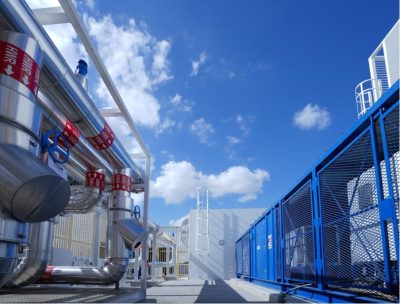

Source: ADNOC/ Tabreed
Examples include:
- Masdar City, UAE – explored geothermal-based district cooling
- Australia – test sites using shallow geothermal for building cooling
- India – project utilizing geothermal energy for cooling of apple storage
- Saudi Arabia – development of a cooling as a service model with geothermal
Benefits of Direct Use
- With heating representing roughly 50% of global final energy demand (including cooling), direct geothermal use represents an underexploited but crucial pillar of the energy transition.
- Direct use of geothermal energy offers a range of environmental, economic, and social benefits. Because the heat is used directly without conversion, it is highly efficient and minimizes energy loss. Systems have long operating lives and rely on a domestic, renewable energy source – enhancing energy security and price stability.
- Environmental benefits include the avoidance of combustion emissions and the ability to support decarbonization in hard-to-abate sectors such as agriculture and heating.
- Economic benefits range from lower fuel costs to new income sources for rural communities (e.g. spas, greenhouses, agri-processing).
- Minimal emissions: clean replacement for fossil-based heating
- Long asset life: systems can operate for decades (with Chadues-Aigues as the likely oldest geothermal heating system in operation since the 14th century, there are many systems in operation for 40+ years)
- Local benefits: supports agriculture, tourism, and small industries
Geographic Distribution and Growth Potential
Today, over 90 countries report some form of geothermal direct use, with installed thermal capacity exceeding 107,000 MWt (as of 2020). China leads globally in direct use capacity, especially in district heating and greenhouses. Other strong markets include Türkiye, Iceland, Kenya, and several European countries.
Figure: Top 10 geothermal countries by direct utilization without heat pumps (TJ/ Year)
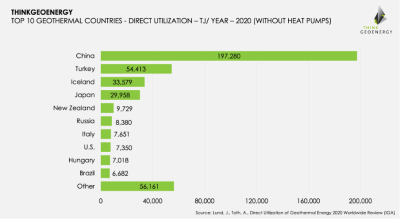

Figure: Geothermal direct utilization by region in TJ/ year (without heat pumps)
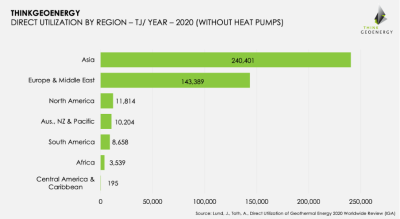


Source: Lund, J., Toth, A., Direct Utilization of Geothermal Energy 2020 Worldwide Review (IGA)
Challenges and Barriers
Despite its promise, direct geothermal use faces several persistent challenges. First, data collection remains inconsistent, with many countries underreporting non-electric geothermal usage. This makes policy development and investment planning difficult.
Second, financing remains limited, especially for small-scale agricultural or municipal heating systems. Compared to power generation, direct use projects often lack visibility and institutional support.
Third, geothermal heat lacks the profile that electricity enjoys in the energy conversation. Public and political attention is often narrowly focused on megawatt-scale power output, sidelining thermal solutions.
Finally, many urban areas lack the infrastructure or planning frameworks to integrate geothermal heat, especially in older buildings and fossil-based district networks. Addressing these barriers requires awareness-raising, incentives, and integration into national energy and climate plans.
- Data gaps – usage is poorly tracked compared to electricity
- Financing – small-scale projects often lack access to capital
- Public recognition – electricity overshadows heat in energy discourse
- Infrastructure limitations – older urban networks are difficult to retrofit