
Global collaboration on standardizing geothermal emissions reporting strengthened at WGC 2026

#image_title
The IEA Geothermal Gas Management Task strengthened its work in standardizing reporting methods for geothermal greenhouse gas emissions at WGC 2026.
At the World Geothermal Congress 2026 (WGC 2026) held in Calgary, Canada in June 2026, an international coalition of researchers, geothermal operators, policymakers, and industry leaders gathered to advance a shared vision for harmonized geothermal emissions reporting through the IEA Geothermal Gas Management Task with financial support of IEA Geothermal and International Geothermal Association (IGA).
The initiative is the first international collaboration specifically focused on geothermal greenhouse gas emissions and the development of scientifically robust reporting methodologies aligned with IPCC and UNFCCC frameworks.
During the congress, the Task presented its latest work, a collaborative paper titled Global Collaboration Toward Standardizing Geothermal Gas Emissions Reporting, highlighting the importance of transparency, scientific consistency, and international cooperation in geothermal climate accounting.
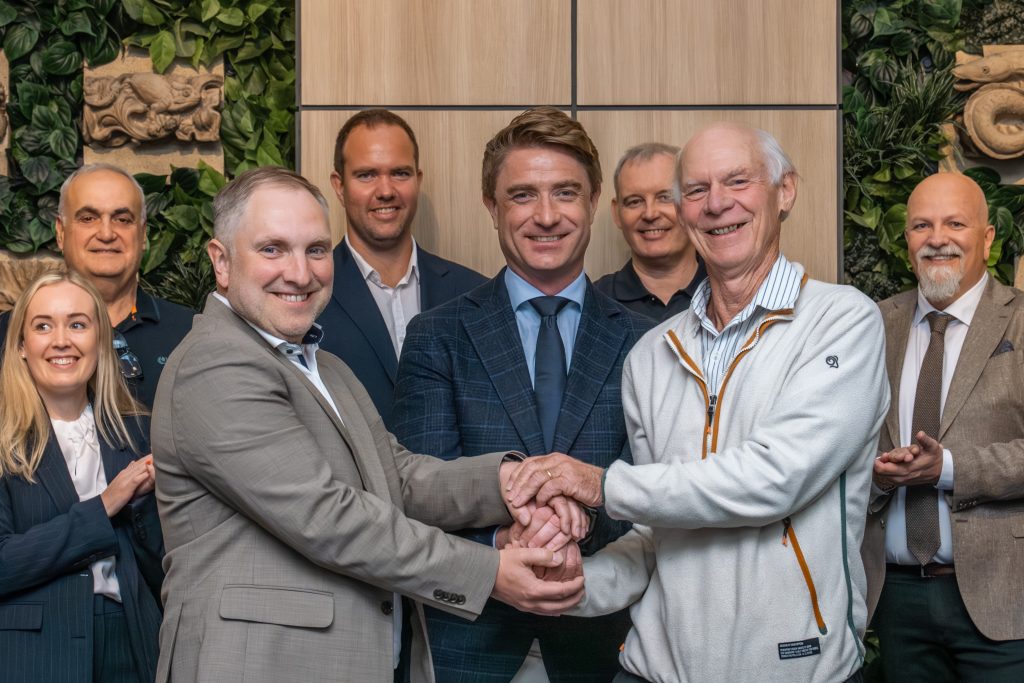
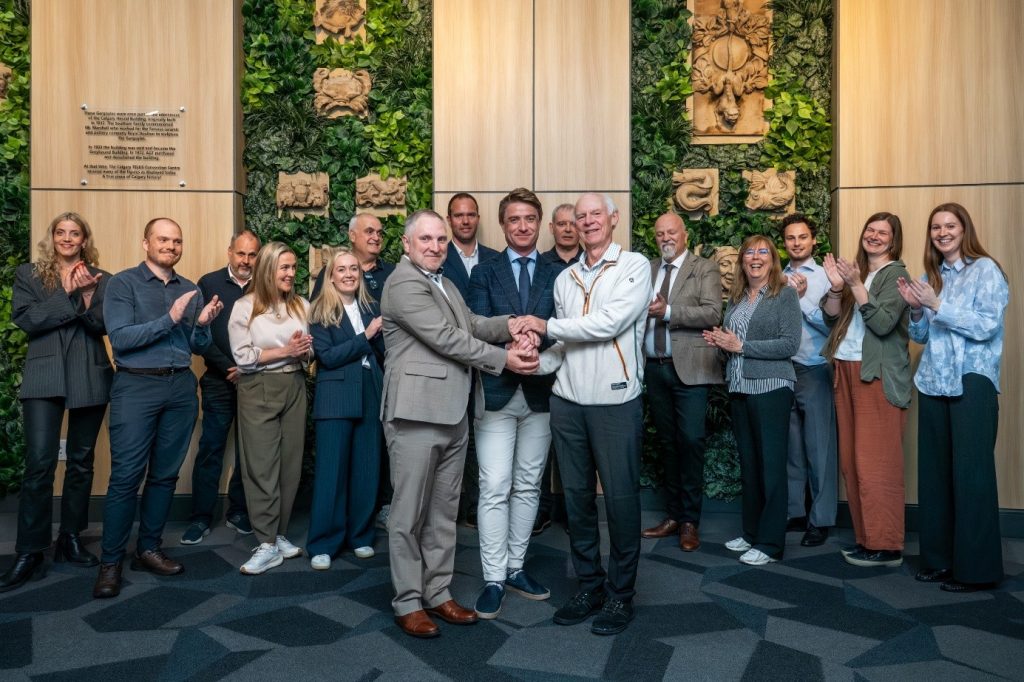
A symbolic moment on the 7th June captured the spirit of the initiative, as the President of the IGA, Dr. Bjarni Pálsson, and the Vice-Chair of the Executive Committee of the IEA Geothermal TCP, Dr. Chris Bromley, shook hands with the Task Leader of the Geothermal Gas Management Task, Mr. Jónas Ketilsson, on the shared vision of forging a truly global collaboration on gas management for the geothermal sector.

Successful stakeholder workshop builds momentum
Alongside the presentation to the congress, the Task hosted a dedicated stakeholder workshop, organized by Alma Stefánsdóttir and Schneider Electric Advisory Services in collaboration with members of the Task, bringing together representatives from industry, government, academia and geothermal operators from multiple countries. The workshop was designed to identify key barriers, align priorities, and develop a collaborative roadmap toward internationally standardized geothermal emissions accounting.
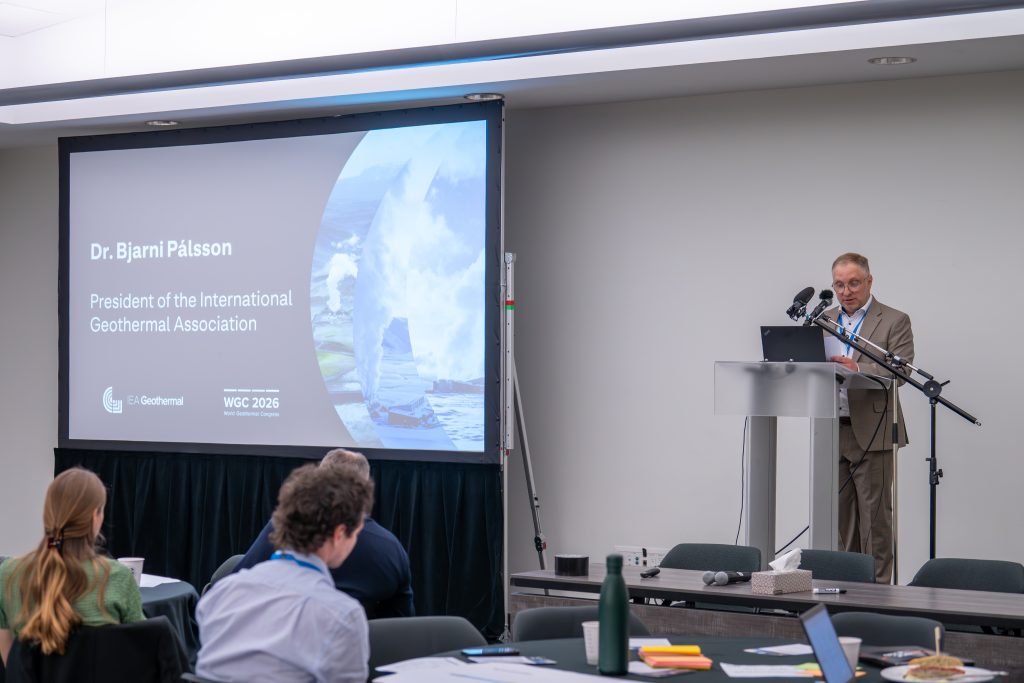
Opening the workshop, Dr. Bjarni Pálsson emphasized the importance of international cooperation and knowledge-sharing in addressing the complex challenges associated with geothermal gas emissions to further support sustainable geothermal development.
“These are not challenges for one country alone. They are global challenges that require global solutions,” said Dr. Pálsson. “The geothermal sector has a strong history of working together to address shared challenges, and this initiative continues that tradition.”
Dr. Pálsson also highlighted the success of previous international collaborations within the geothermal sector, including the Geothermal Sustainability Assessment Protocol (GSAP), which helped establish common sustainability frameworks and strengthen global cooperation across the industry.
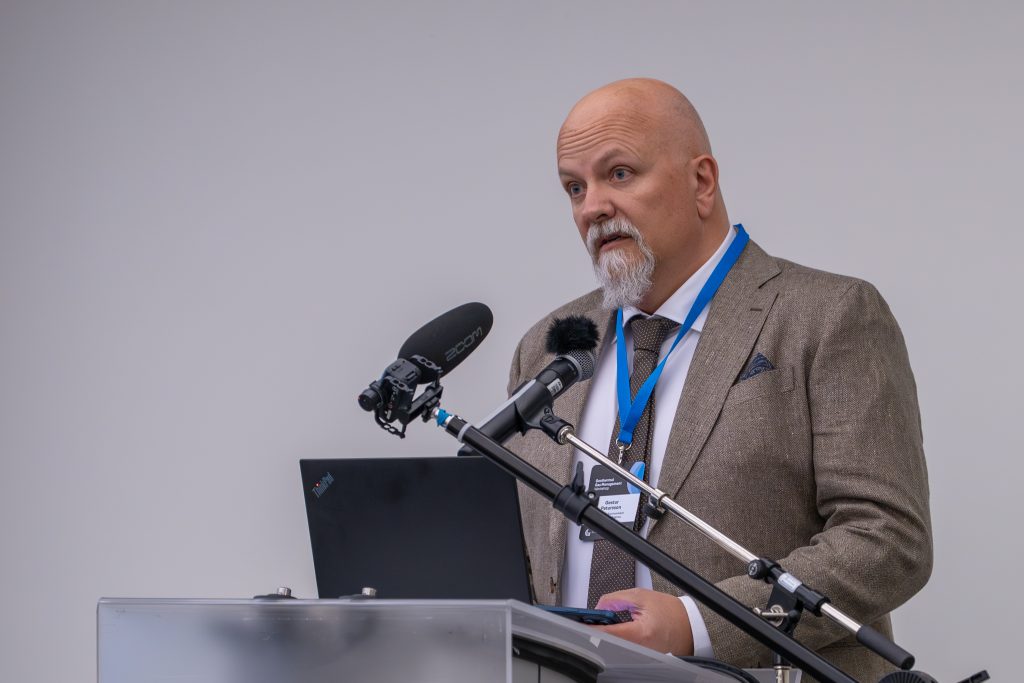
In his opening remarks, Gestur Pétursson, Director General of the Icelandic Environment and Energy Agency, stressed the importance of ensuring that policy and regulatory frameworks evolve alongside advances in geothermal science and technology.
“Good policy depends on good science, and good science must ultimately be translated into practical solutions,” said Pétursson. “New approaches to monitoring, reinjection, carbon mineralization, and gas utilization are opening opportunities that did not exist only a decade ago.”
Pétursson further emphasized that robust and credible frameworks are necessary to ensure these technological advances are consistently recognized within international reporting systems and regulatory structures. He also invited participants to continue the discussions at the Iceland Geothermal Conference in 2027, where the IEA Geothermal Gas Management Task will convene an international stakeholders event to further advance the initiative as a part of the IGC official agenda.
The workshop was widely regarded as a success, generating strong engagement and constructive dialogue across technical, regulatory, and policy areas. Participants collaborated on identifying challenges related to emissions measurement, distinguishing natural and operational emissions, data transparency, funding, and international governance. The discussions resulted in a draft multi-year strategic roadmap aimed at delivering internationally recognized methodologies and reporting tools by 2029. The results will be presented at the World Geothermal Congress in Kenya the same year.
The IEA Geothermal Gas Management Task is working to develop harmonized reporting guidelines, establish a global catalogue of geothermal gas emissions data, improve understanding of geological CO2 variability, and share best practices for mitigation, monitoring, and gas utilization.
Speaking at the congress, Task Leader Jónas Ketilsson emphasized the broader importance of the initiative: “Our goal is to ensure that geothermal energy is assessed fairly, scientifically, and consistently worldwide. Through transparency, collaboration, and robust science, we can strengthen geothermal energy’s role in the global energy transition while building greater confidence in climate reporting and investment decisions.”
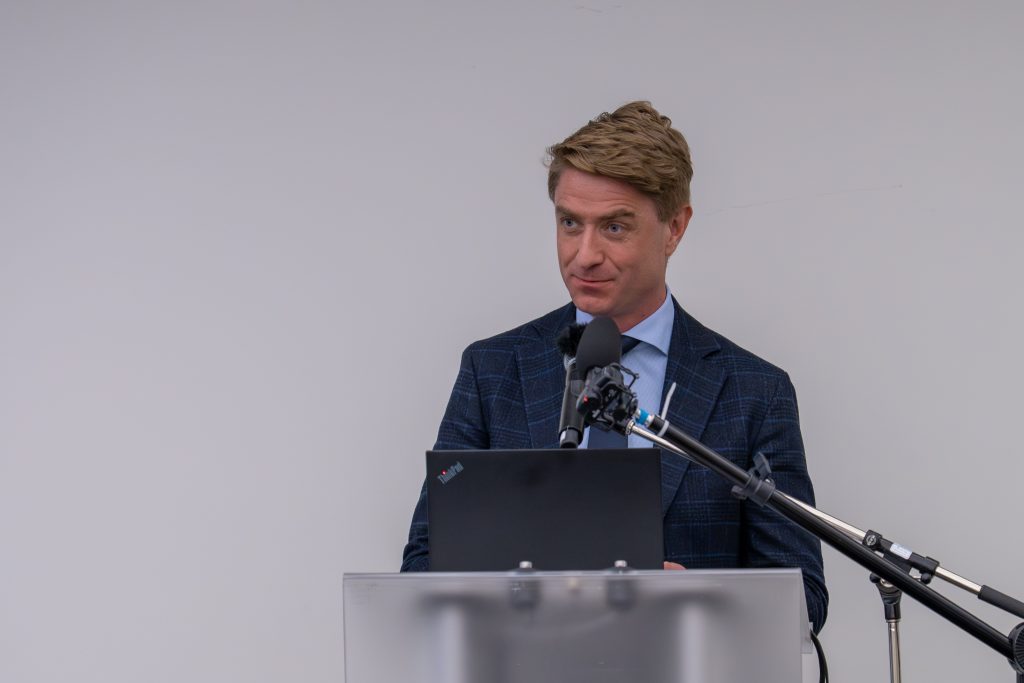
Sævar Freyr Þráinsson, CEO of Reykjavík Energy said after the workshop: “Today I participated in the Geothermal Gas Management Workshop, which was held as a pre-event of the conference. The workshop focused on one of the key issues currently facing the industry: how to measure, report, and communicate greenhouse gas emissions from geothermal energy in a consistent and scientifically robust manner. It was particularly encouraging to see the contribution of Icelandic experts and companies to the work that is now taking place within the IEA Geothermal Gas Management Task. The goal is to create an internationally coordinated approach that considers geological conditions, natural emissions, mitigation measures and technological advances such as CO2 reinjection and mineral carbon storage.”
The Task has already established active collaboration between participants from France, Iceland, Italy, Japan, New Zealand, Portugal, and the United States, with additional geothermal
nations expected to join in the coming years.
Upcoming work includes the continued development of the Global Catalogue of Geothermal Gases and the forthcoming IEA Geothermal Carbon Accounting Toolbox, which Professor Andri Stefánsson at University of Iceland is leading with nominated experts from other participating nations, both intended to support transparent, science-based geothermal emissions reporting on a global scale.
The discussions and partnerships forged during WGC 2026 are expected to form an important foundation for future international collaboration leading toward the World Geothermal Congress
2029 in Kenya.
For more information visit the IEA Geothermal web page. Interested in joining the work? Please contact Jónas Ketilsson.