
Herrenknecht, Badenova plan geothermal JV in Germany

#image_title
Herrenknecht Vertical and Badenova plan a joint venture to develop geothermal heating projects in southwest Germany, starting with the Hartheim project.
As reported yesterday locally, Germany-based Herrenknecht Vertical and regional energy utility Badenova plan to are planning to establish a joint venture to develop geothermal heating projects, beginning with the planned geothermal development in Hartheim in Southwest Germany.
In statements to local media, representatives of the companies confirmed that discussions are at an advanced stage. The Board of Badenova is expected to go over the proposed cooperation later this month. The Hartheim project aims to supply renewable heat to around 20,000 people in the area of Freiburg in the Upper Rhine Valley in the Southwest of Germany. Drilling is expected to begin in 2027 and heat production targeted around 2029 to 2030. We previously reported about the plans of Badenova.
Hartheim project planned as first joint development
The planned project in Hartheim is expected to require an investment of around EUR 60 million (around USD 69m), covering drilling, construction of the heating plant, required district heating infrastructure connecting the resource to the city of Freiburg. As we reported previously, the Hartheim site was selected following geological exploration work by Badenova that identified favourable reservoir conditions while at the same time allowing for sufficient distance from residential areas and protected groundwater zones. Additional geothermal opportunities are considered by both comapnies in the region of Lörrach, right at the border to Switzerland.
Strategic role for Herrenknecht
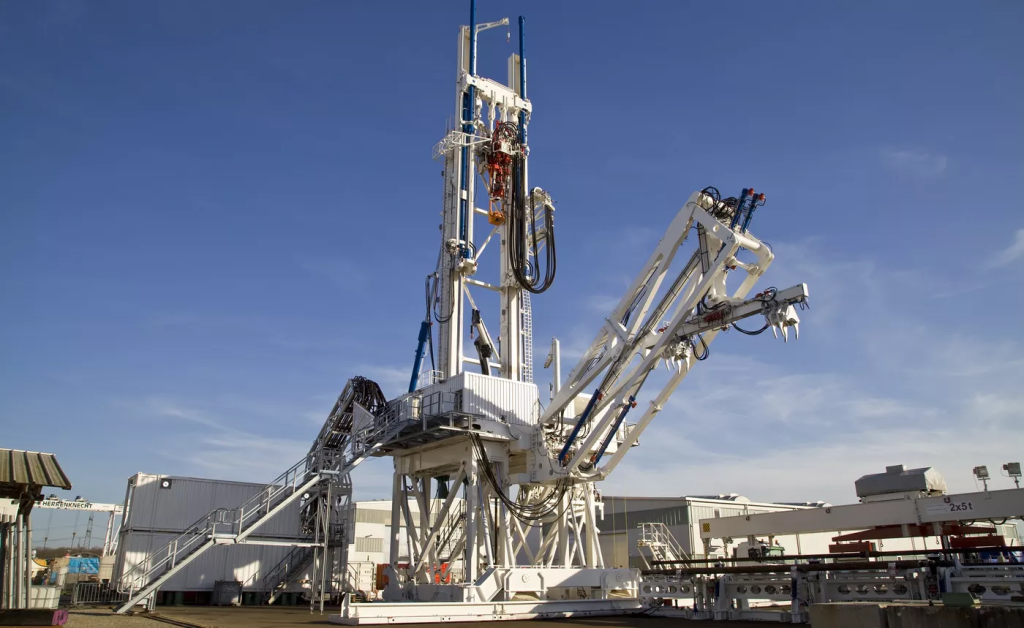
This now proposed partnership, clearly reflects a broader evolution in Herrenknecht’s geothermal strategy. While the company is globally recognised as a world’s leading manufacturer of tunnel boring machines, its subsidiary Herrenknecht Vertical has steadily expanded its geothermal activities over the past two decades. The company introduced its first dedicated geothermal drilling rig in the late 2000s. The company has since developed drilling technologies for deep geothermal projects, including compact rigs designed for use in urban environments.
More recently, Herrenknecht has also broadened its technology portfolio with the development of a dedicated seismic exploration truck intended to improve geothermal resource exploration in Germany and other markets. In 2026, the company won the European Geothermal Innovation Award at the GeoTherm expo in Germany.
In addition the company acquired a stake in drilling contractor H. Anger’s Söhne (Anger & Söhne) in 2023, and in 2024 established a partnership with French geothermal developer Arverne.
The proposed partnership now with Badenova seems to represent another step in the company’s evolution. Rather than supplying drilling equipment alone, Herrenknecht would – under this proposed partnership – participate directly in geothermal project development and share in the long-term value created by the asset for both companies, but also for the energy transition in the home region of the company. The CEO of Badenova Dirk Sattur mentioned that the cooperation is intended to combine the drilling expertise of Herrenknecht with Badenova’s expeirence in developing and operating envery infrastructure.
The founder of Herrenknecht, Martin Herrenknecht has been a long-time supporter of geothermal energy and the company has been advocating for expanding geothermal development in Germany for now decades.
Definitely a rather interesting development and partnership as Germany continues with decarbonisation efforts for its heating market seeking alternatives to fossil-based heat. A partnership like this that combines industrial and engineering capabilities with experienced utilities could become a possible model for accelerating geothermal deployment. For Germany’s geothermal sector, the planned joint venture may also signal growing confidence from established industrial companies that geothermal heat projects are becoming investable infrastructure rather than solely engineering contracts.
Source: Schwarzwaelder Bote, Badische Zeitung