
Iceland presents blueprint for resilient and people-centered geothermal direct use systems

#image_title
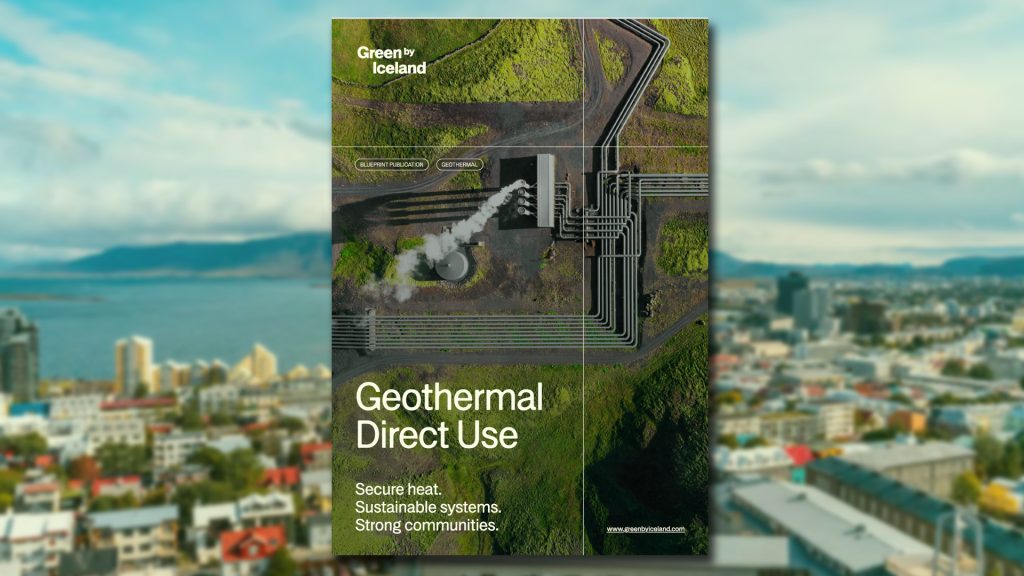
Green by Iceland has published a document that chronicles the journey of Iceland to build geothermal direct use systems and a blueprint to replicate this model.
A new publication by non-profit platform Green by Iceland highlights the immense value that geothermal direct-use applications has provided for Iceland, and presents a blueprint for similar systems to be deployed in other parts of the world.
Despite heating and cooling accounting for about half of the global energy consumption and about 40% of energy-related CO2 emissions, it remains an overlooked component of energy transition efforts in many countries. Relying solely on electrification to address this problem will not be enough as power grid also face challenges related to congestion, flexibility, and infrastructure constraints.
Geothermal direct use turns heat from a traded commodity to a managed infrastructure – one that is much more predictable and controllable, and is not affected by geopolitical issues and other external factors.
Iceland: A model for a thriving geothermal direct use industry
Iceland presents an interesting model in addressing this dilemma. As a country with nearly perpetual need for heating, the oil crises in the 1970s prompted decisive political action to reshape Iceland’s approach to heating. Building upon early geothermal innovation and deployment from the previous decades, geothermal heating was made available to almost 90% of homes in Iceland by 1982. Today, Iceland is recognized as a global leader in geothermal energy and has played an influential role in geothermal development in many other countries, whether through skills development or the export of expertise and services.
The blueprint focuses on the use of low to medium-enthalpy geothermal resources, which are far more common than high-temperature geothermal, for direct-use applications. Aside from space heating in homes, geothermal heat can also be used for tourism, public services (such as snow melting), and industrial applications. Notable examples in Iceland and in other countries like the United States, Hungary, China, New Zealand, and Kenya are discussed in the paper.

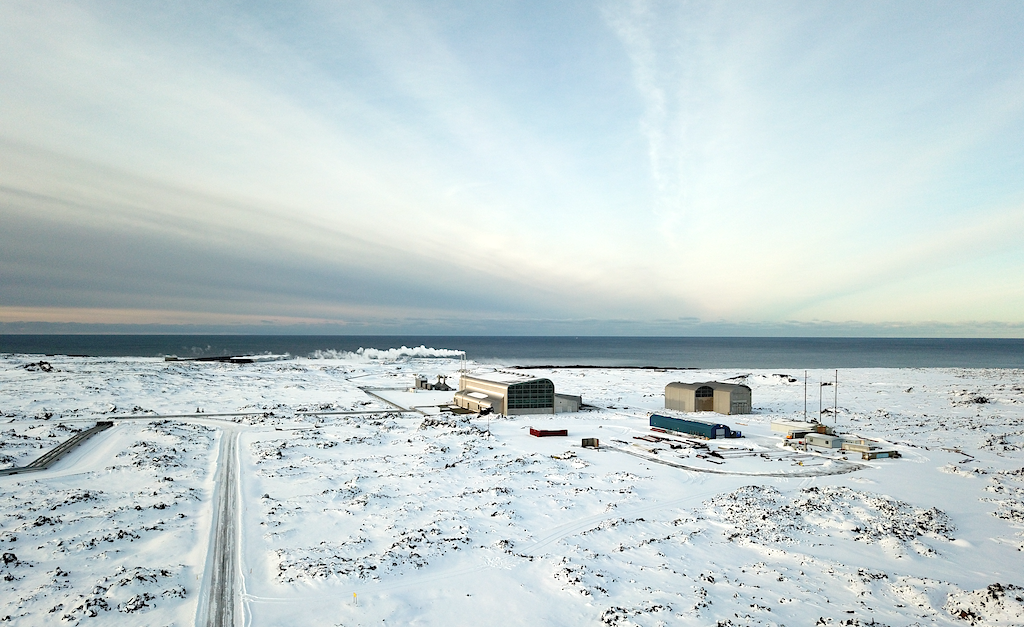
The benefits of geothermal direct use are multifaceted. It provides a locally available and stable energy source that can empower multiple sectors through cascaded use. Geothermal systems are long-lived investments, providing budget stability and planning security for both local governments and local enterprises. It also contributes to the well-being and improved quality of life of local communities through recreational facilities and indoor heating.
A roadmap for geothermal direct use deployment
An important part of the document is the roadmap for other countries and regions to transition heating system to geothermal direct use. The point being made is that Iceland may have unique geology, but the lessons that the country has learned through the decades can be applied to other geological, political, and market settings.
The roadmap emphasizes several crucial steps in successfully deploying geothermal direct use, such as establishing a policy framework that clearly defines roles of government agencies and regulating bodies, conducting an analysis of the local heating market, establishing risk-sharing funding mechanisms, engaging with local communities, and capacity building.
A robust ecosystem for geothermal innovation, deployment, and implementation
From the Iceland blueprint and the recommended roadmap, it is clear that it took a coordinated effort between policymakers, utility companies, technology and service providers, and researchers to achieve geothermal deployment at an unprecedented scale.
Through the decades, Iceland has managed to built a fully-equipped ecosystem of companies and institutions that have empowered the geothermal sector, both locally and internationally. Aside from offering technical expertise in drilling and operations, these institutes can also advise on financing, policy development, and capacity building. The document closes with an invitation for companies and governments to partner with Iceland to benefit from their practical experience and help the growth of the geothermal sector globally.
Source: Green by Iceland