
Icelandic Orkuveitan sees up to 50 MW potential for IDDP-3

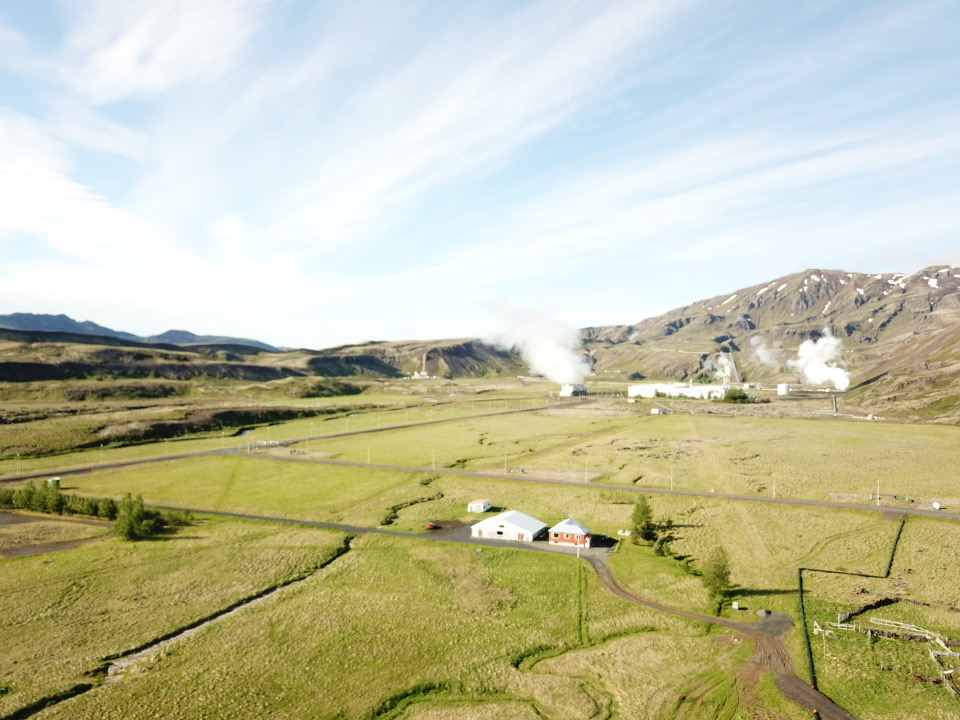
Orkuveitan (Reykjavik Energy) says IDDP-3 at Nesjavellir could produce 20–50 MW per well, as a four-stage programme tests superhot geothermal through 2028.
Icelandic utility Orkuveitan (Reyjavik Energy) expects its upcoming IDDP-3 well at Nesjavellir to test whether superhot geothermal wells can deliver substantially more power than conventional geothermal production wells, potentially reaching 20 to 50 MW per well.
In an interview with Icelandic newspaper Morgunbladid published Sept. 10, 2026, Orkuveitan CEO Sævar Freyr Þráinsson and Hera Grímsdóttir, Executive Director of Research and Innovation, outlined a four-stage development programme that is intended to move the Iceland Deep Drilling Project from accessing a superhot resource towards testing its use for commercial energy production.
Drilling of IDDP-3 is scheduled for the fourth quarter of 2026 at Nesjavellir. The target is a resource above 400°C at a depth of around 4 to 5 kilometres. Orkuveitan has previously confirmed that drilling is planned for late 2026.
As ThinkGeoEnergy reported in July 2026, Orkuveitan has contracted Iceland Drilling to drill the well.
Testing whether much higher well output is possible
The clearest new indication from the interview concerns the potential output Orkuveitan believes could ultimately be achieved from superhot resources.
According to Sævar Freyr, geothermal wells currently operated under conventional conditions typically encounter temperatures of around 250°C to 350°C, with many delivering between 2 MW and 7 MW. By drilling deeper and accessing hotter formations, Orkuveitan is targeting output of between 20 MW and 50 MW from an individual well.
The company stresses that IDDP-3 is intended to establish whether those expectations can actually be achieved.
“The expectation is that power production from each well could become many times greater than from conventional geothermal wells,” Sævar Freyr said in the interview.
The newspaper characterised the upper end of the expectation as potentially around seven times the output of today’s production wells. Orkuveitan has not presented 50 MW as a demonstrated IDDP-3 capacity, and the upcoming testing programme will be needed to determine achievable production.
Higher temperatures matter because superhot fluids contain considerably more energy. Orkuveitan’s broader deep-utilisation programme aims to access geothermal resources above 400°C, compared with the approximately 2 to 3 kilometre depths and temperatures of up to 350°C commonly utilised today.
Four steps from drilling to power production
The programme outlined by Orkuveitan extends beyond drilling IDDP-3.
The first step, planned for the fourth quarter of 2026, is drilling IDDP-3 at Nesjavellir. The location was selected in part because the geothermal system is well characterised and high temperatures are believed to occur at comparatively accessible depth.
A second research well, planned for the fourth quarter of 2027, will test injection of water into the superhot geothermal system and examine how this affects the existing reservoir. Orkuveitan has also previously announced the planned deep-injection well.
The third stage, scheduled for the third quarter of 2028, is intended to examine stimulation of water flow through hot rock. Water would be injected, heated underground and subsequently recovered so that the resulting heat and steam can be used for energy production.
In the fourth stage, also targeted for the third quarter of 2028, the initial IDDP-3 well would be connected to a geothermal power plant by ON (Orka náttúrunnar). The aim is to test production from superhot formations as part of an operating geothermal system.
From research well towards a scalable concept
Hera Grímsdóttir told Morgunblaðið that earlier IDDP wells had already established the presence of superhot geothermal resources. The focus of IDDP-3 is therefore shifting towards developing the materials, equipment and operating methods needed to use such resources safely and economically.
Materials capable of withstanding extreme temperatures and pressures remain one of the main technical challenges. Previous IDDP drilling at Krafla and Reykjanes encountered superhot conditions, but also demonstrated difficulties with casing, valves and other equipment.
Orkuveitan says advances in drilling technology, materials and measurement equipment during the past decade have made it possible to revisit these challenges.
The programme is also designed to proceed incrementally rather than attempt to solve every technical issue in a single well. Each stage will provide information for the next decision on whether and how the concept can be expanded.
Economics will depend on the test programme
Orkuveitan has not yet provided a final cost estimate for electricity generated from superhot wells.
Hera said the development programme is intended to answer that question. The underlying proposition is that, if each successful well can generate substantially more energy, fewer wells and less surface infrastructure could eventually be required for a given generating capacity.
Whether that translates into competitive electricity costs will depend on drilling cost, well performance, equipment life and the ability to operate reliably at superhot conditions.
Orkuveitan sees IDDP-3 as the first major step in a wider deep-geothermal programme. If the initial stages succeed, the company intends to investigate applying the technology more widely in existing geothermal fields and eventually drilling deeper than is currently possible.
The IDDP-3 work also forms part of the European SHiFT research programme. The consortium received EUR 10 million from Horizon Europe earlier this year to develop technologies for geothermal resources above 400°C.
Further information on Orkuveitan’s programme is available from the official deep geothermal utilisation project page.
Source: Article in the print version of Icelandic publication Morgunbladid, September 10, 2026