
New Zealand publishes 2026-2027 geoheat action plan

#image_title
Earth Sciences NZ and Ara Ake have published the 2026-2027 Geoheat Action Plan, aiming to accelerate geoheat utilization in Aotearoa New Zealand.
Earth Sciences New Zealand and Ara Ake, New Zealand’s energy innovation centre, have published the 2026-2027 edition of the Geoheat Action Plan, which aims to to help rapidly increase the utilization of geoheat throughout New Zealand.
Geoheat in this context refers to geothermal heat sources with temperatures below 150 ºC. This can be utilized in a diverse range of industries and production systems that require process heat or controlled temperature environments including wood processing, food processing, industrial manufacturing, aquaculture, horticulture, and biotechnology.
Click here to read the “Action Plan 2026-2027: Geoheat Strategy for Aotearoa New Zealand.”
The plan highlights growing opportunities in low- and ambient-temperature geothermal applications, which are well established overseas but have had limited uptake in New Zealand to date, despite significant potential for adoption. The plan particularly places strong emphasis on regional leadership, which is mirrored by the interest accelerating in regions like Bay of Plenty, Taranaki, Waikato, Auckland and Canterbury. This is the fifth Geoheat Action Plan in the series fostering the uptake of direct geothermal heat use (and cool) in industrial and commercial businesses.
The Action Plan has been written to support the delivery of the Government’s first?ever Geothermal Strategy, From the Ground Up, and includes:
- Five new geoheat projects over 500 kW in planning or operation
- Ten or more workshops, conferences and engagement events nationwide
- Five site visits showcasing geoheat in action
- At least 10 publicly available reports, papers and case studies, with ESNZ leading knowledge generation and Ara Ake supporting de?risking and innovation.
These actions will be delivered by the Geoheat Action Group – a consortium of industry, government, specialist and regional stakeholders that have played a key role in delivering the previous four action plans.
Among the case studies and achievements cited in the report are the development of the “geothermal for glasshouse calculator” by Earth Sciences NZ, and the official opening of Essity’s paper machine that has been completely converted from natural gas fired heat to geothermal energy.
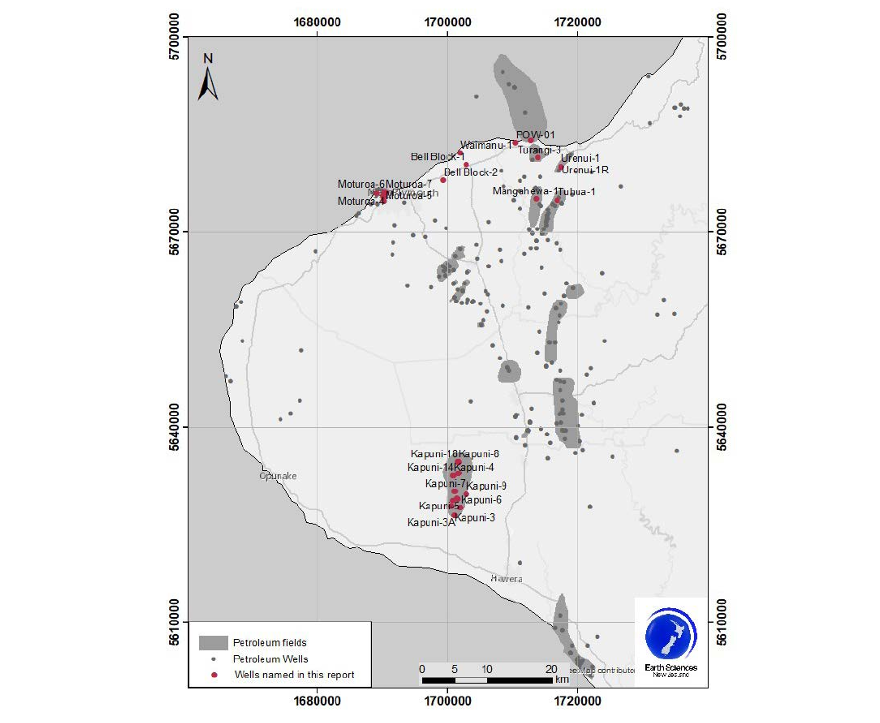
Another interesting initiative featured in the action plan is the Taranaki Geoheat Discovery Challenge. Led by Ara Ake, the initiative seeks to evaluate if the hundreds of suspended and shut-in onshore petroleum wells in the Taranaki region on the western side of New Zealand’s North Island could be repurposed to deliver geothermal heat for industrial and household use.

Source: Earth Sciences New Zealand