
Preparing for the worst case scenario – Casing collapse testing for superhot geothermal

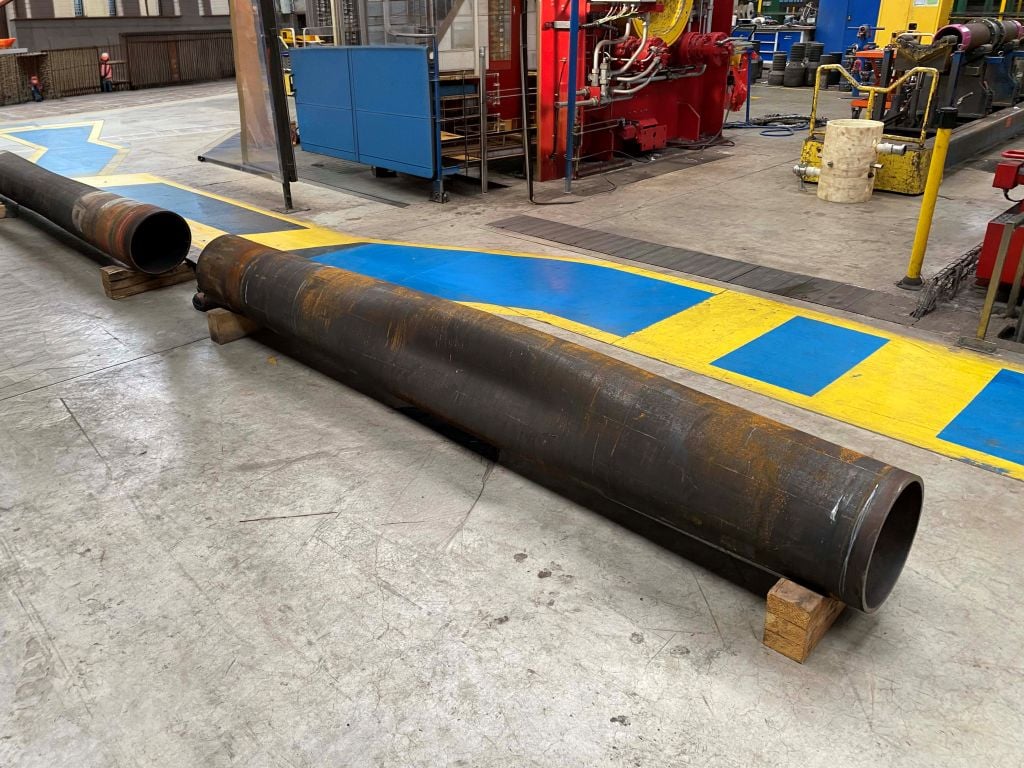
#image_title
As geothermal ventures into superhot conditions, physical casing collapse testing at high temperatures help reduce the risk of casing failure.
One of the frontiers being pushed by innovative geothermal companies is towards the utilization of superhot or supercritical geothermal companies. Right now, there are parallel efforts in this field taking place in Iceland, New Zealand, and the United States.
While the advantages in terms of well productivity and overall efficiency are well-documented, the challenge lies in developing drilling, well completion, and surface infrastructure technologies designed for increasingly extreme environments.
Several studies have identified casing collapse as one of the most severe failure modes in high-temperature geothermal wells. Vallourec noted in its 2023 review that collapse-related failures account for a meaningful portion of geothermal well integrity incidents, with most occurring in wells operating above 250 °C. In geothermal wells, casing integrity is central to long-term productivity and safe operation. Cemented casing strings must withstand repeated thermal cycling, high external pressures, and exposure to corrosive fluids.
In this article, we take a close look at some of the cases of casing collapse in superhot geothermal environments, as well as the recent collapse testing programs conducted by Vallourec to help address this challenge.
Cases of casing collapse
There has been interest in exploring supercritical geothermal resources for a few decades now. In many such cases, the extreme conditions of the geothermal fluids caused heavy damage to cemented casing strings and eventually resulted to well abandonment. This section looks into a small number of these cases, but more than 20 similar cases are documented in literature.
Nisyros, Greece
One of the earliest documented geothermal casing collapse failures occurred in the Nisyros-1 wildcat well in Greece. Drilled in 1982, the well encountered temperatures above 400 °C and highly saline fluids. During production testing, the 9 5/8-inch production casing suffered severe deformation at six different intervals between depths of roughly 150 m and 1240 m.
The collapse was explained as caused by rapid thermal cycling, due to the fast heating during initial production tests and fast cooling during well killing operations. Bad cementing operations was also considered as a contributing factor.
IDDP-1, Iceland
The Iceland Deep Drilling Project (IDDP-1) remains one of the most influential geothermal drilling experiments ever conducted. The well unexpectedly intersected rhyolitic magma at a depth of 2104 m and later produced superheated steam at temperatures reaching 450 °C.

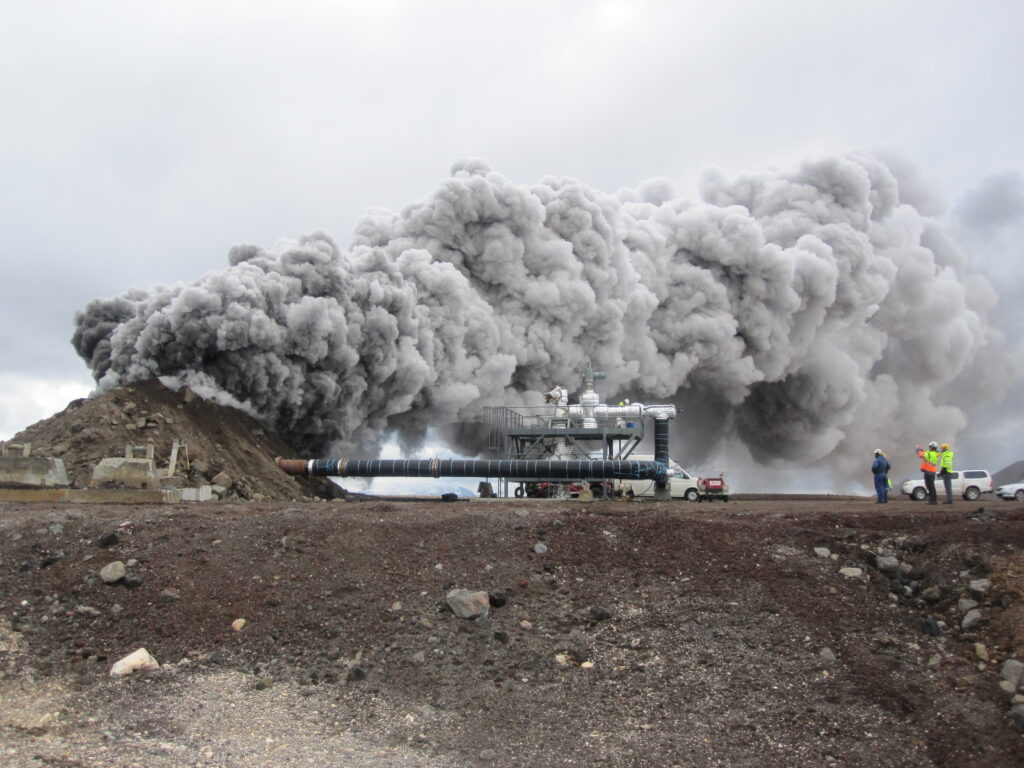
Although the well successfully demonstrated the energy potential of superhot geothermal systems, it also revealed the limits of existing well construction technology. After prolonged flow testing, the well had to be quenched with cold water following failure of the master valves. Even though operators attempted a controlled cooling procedure, the sacrificial production casing collapsed below 600 m depth and experienced coupling rupture.
East Java, Indonesia
A more recent and casing failure case was documented in a 2025 study analyzing a geothermal well in East Java, Indonesia. During production testing, steam leakage was observed from the annulus between the 20-inch surface casing and the 13 3/8-inch production casing. Multi-finger caliper inspection later confirmed severe casing collapse near the surface, with the minimum internal diameter reduced to 10.523 inches compared to the nominal drift diameter of 12.259 inches.
The collapse occurred in an uncemented annular section containing trapped water. During production, heating of this trapped water caused thermal expansion and annulus pressure buildup. Once the trapped fluid could no longer dissipate pressure into the formation, external pressure loads exceeded the casing collapse resistance.
Importantly, the failure occurred at temperatures as low as 145 °C at the wellhead, despite the well being designed for downhole temperatures of around 320 °C. This showed that localized annular pressure buildup can generate destructive collapse loads even when measured surface temperatures appear moderate.
The case study demonstrates that casing collapse can occur, even in subcritical geothermal conditions. Other conditions, such as poor cementing jobs and trapped fluids in the annular space, can cause well casing to collapse.
Casing collapse mechanisms and models
Recognizing the growing integrity challenges in high-temperature geothermal wells, Vallourec has conducted extensive research into collapse resistance under geothermal operating conditions. The company’s work focuses on both understanding failure mechanisms and developing higher-performance tubular solutions capable of resisting elevated collapse loads.
According to Vallourec’s 2023 paper, two primary collapse mechanisms dominate geothermal applications:
- Differential external pressure during cementing
- Annular pressure buildup caused by thermal expansion of trapped fluids during production
The second mechanism has become especially important in geothermal wells where fully cemented casing strings and rapid thermal transitions are common. When trapped annular fluids heat up, they expand significantly. If the surrounding formation cannot absorb the pressure increase, external pressure builds directly against the casing wall
To address these challenges, Vallourec developed High Collapse (HC) and Extreme Collapse grades designed to provide significantly greater collapse resistance than conventional API tubulars. The company also implemented a proprietary collapse prediction model that evaluates the geometry and mechanical characteristics of individual pipe joints. The model incorporates non-destructive inspection data and physical collapse testing results to estimate collapse resistance with improved reliability.
Testing results based on the model presented by Vallourec showed substantial performance improvements compared to standard API grades:
- A 9 5/8-inch 47 lb/ft VM80 HC pipe achieved collapse resistance of 6740 psi, compared to 3890 psi for K55 and 4750 psi for standard L80
- A 13 3/8-inch 68 lb/ft VM80 HC pipe achieved 2980 psi collapse resistance, compared to 1950 psi for K55
Another important area of investigation has been the effect of elevated temperature on steel properties. Vallourec noted that carbon steel yield strength declines progressively with temperature, with mechanical degradation accelerating rapidly above 300 °C.
Physical casing collapse testing at high temperatures
Historically, most collapse testing has been conducted at ambient temperature. However, geothermal wells routinely expose casing to temperatures exceeding 250 °C and, in some cases, above 400 °C. Vallourec highlighted that elevated-temperature collapse testing remains relatively rare in the OCTG industry, especially for larger casing sizes commonly used in geothermal applications.
Recognizing this critical gap, Vallourec has dedicated significant R&D resources to developing and validating solutions specifically suited for high-temperature geothermal applications. Conducting out these high-temperature tests required Vallourec’s Aulnoye-Aymeries Research Center in northern France to invest in new testing capabilities and develop a dedicated fit-for-purpose methodology. The new process included accurate heating control, combined with precise pressure and load monitoring, in order to safely conduct collapse rating evaluations at ultra-high temperatures.

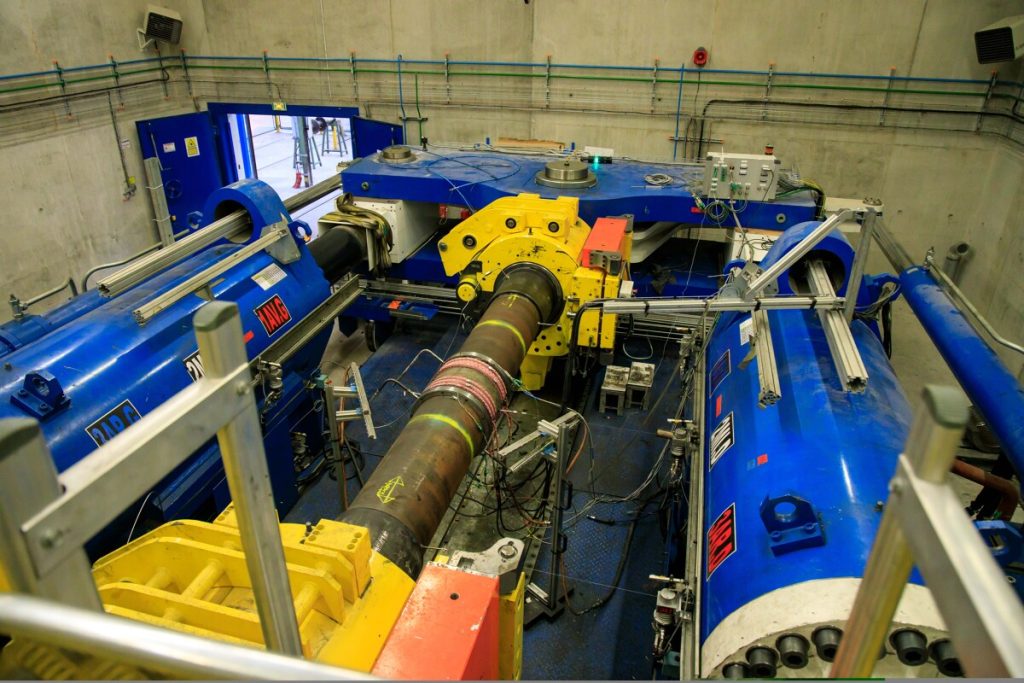
Vallourec has reported conducting the industry’s first physical casing collapse tests at elevated temperatures. Fifteen joints of 13 3/8″ 72.00# casing in VM80HC steel grade were tested, including high static testing at 250 ºC. The results closely aligned with Vallourec’s theoretical models, providing operators with the first validated high-temperature collapse data ever generated. It also validated the significantly higher collapse resistance of VM80HC compared to L80 or K55, as indicated by the models.
Beyond validating a single steel grade, this unique test setup reinforces Vallourec’s broader high temperature solution offering. Alongside high collapse tubulars, VAM® 21 premium connections qualified to 350°C, and extensive material evaluations up to 500°C, the newly proven collapse at temperature performance provides operators with a coherent, end to end solution set. This integrated approach means that from well design to long term production, Vallourec can support geothermal projects with what the company describes as the most comprehensive and physically validated high temperature tubular offering on the market.
The value of high-temperature collapse testing
As geothermal drilling moves deeper and hotter, the industry is entering operating conditions where conventional oilfield casing design methodologies may no longer be sufficient. Many existing standards were developed for oil and gas wells operating below the thermal extremes now encountered in superhot geothermal projects.
Dedicated collapse testing under geothermal conditions can therefore provide several important benefits. It allows operators to set realistic safety margins for casing strings exposed to extreme temperatures, thus improving well design optimization and reliability. It can also pave the way for international well design standards formulated specifically for supercritical geothermal conditions.
The growing body of field experience suggests that future geothermal developments will increasingly depend on integrated approaches combining improved casing metallurgy, advanced cementing practices, annulus pressure management, and geothermal-specific collapse testing. Vallourec’s work represents an important step toward adapting OCTG technology to the realities of next-generation geothermal energy production.
References
- Garbino, A. 2023. Iceland Deep Drilling Project: a Review of the Main Challenges and Implications of Drilling the Well IDDP-1. GRC Transactions, Vol. 47, 2023
- Kruszewski, M. and Wittig, V. 2018. Review of failure modes in supercritical geothermal drilling projects. (https://doi.org/10.1186/s40517-018-0113-4)
- Penven et al., 2023. Collapse Challenges in High-Temperature Geothermal Wells. PROCEEDINGS, The 9th Indonesia International Geothermal Convention & Exhibition (IIGCE) 2023
- Vallourec, 2026. Improving Geothermal Well Integrity at High Temperatures through Collapse Solutions.
- Zaifullah, et al. 2025. Case Study – Failure Analysis of Collapsed Production Casing in anElevated Temperature Well. (DOI 10.2523/IPTC-24997-MS)