
Regulatory stability and financing structures for geothermal highlighted at Budapest summit

#image_title
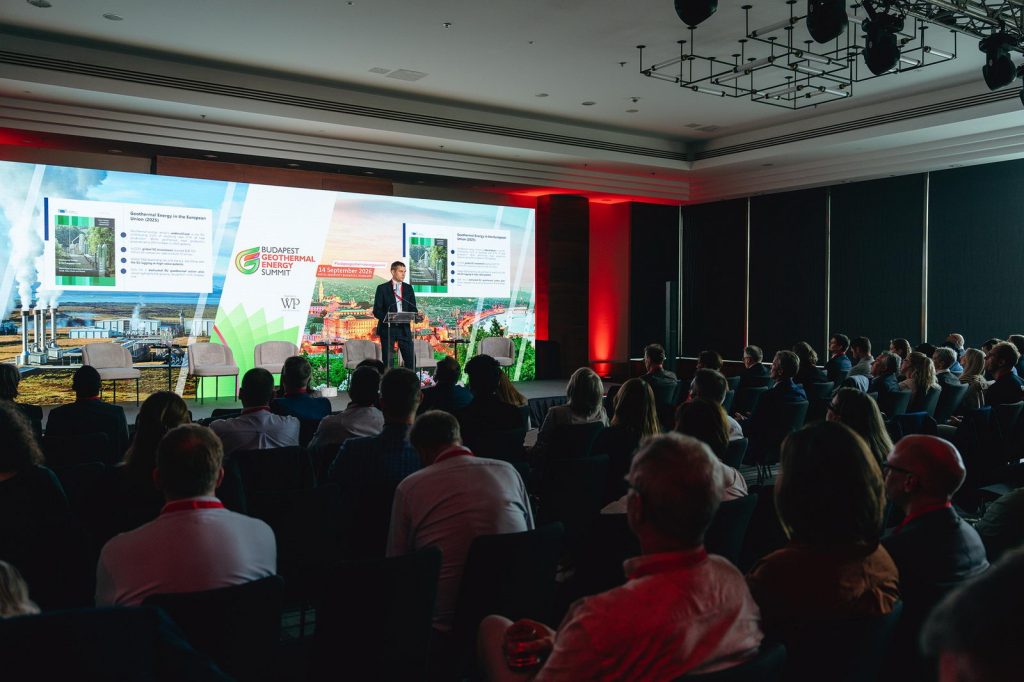
With more than 200 participants, the Budapest Geothermal Energy Summit proved to again be an important meeting point for geothermal in the CEE region.
For the fourth time, White Paper Consulting organised the Budapest Geothermal Energy Summit, the region’s leading geothermal energy conference, where Government and European Union officials, senior executives of market-leading companies, and representatives of professional organisations, representing more than 25 countries and 100 companies, discussed the role of geothermal energy in the transforming energy sector.
The conference was opened by István Bart, Hungary’s Deputy State Secretary for Electrification and Decarbonisation, who spoke publicly for the first time about the new Hungarian government’s energy strategy with regard to geothermal energy. “Hungary needs an energy and water revolution,” the Deputy State Secretary said, adding that the old dilemma of whether to be green or cheap is now a thing of the past. He stressed that capital seeks regulatory stability, while unpredictable policy shifts deter investors.

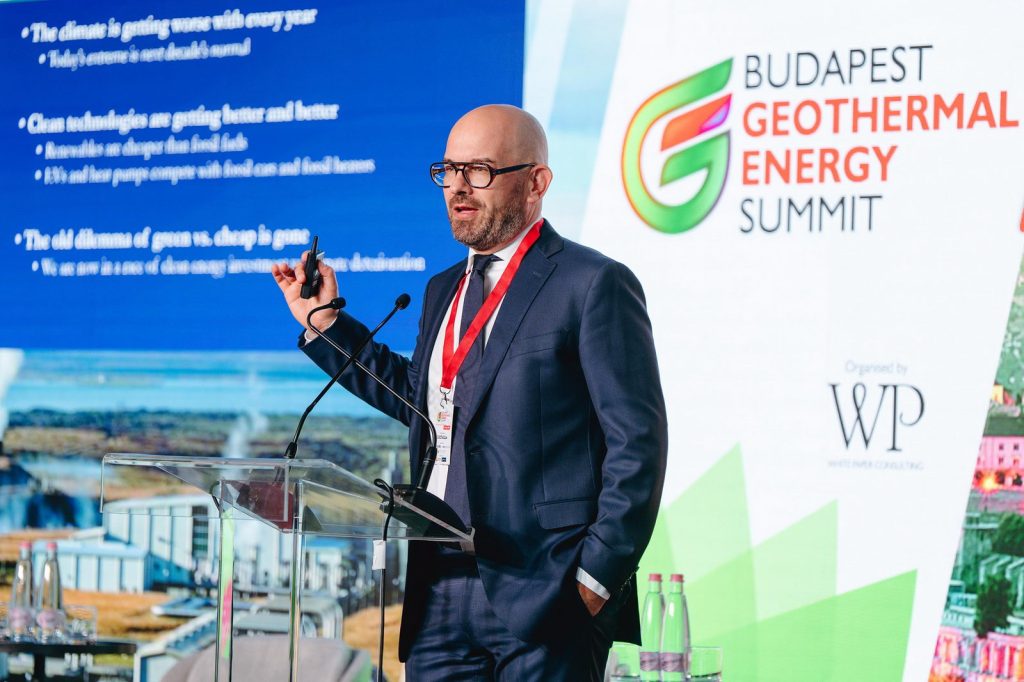
Marit Brommer, CEO of the International Geothermal Association (IGA), pointed out that geothermal energy should be viewed as a strategic infrastructure that is essential for achieving climate goals. “Phasing out fossil fuels means we’ll have to cover 80 per cent of our energy consumption from other sources. That’s a huge amount of energy, and solar panels with battery storage alone won’t be enough to provide it,” she said.
Miklós Antics, President of the European Geothermal Energy Council (EGEC), outlined the current state and prospects of geothermal development in Europe. “We have all the technologies we need, from depths of 5 metres all the way down to 5 kilometres,” he said, adding that geothermal energy offers enormous potential in most European countries for both district heating and electricity generation.
Marianna Jakab, a policy officer at the European Commission’s Directorate-General for Energy, stressed that Europe has significant geothermal potential, which could meet 30 per cent of the continent’s district heating needs by 2050, 10-25 per cent of total heating and cooling demand, and at least 10 per cent of electricity consumption. She emphasised that effective implementation of existing EU regulations is crucial to the sector’s development. Member States must also address several priorities, including data availability, project bankability and access to capital.
Regarding EU regulation, however, Tatiana Mindeková, a Policy Advisor at the international energy think tank Ember, called the continued lack of a common European geothermal strategy a missed opportunity.
Long-term government support and stage-specific financing mechanisms
The conference also addressed strategies for expanding access to financing. Participants highlighted Iceland as a good example of consistent government policy, appropriate regulation and risk sharing, and they pointed out that different types of financiers are needed at different stages of a project.
Árni Magnússon, CEO of Iceland GeoSurvey, recalled how Iceland responded to the oil crisis by shifting from fossil fuels to geothermal energy, which today provides heating for more than 90 per cent of Icelandic households. He stressed that European countries could replicate this success, among other things through innovative exploration methods targeting lower temperature resources.
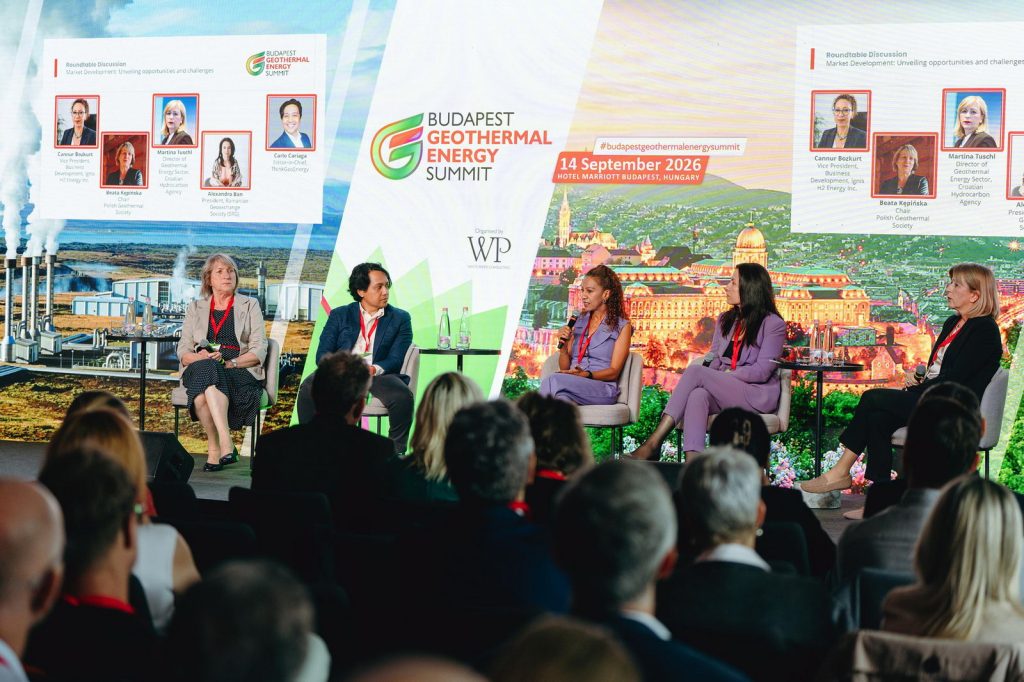
Central and Eastern Europe has significant geothermal potential, which can meet substantial energy demands in district heating, electricity generation and industrial applications. Beata Kepinska, President of the Polish Geothermal Society, Alexandra Ban, President of the Romanian Geoexchange Society (SRG) and Martina Tuschl, Head of Geothermal Energy at the Croatian Hydrocarbons Agency, shared their countries’ experiences in the field of geothermal energy. They emphasised the need for long-term government support, regulatory modernisation and making use of the EU emissions trading system. Geothermal energy is currently at roughly the same stage as solar and wind energy were 20 years ago: it needs initial support to reach a point where it can become competitive without subsidies.
Policy and project progress in Hungary
Despite the challenges facing the sector, the event also showcased a number of positive initiatives. Gábor Molnár, managing director of Arctic Green Engineering Services and Péter Gyöpös, Project Manager, shared their practical experiences from the geothermal system implemented in Csömör. Sándor Tiszavári, Technical Director at Rotaqua, and Gergely Domonkos Horváth, CEO of MVM Zöld Generáció, spoke about the deep-drilling project underway in the Kiskunhalas and Zsana area, where Hungary’s first hybrid geothermal system for electricity generation and heat utilisation is being developed.
The conference also addressed the broader application of geothermal energy in district heating and cooling systems. Krisztina Hegedüs, head of the District Heating Supervision and Price Regulation Department at the Hungarian Energy and Public Utility Regulatory Authority, emphasised that this is the first year Hungarian district heating providers are required to submit a ten-year development plan. This includes an assessment examining the potential for renewable energy, waste heat, and combined heat and power generation.
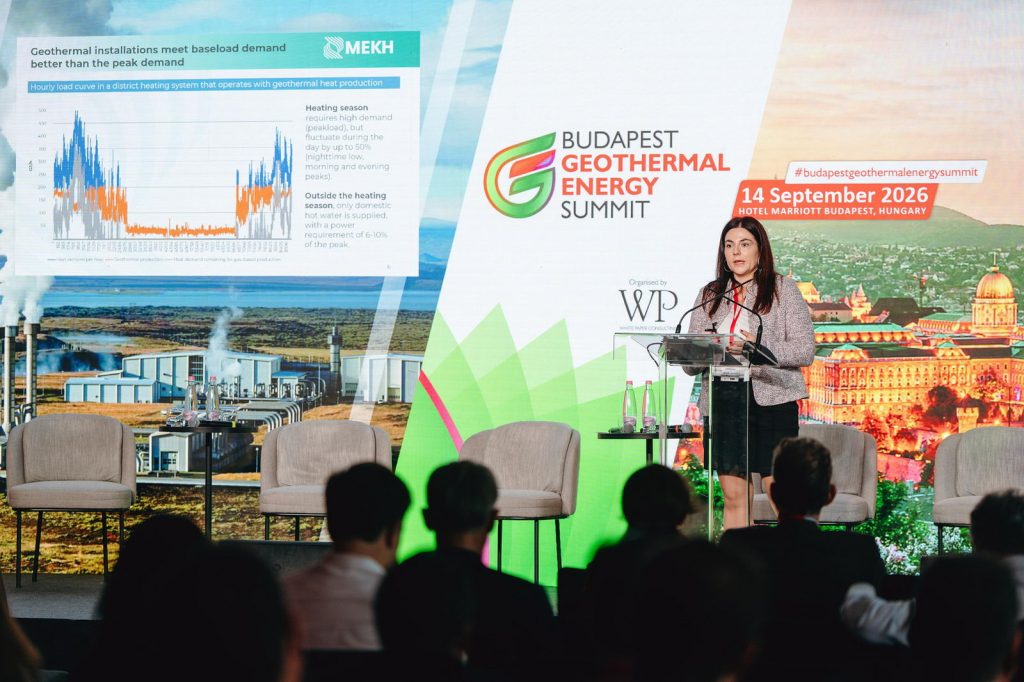
At the same time, Hungary faces the challenge that its district heating network, built in the 1950s, was designed for very high temperatures, so lower-temperature geothermal solutions cannot be easily integrated into the existing infrastructure. For development to succeed, the deployment of geothermal energy must become a clear priority. Since it takes longer for these investments to pay off, sustained effort and a predictable regulatory environment are necessary. When it comes to cooling, geothermal energy rarely comes to mind, even though it could be used in many areas, such as cooling food storage facilities. At the same time, geothermal energy is increasingly being considered as a solution for powering data centres as well.
Experts at the conference agreed that geothermal energy could be a defining element of the energy transition in the coming decades. Available natural resources, technological advancements and growing energy demand all contribute to the sector’s development. However, further growth requires predictable regulations, appropriate financing structures, accessible data and long-term policy support.