
Special exhibition on geothermal energy unveiled in Taichung, Taiwan

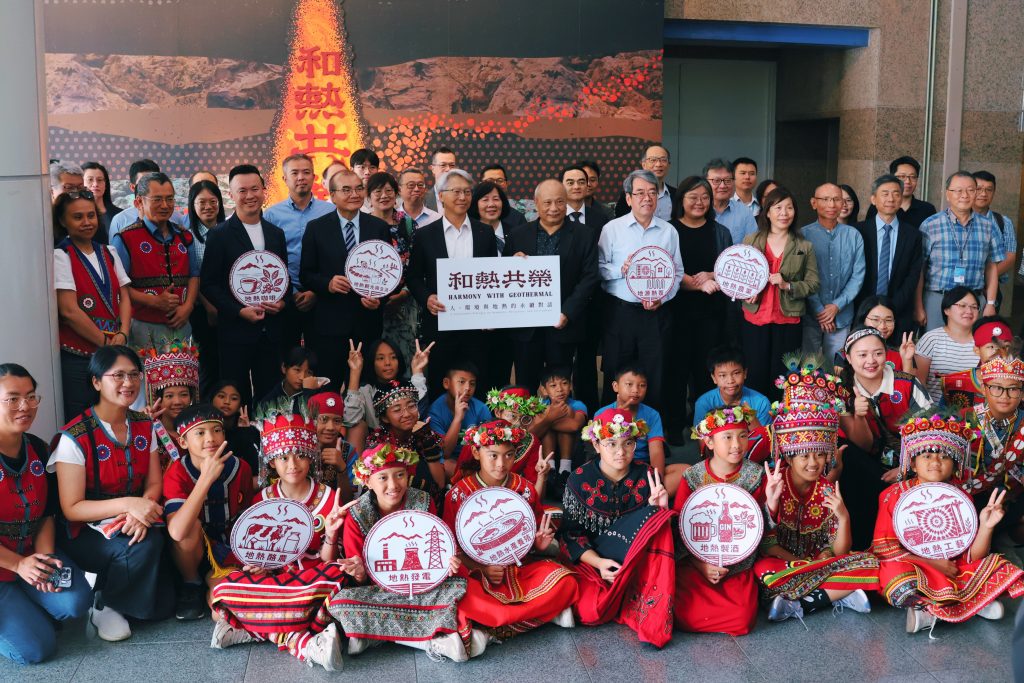
#image_title
A new exhibition at the National Museum of Natural Science in Taichung, Taiwan showcases diverse perspectives on geothermal energy.
Our special thanks to Dr. Ho Gong-Ruei of the National Museum of Natural Science for connecting with us and providing most of the material used in this article.
About a month ago, a special geothermal exhibition was opened at the National Museum of Natural Science (NMNS) in Taichung, Taiwan. The exhibition, titled “Harmony with Geothermal: A Sustainable Dialogue on Humanity, Resources, and Environment”, is open from 4 June 2026 to 6 April 2027.
The special exhibition is co-hosted by the NMNS and Academia Sinica, with the Geological Survey and Mining Management Center of the Ministry of Economic Affairs serving as a co-organizer. Through immersive display and interactive installations, the exhibit showcases the multifaceted nature of geothermal energy, covering scientific research, energy development, and its applications in daily life and industry.

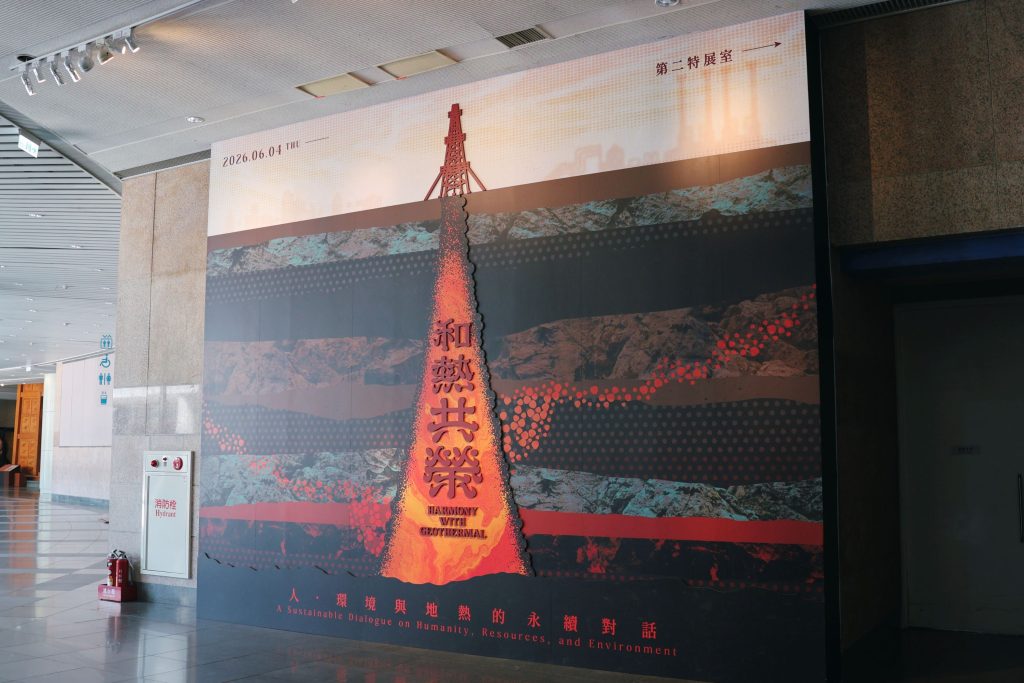
Academia Sinica President James C. Liao stated that geothermal energy is a key element in Taiwan’s push for a net-zero transition. Through this collaboration with the National Museum of Natural Science (NMNS), the institution hopes to bring cutting-edge geothermal research into the public eye and foster societal awareness and discussion regarding geothermal energy. Academia Sinica has actively engaged in the geothermal sector in recent years and aims to complete the nation’s first deep-well drilling and research project by 2025.
Hsu Ming-hung, Director of the Geological Survey and Mining Management Center (GSMMC) under the Ministry of Economic Affairs, noted that the center has already been developing a geothermal exploration information platform and made nationwide subsurface exploration results publicly available. By enhancing the transparency of geothermal data for use by industry, government, academia, and research sectors, and by showcasing research findings to the public, the center aims to broaden public understanding of geothermal energy.
The exhibition team shared that while geothermal energy has attracted significant attention in recent discussions on energy transition, the conversation often focuses narrowly on power generation capacity and development benefits. This exhibition seeks to guide visitors toward a broader perspective, revealing the interplay between geothermal energy and the land, communities, and daily life. The goal is to move the conversationbeyond the simplistic notion that “geothermal energy equals electricity generation.” Future activities, timed to coincide with the summer season and the Science Festival, will include hands-on workshops, lectures, film screenings, and post-screening discussions.
A walkthrough of the geothermal exhibition
The special exhibition comprises five sections, with each section designed to represent a unique facet of the science of geothermal energy, the development process, and its benefits to society.
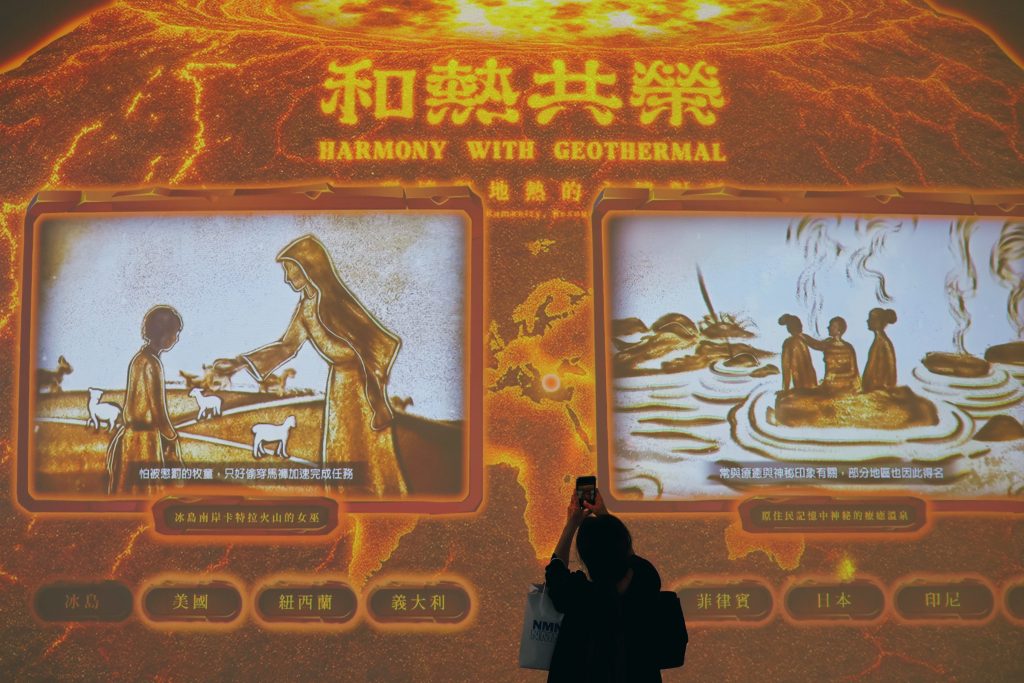
The introductory section, “Memories of Warmth,” uses interactive projections to recount geothermal myths and legends from around the world. The exhibition introduces geothermal narratives from New Zealand, Iceland, Italy, the United States, Indonesia, the Philippines, Japan, South Korea, and Taiwan. Although these stories emerged from distinct historical and cultural contexts, many engage with themes such as creation, destruction, healing, fertility, and renewal. Together, these stories illustrate how geothermal landscapes have informed collective memory and shape relationships between human and the Earth.
Through storytelling, visitors are transported across time to witness how—before the advent of modern science—humans transformed their fear, awe, and gratitude regarding natural phenomena like volcanoes and geothermal activity into the wisdom of living in harmony with nature.
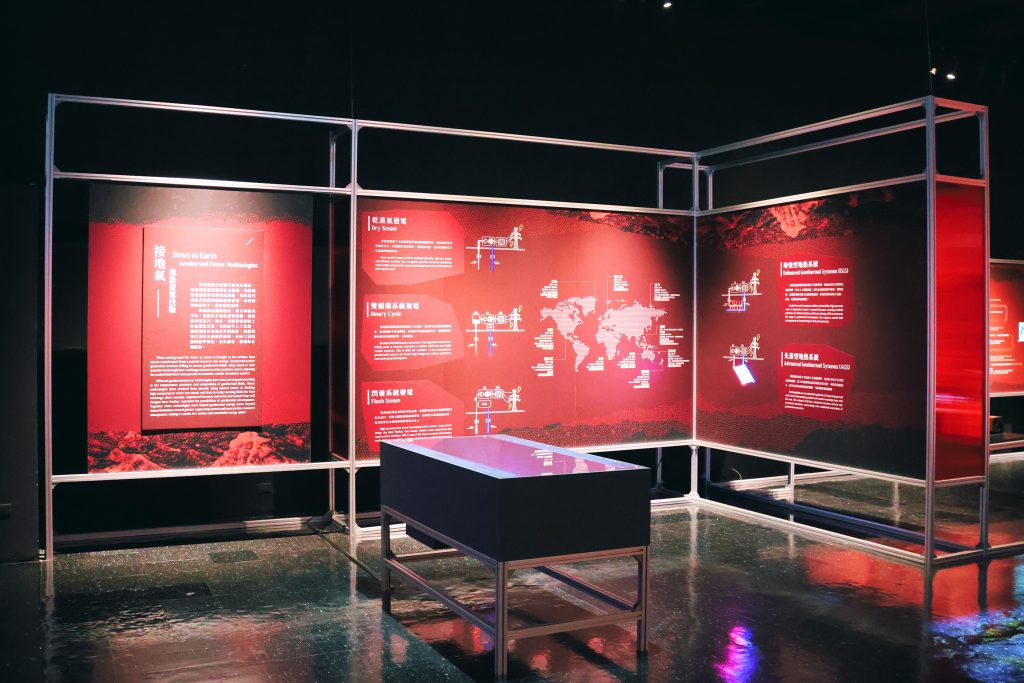
Upon entering the “Exploring the Hidden Heat” section, visitors are greeted by a spectacular geothermal landscape, with volcanic magma projections creating a stunning visual impact. This section explains the generation, storage, and circulation of subsurface heat, as well as the processes by which humans harness exploration, drilling, and engineering technologies to convert geothermal energy into usable power.
To illustrate the diversity of geothermal environments, the exhibition introduces four tectonic settings that commonly host geothermal resources: magmatic-volcanic fields, extensional domains, orogenic belts, and geopressured sedimentary basins. Each setting represents a distinct geological pathway for concentrating subsurface heat and facilitating fluid circulation.
The exhibition further explores how geothermal resources are converted into usable energy through a range of power-generation technologies. Rather than presenting geothermal development as a single technological approach, it emphasizes that engineering choices depend on geological and resource conditions.
The exhibition highlights several representative geothermal projects that illustrate the progression from resource assessment and scientific exploration to drilling and power generation. These include the historical development of the Qingshui geothermal field, recent exploration in the Tatun volcanic area, and deep geothermal investigations in Yilan. These examples show how advances in geological mapping, geophysical imaging, geochemical analysis, and drilling technology continue to improve our understanding of subsurface resources in Taiwan and support future geothermal development.
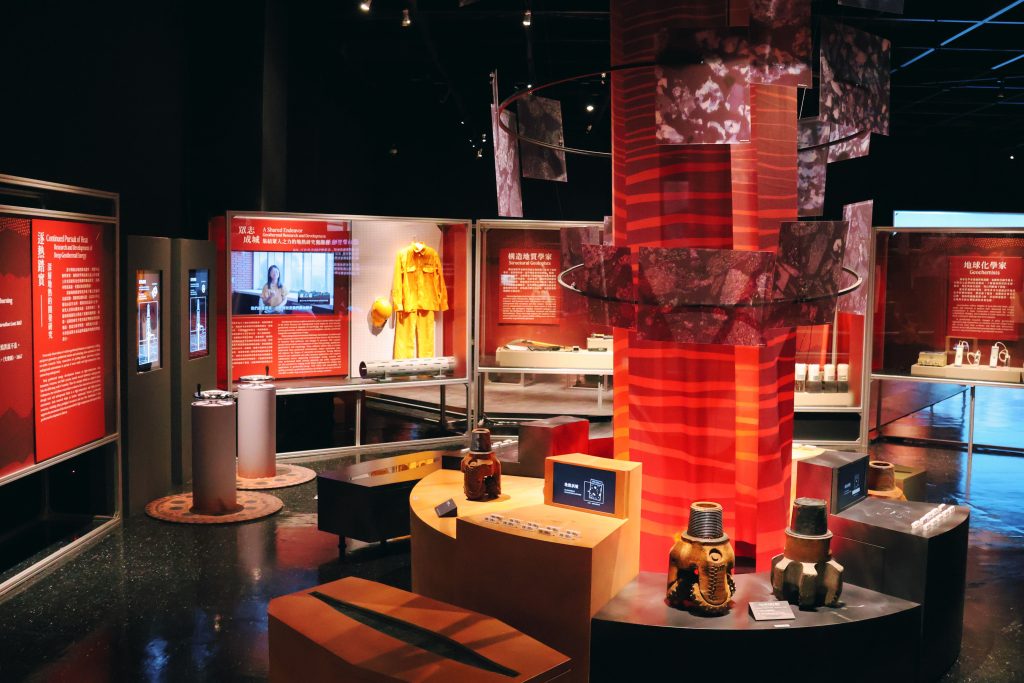
The “Hidden Heat Beneath the Island” section focuses on Taiwan’s potential and efforts regarding geothermal energy development, tracing the journey from a solid foundation built on past surveys to current research into deep geothermal exploration. An installation in the center of the exhibition – featuring a geothermal well and geological strata imagery, alongside actual drill bits and microscopic photos of underground rock layers – offers an intuitive glimpse into the subterranean world usually hidden from view, highlighting the crucial role of science in geothermal development.
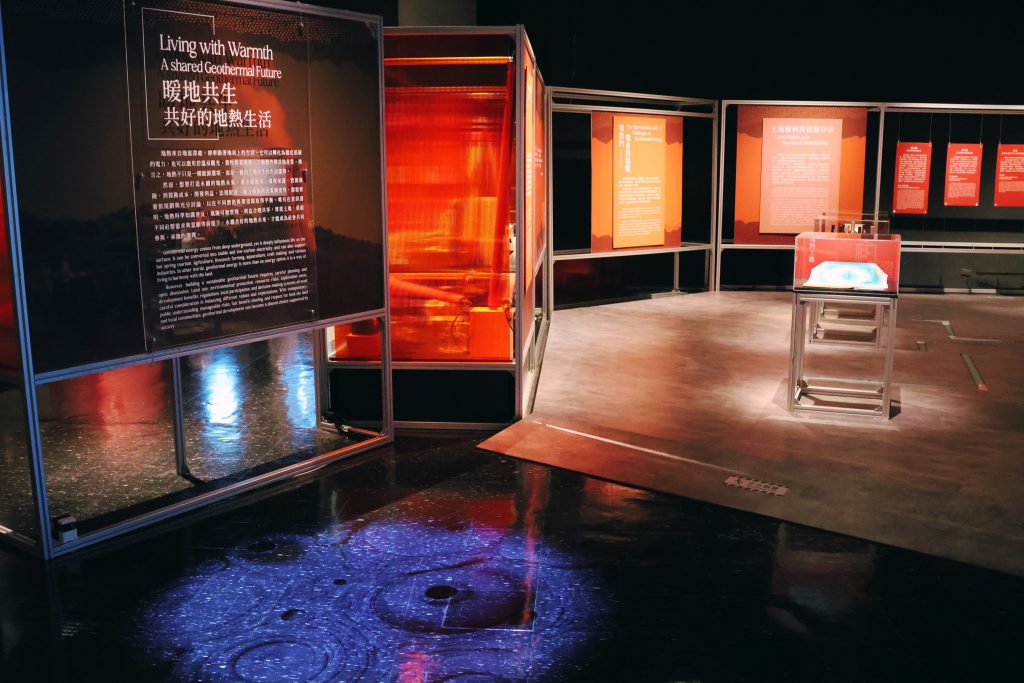
“Living with Warmth: A Shared Geothermal Future” brings the focus back to everyday life, showcasing the diverse applications of geothermal energy through domestic and international examples. Beyond electricity generation, these applications span greenhouse agriculture, livestock and dairy processing, coffee and liquor production, and hot spring tourism. The section also addresses multifaceted issues, such as land rights, legal and economic factors, environmental impacts, and risk management, prompting reflection on how to balance energy development, environmental protection, and local culture while striving for a lifestyle powered by geothermal energy.
Like other large-scale energy projects, geothermal development takes place within complex environmental and social contexts, where technical feasibility alone does not ensure successful implementation. Responsible development therefore requires coordination among scientific, legal, environmental, governmental, industry, and community interests, as well as meaningful engagement with local communities, Indigenous peoples, government agencies, industry partners, and other stakeholders.
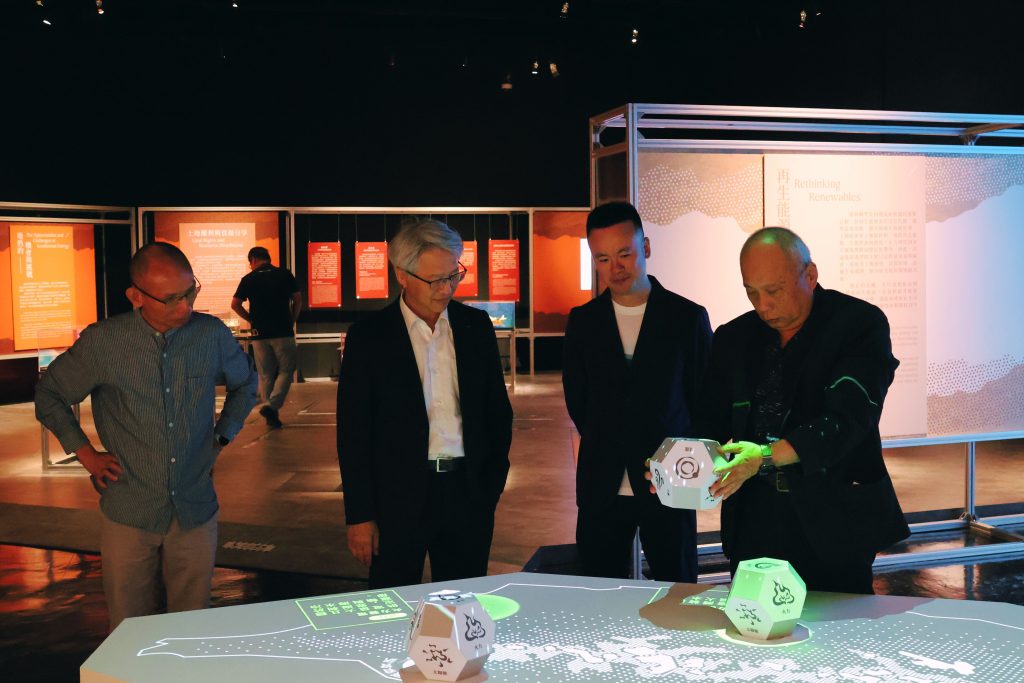
Finally, “Journeying Toward Sustainability” uses interactive displays to encourage the public to consider how different energy sources can complement one another based on local conditions, seeking resilient energy solutions for Taiwan.
To encourage critical reflection on these issues, the exhibition includes a sensor-activated tabletop installation featuring six representative regions in northern, western, eastern, and offshore Taiwan. By selecting and comparing eight different energy options—including thermal power, solar energy, wind energy, hydropower, geothermal energy, bioenergy, hydrogen energy, and marine energy—participants can examine how geography, geology, resources available, infrastructure and environmental conditions influence regional energy choices.
Source: Email correspondence