
Utilising geothermal microorganisms in promising medical research

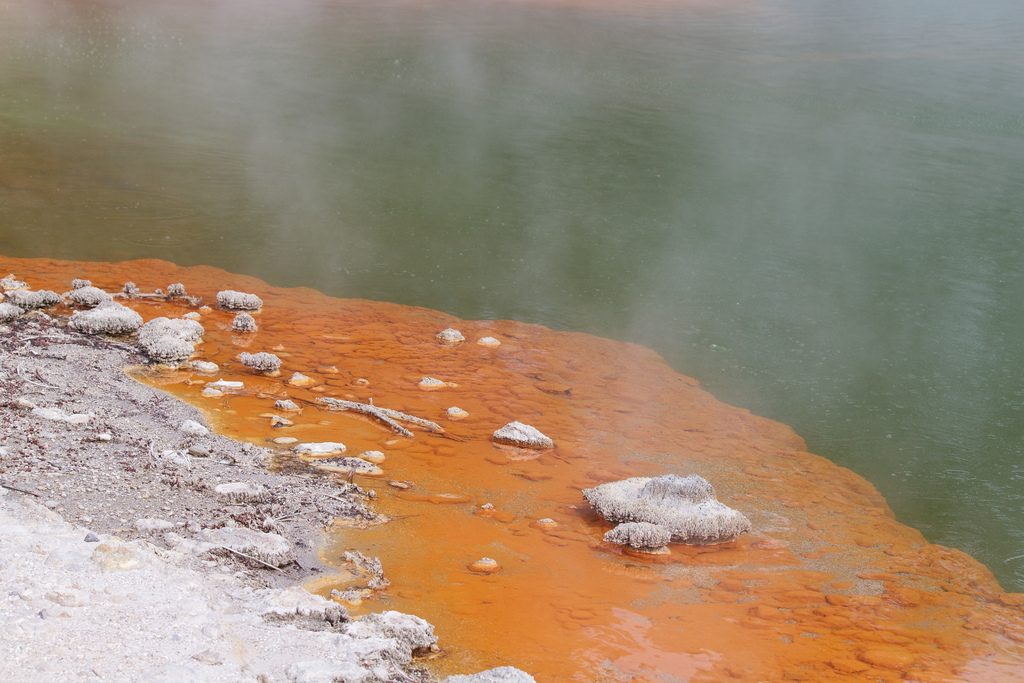
At the geothermal wonderland Wai-O-Tapu you can experience geology live. From the brochure: "It has the largest area of surface thermal activity of any hydrothermal system in the Taupo Volcanic Zone. The area is associated with volcanic activity dating back about 160,000 years and is located right on the edge of the largest volcanic caldera (depression) within the active Taupo Volcanic Zone."
Researchers from New Zealand have discovered a new protein with potential antibiotic properties created from geothermal microorganisms from the Taupo geothermal zone in New Zealand.
A recent article shared by the Royal Society of Chemistry, describes how scientists in New Zealand have discovered a new protein derived from geothermal microorganisms that could have antimicrobial properties.
As the article describes, antimicrobial resistance is one of the biggest threats to global health and the race is on to find new molecules with antibiotic properties. Scientists have therefore approached different ways to find these molecules and one has been to actual study proteins produced by microorganisms themselves.
As part of genome mining, the scientists in New Zealand worked with a type of bacteria that lives in extreme conditions in the heated soil of New Zealand’s Taupo geothermal zone. With that they discovered a new type of lanthipeptide, called tikitericin, which they believe is part of the microorganism’s host defence system.
The actual article can be accessed here.
Source: Royal Society of Chemistry