
Vulcan Energy starts commercial production of adsorbent for lithium extraction from geothermal brine

#image_title
Vulcan Energy has started commercial production of VULSORB, its proprietary adsorbent for the planned geothermal lithium extraction operations in Germany.
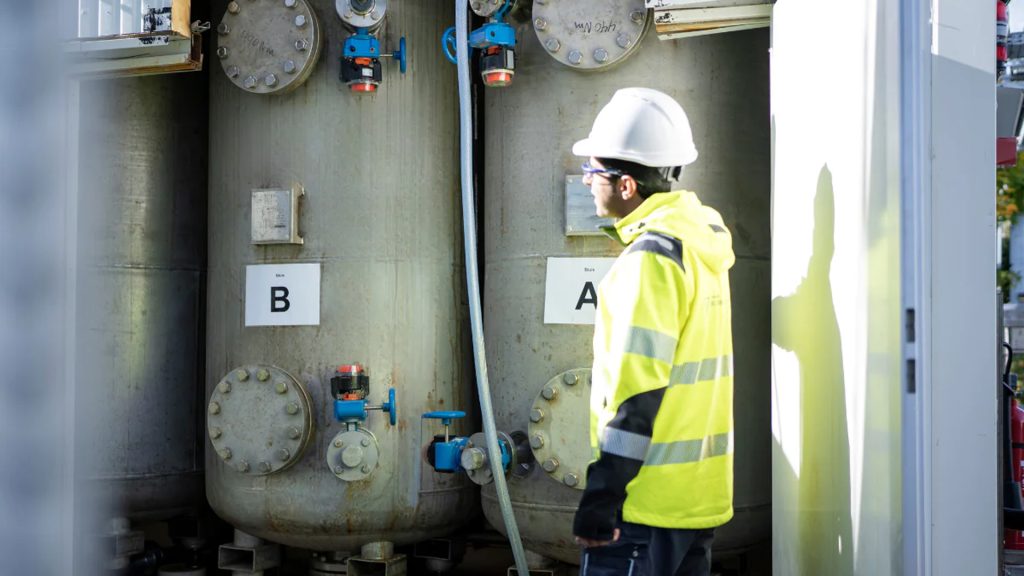
Vulcan Energy has announced the start of commercial production in Germany of VULSORB, its proprietary adsorbent that selectively extracts lithium from geothermal brine. The first batches of adsorbent for the extraction columns of the Lionheart project are now being produced, where lithium extraction will take place on an industrial scale.
The announcement follows years of testing and validation of the performance of the adsorbent at Vulcan’s pilot plants in Insheim and its optimization facility in Landau. First announced in late 2022, VULSORB encompasses both the aluminum-based adsorbent and all other association production processes.
Vulcan has already successfully tested the production of VULSORB with selected European manufacturing partners at several locations. During product trials over the past three years, Vulcan has been able to produce high-purity lithium chloride and battery-ready lithium hydroxide monohydrate at its optimization plants in Landau and Frankfurt-Höchst. Under real operating conditions, lithium extraction rates of up to 95% were achieved.
These results form the basis for the transition to commercial production of VULSORB with the preferred local manufacturing partner. VULSORB is intended for use in all of Vulcan’s projects in the Upper Rhine Graben, including the Lionheart and Ludwig projects, as well as other planned development phases. Furthermore, Vulcan intends to make the technology available to third parties through selected licensing partnerships.
As a next step, Vulcan, together with its manufacturing partner, will produce VULSORB over the next 18 to 24 months to prepare for the commissioning of the Lionheart project in the second half of 2028. Civil construction work for the Lionheart facility had already started a few months ago. The facility is targeting a production of 24,000 tonnes of lithium hydroxide monohydrate (LHM) while co-producing 275 GWh of renewable power and 560 GWh of renewable heat per annum for local consumers.
This development gives Vulcan the advantage of having one of the few commercially proven adsorption-based direct lithium extraction (A-DLE) technologies with a supply chain completely independent of China.
“At a time when access to critical raw material technologies is becoming increasingly strategic, this provides Vulcan with greater security of supply and more planning certainty for project implementation,” said Cris Moreno, Managing Director and CEO of Vulcan Energy.
“The commercial production of VULSORB creates an important foundation not only for Lionheart but also for Vulcan’s further growth in the Upper Rhine Graben, following the approach: develop once, implement many times.”
While commercial-scale production of lithium from geothermal brine had not yet been proven at scale, several companies have been making good progress. Geothermal Engineering Ltd, based in Cornwall in the UK, had just recently announced that it will be building a commercial-scale lithium extraction facility capable of producing around 1500 tonnes of lithium carbonate per year. Over in Alsace in France, Lithium de France had just recently commissioned an independent assessment of the lithium production potential of its license areas.
Lithium extraction from geothermal brine, as well as co-production of other critical minerals, has the potential of pairing geothermal energy production with a high-value market. This can help the commercial feasibility of geothermal projects while even further incentivizing geothermal development, particularly for regions needing to secure a local supply chain for batteries.
Source: Vulcan Energy