
Our Hidden Powers: The Big Switch – Using storytelling to start the geothermal conversation

#image_title
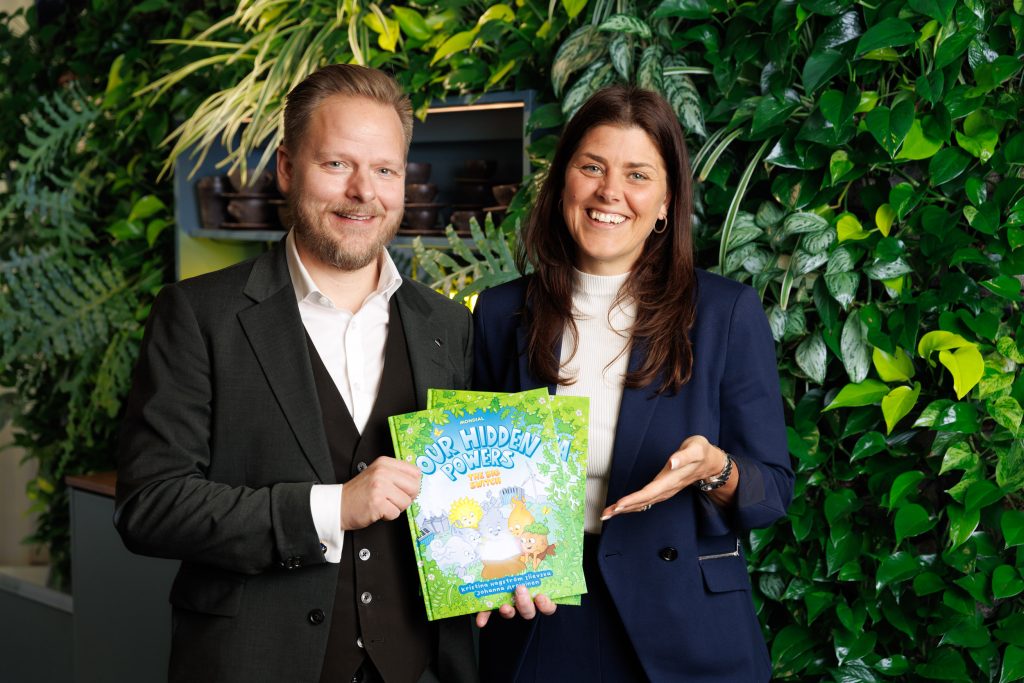
Through art and storytelling, the message of the geothermal industry is reaching a wider audience with the new Our Hidden Powers: The Big Switch book.
Even as the geothermal industry slowly gains momentum globally, the challenge of explaining what geothermal is to people outside the sector remains. Developers, policymakers, and investors may now be starting to recognize the value of geothermal as a reliable and low-carbon energy source. However, public awareness still lags behind in many parts of the world.
Baseload Capital has sought to address this challenge through an unconventional medium: children’s literature. The company recently launched Our Hidden Powers: The Big Switch, the second installment in its educational book series that introduces young readers to energy systems, climate change, and the role of renewable energy. Building on the success of the first book, the new release expands the conversation by introducing a character representing fossil fuels and exploring the complexities of the global energy transition.
Recognizing the undeniable value of fossil fuels
One of the notable aspects of Our Hidden Powers: The Big Switch is its decision to avoid portraying the energy transition as a simplistic battle between good and bad. According to Kristina Hagström-Ilievska, Chief Marketing and Communications Officer at Baseload Capital, the book acknowledges the important role fossil fuels have played in powering modern society.
“Our approach was to avoid turning this into a simple ‘good versus bad’ story,” Hagström-Ilievska explained. “The energy system we live in today was built over many generations, and fossil fuels have played a major role in powering societies, industries, and everyday life. That is important to acknowledge, especially when explaining energy to children.”
At the same time, the book clearly communicates that climate change is real, human-induced, and requires urgent action through cleaner and more sustainable energy solutions. Rather than presenting renewables as an overnight replacement, the story frames the energy transition as a gradual but necessary shift toward a more sustainable future. This perspective reflects the reality faced by many countries today, where the transition toward renewable energy is not just an environmental conversation, but also involves complex economical and social issues.
It also introduces an important message that extends beyond energy technology: meaningful progress requires understanding, cooperation, responsibility, and open dialogue.
“We wanted to show that the energy transition is not only about technology,” Hagström-Ilievska said. “It is also about understanding, cooperation, responsibility, and the courage to talk about difficult things in a way that people can relate to.”
How gaps in public awareness stifle geothermal growth
For geothermal energy specifically, communication challenges often translate directly into project development challenges. Despite the many benefits touted by the industry, geothermal remains significantly less understood than wind and solar energy in many parts of the world. This lack of familiarity can create barriers to public acceptance, policy support, and investment decisions. As Hagström-Ilievska says, public awareness plays a much bigger role than many people realize.
Geothermal projects often require long-term commitments, substantial upfront investments, and strong relationships with local communities. When people do not understand what geothermal energy is, how it works, or how it benefits them, establishing trust becomes more difficult.
“The gap is not only about lack of information,” Hagström-Ilievska noted. “It is about lack of connection. People need to understand why geothermal matters for their communities, their energy security, and their future.”
The principle of prioritizing communications is reflected on the geothermal projects being developed by Baseload Capital. In Taiwan, the company’s local subsidiary recently secured an overwhelming approval from the local tribe for a geothermal project in Hualien County. This followed years of dedicated communications and social engagement work to win over the local’s long-term trust and support.
As geothermal continues to attract growing global attention, the industry faces increasing responsibility to communicate beyond technical audiences.
Incorporating storytelling in geothermal communications
Addressing these communication gaps will require approaches that are different from the technical perspectives that many in the industry are comfortable with. This means crafting the message to fit the audience. As Hagström-Ilievska points out, geothermal communication must become more relatable, accessible, and human-centered, focusing on stories that connect with everyday experiences and local priorities.
Educational materials, visual content, books, and videos can all play an important role in helping audiences understand geothermal energy. Equally important is highlighting real-world examples from communities where geothermal development has already delivered benefits such as reliable electricity, district heating, local employment, and greater energy independence.
Communication should also begin much earlier in the project lifecycle. “Communication should not only start when a project is already finished,” Hagström-Ilievska emphasized. “It should be part of the full journey, from early understanding to long-term local acceptance.”
The geothermal sector can also benefit from a more collaborative approach to public engagement. Rather than relying solely on individual companies, associations and companies should work together to strengthen the geothermal messaging. The industry can also work alongside educators, associations, policymakers, media organizations, and local stakeholders to create broader awareness.
A children’s book that is also adult-friendly
Although Our Hidden Powers: The Big Switch is written for children, its audience extends well beyond younger readers. Hagström-Ilievska argues that educational storytelling can be equally valuable for adults, many of whom also struggle to understand the complexities of modern energy systems.
“Children’s education is very important because children are often open to learning about complex topics in a curious and honest way,” she said. “But the value is not only for children. A good children’s book can also help adults.”
The objective of the book is not to provide comprehensive technical explanations. Instead, it seeks to spark curiosity and encourage conversations about energy, climate change, and the future. For the geothermal industry, that may be the most important lesson of all. As developers continue to advance geothermal technologies and expand deployment worldwide, success will depend not only on engineering and finance but also on society’s understanding of the resource itself.
“With Our Hidden Powers: The Big Switch, the goal is not to give children all the technical answers,” Hagström-Ilievska said. “The goal is to spark curiosity, questions, and conversations. That is where real understanding begins.”
“The geothermal industry has a powerful story to tell,” Hagström-Ilievska further added.. “It’s about energy that lies beneath our feet, local resources, long-term reliability, and a more balanced energy future. If we want society to support geothermal, we need to make that story visible, understandable, and human.”
With the launch of Our Hidden Powers: The Big Switch, Baseload Capital is demonstrating that starting the geothermal conversation does not have to start with technical diagrams or data. Through characters, curiosity, and the power of storytelling, the geothermal message can be conveyed to a much wider audience.