As geothermal developers pursue deeper reservoirs and higher temperatures, the industry is increasingly confronting a challenge that receives far less attention than drilling technologies or resource potential: materials performance.
Whether in conventional geothermal systems, enhanced geothermal systems (EGS), or emerging superhot geothermal projects, the ability of materials to withstand extreme temperatures, pressures, and corrosive fluids may ultimately determine the long-term success and economics of future developments.
Few researchers have been more closely involved in studying these challenges than Professor Sigrún Nanna Karlsdóttir of the University of Iceland. Her research focuses on corrosion, materials characterization, and testing of materials in demanding environments, with a particular emphasis on geothermal applications.
Ahead of the World Geothermal Congress 2026 in Calgary, where more than 100 Icelandic geothermal experts are expected to participate, ThinkGeoEnergy spoke with Karlsdóttir about the growing importance of corrosion research, Iceland’s role as a global testing ground for geothermal technologies, and the materials challenges emerging as the industry moves toward superhot resources.
Why corrosion matters
While corrosion may not attract the same attention as drilling rigs or power plants, it plays a central role in the operation and maintenance of geothermal facilities.
According to Karlsdóttir, understanding how materials behave in geothermal environments is essential for reducing operational costs, improving reliability, and extending the lifetime of geothermal infrastructure.
“This is an important topic because it plays a role in the operation and maintenance and associated costs in geothermal energy production,” Karlsdóttir explained.
Selecting the right materials for specific geothermal environments can significantly reduce maintenance requirements, avoid operational delays, and improve the overall economics of a project.
The issue is becoming increasingly important as geothermal facilities around the world age and operators seek to maximize plant lifetimes. At the same time, developers are expanding into new geological settings and pursuing higher-temperature resources that place greater demands on wells, pipelines, turbines, and surface facilities.
Understanding the limits of material performance is therefore becoming a key part of geothermal engineering and project design.
Iceland’s unique role as a geothermal laboratory
Iceland has provided a unique environment for advancing geothermal materials research.
Through her work at the University of Iceland and the research company Gerosion, Karlsdóttir and her team have been able to test materials directly in operating geothermal fields while working closely with Icelandic energy companies.
This combination of academic expertise, industrial collaboration, and access to active geothermal operations has enabled the development of specialised testing capabilities that are difficult to replicate elsewhere.
Over the years, these efforts have been supported by several national and international research initiatives, including the Horizon Europe projects GeoCoat, GeoDrill, GeoHex, and GeoSmart, as well as the Eurostars project ProCase and the CETPartnership-funded OrkaShield project.
The result has been the creation of advanced research infrastructure designed specifically for geothermal applications.
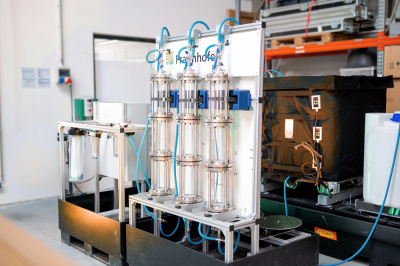
Among these facilities is a High-Temperature High-Pressure (HTHP) autoclave laboratory at the University of Iceland. The laboratory allows researchers to expose materials to controlled environments that simulate the temperatures, pressures, and chemical conditions expected in deep geothermal wells.
In parallel, a new Flow Through Testing Facility is being established together with ON Power at Glóð, the centre for innovation and collaboration located within the Hellisheiði geothermal field.
Unlike laboratory testing alone, the facility will enable researchers to evaluate material performance under real operating conditions using geothermal fluids directly from the field.
Together, these facilities provide researchers with opportunities to investigate how different materials behave in a range of geothermal environments and to identify optimal material solutions for specific applications.
Pushing beyond conventional limits
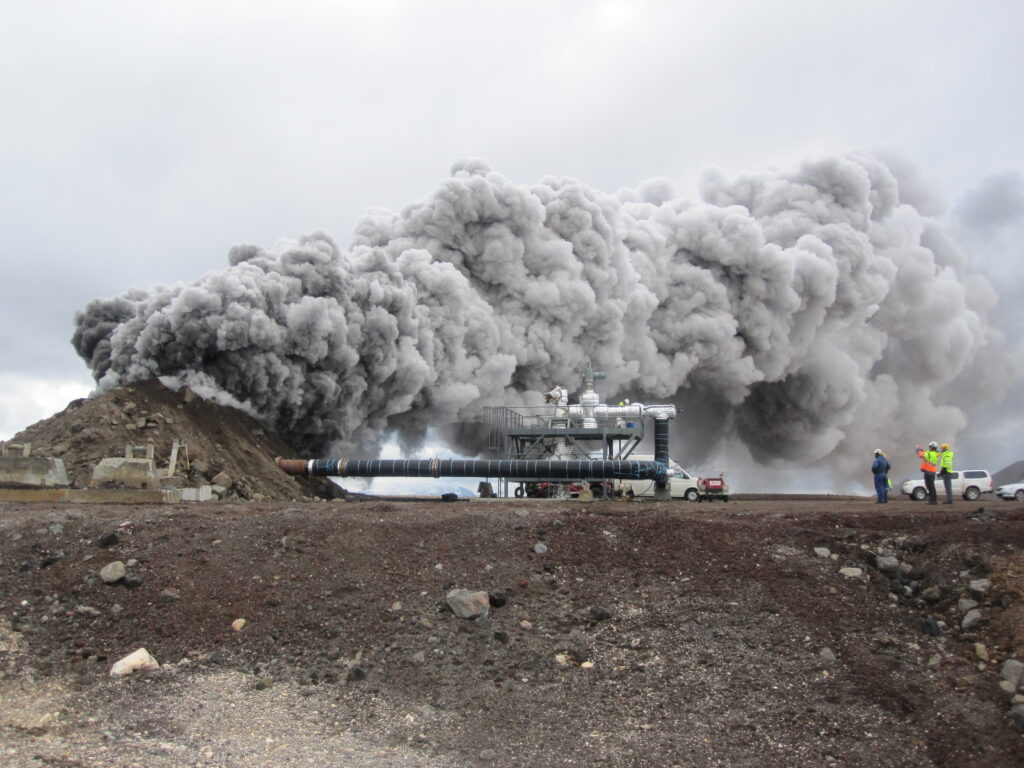
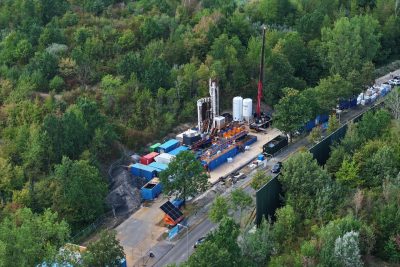
The importance of this work becomes particularly apparent in projects such as the Iceland Deep Drilling Project (IDDP) and the Krafla Magma Testbed (KMT).
Both initiatives seek to explore geothermal resources under conditions that go well beyond those encountered in conventional geothermal developments.
Temperatures in these environments will exceed 350°C and approach 500 °C. Pressures will surpass 100 bar, while fluids may contain significant concentrations of corrosive gases such as hydrogen sulphide (H2S), carbon dioxide (CO2), and hydrogen chloride (HCl).
“The challenges for IDDP and KMT are that we are going beyond the limits of conventional materials,” Karlsdóttir said.
At these temperatures and pressures, the behaviour of materials changes significantly.
Well casings, for example, are subjected to substantial thermal and pressure gradients. Because steel casings are constrained by surrounding cement, thermal expansion can generate large mechanical stresses and strains.
During repeated heating and cooling cycles, these stresses can result in permanent plastic deformation of the casing. In extreme cases, this may lead to rupture and failure of the well structure.
At the same time, elevated temperatures reduce the mechanical strength of conventional API-grade carbon steel casing materials, limiting their safe operating range.
The challenge is not only mechanical.
Deep geothermal fluids can be highly corrosive due to their chemical composition. Under superhot conditions, corrosion and erosion-corrosion processes can accelerate, threatening both casing integrity and long-term well performance.
Field experience has already demonstrated the severity of these challenges.
Observations from geothermal operations in Larderello, Italy, and from the Krafla geothermal field in Iceland have shown severe corrosion when superheated steam condenses on well materials.
Such findings highlight the need to evaluate both conventional materials and advanced corrosion-resistant alloys before they are deployed in future superhot geothermal projects.
What industry wants to know
These challenges have created growing interest from industrial partners seeking to develop materials capable of operating in increasingly demanding geothermal environments.
Karlsdóttir’s research group has collaborated with a range of materials manufacturers and suppliers to evaluate the corrosion behaviour and suitability of new alloys for geothermal applications.
Previous collaborations have included work with companies such as Nippon Steel and Timet (PCC Metals), while discussions with Vallourec have been linked to the requirements of future superhot geothermal developments.
The focus is often on testing new alloys and corrosion-resistant materials that could potentially be used in deep geothermal wells.
Using both laboratory and field-based testing, researchers evaluate corrosion rates, degradation mechanisms, and overall material performance under conditions designed to replicate those expected in future geothermal projects.
Particularly valuable is the HTHP autoclave facility, which allows researchers to simulate deep superhot geothermal environments under carefully controlled conditions.
Closing critical knowledge gaps
Despite recent advances, Karlsdóttir believes that substantial knowledge gaps remain.
One of the industry’s most pressing needs is a better understanding of material performance at temperatures above 300°C.
Existing data remain limited regarding corrosion rates under these conditions, especially for long-term exposure.
Researchers also need more information about localized corrosion mechanisms such as pitting corrosion and crevice corrosion, which can lead to rapid degradation even when overall corrosion rates appear manageable.
Another area of concern involves cracking mechanisms associated with hydrogen.
This includes susceptibility to hydrogen-related degradation processes and high-temperature hydrogen attack, both of which can significantly affect material integrity.
Mechanical performance also remains an important research priority.
Additional data are needed on the effect of prolonged exposure to superhot geothermal conditions on material properties, including creep behaviour in both carbon steel casing materials and corrosion-resistant alloys.
Obtaining such information is not straightforward.
Long-term testing opportunities remain limited because very few operating wells currently exist under the conditions that researchers ultimately want to study.
For that reason, future projects such as a potential IDDP-3 well could play an important role in advancing the industry’s understanding of material performance under genuine superhot geothermal conditions.
Bringing new results to WGC 2026
At the World Geothermal Congress 2026 in Calgary, Karlsdóttir will present a paper titled “High-Temperature and High-Pressure Testing of Well Casing Materials in Superhot Geothermal Well Conditions.” (Monday, June 8, 2026 – 14:00 to 15:45 in the Session of Advances and Remaining Gaps in Superhot Rock Geothermal Deployment Part 1)
The paper was prepared together with co-authors Gifty Oppong Boakye, Daniel Agbonluai Ijegbai, Maria Y. Thrainsdottir, and Erlend O. Straume.
The research investigates the corrosion behaviour of both conventional and advanced casing materials under simulated superhot geothermal conditions.
Testing was conducted in a specially designed high-temperature, high-pressure autoclave system intended to replicate deep geothermal environments.
Materials were exposed to temperatures of 350°C, 400°C, and 450°C at pressures between 165 and 168 bar in water-based environments containing H?S and CO?.
The work aims to improve understanding of how commonly used and advanced casing materials perform under these extreme conditions and to support future material selection and engineering design decisions for next-generation geothermal wells.
Looking ahead
As geothermal development expands into deeper and hotter resources, materials science is likely to become increasingly important.
While advances in drilling technologies often receive the most attention, the industry’s ability to safely and reliably operate wells under extreme conditions will depend just as much on understanding how materials respond to those environments.
For Karlsdóttir, this makes corrosion research a critical component of geothermal innovation.
Looking ahead to the World Geothermal Congress, she expects strong interest in emerging technologies such as superhot geothermal systems and enhanced geothermal systems, as well as discussions on how geothermal development is advancing in new regions around the world.
“I think exciting topics like novel technologies and solutions for challenging and new areas such as superhot geothermal and EGS systems will be popular,” she said.
For Iceland, whose geothermal sector continues to push the boundaries of what is technically possible, those discussions are already taking place in laboratories, test facilities, and some of the world’s most ambitious geothermal projects.