In Europe, the majority of buildings are heated with fossil fuels. That single fact, unremarkable because it has been true for so long, sits at the centre of one of the continent’s most urgent decarbonisation challenges. Replacing gas boilers and coal-fired district heating networks requires not just new policy ambition but proven, scalable alternatives.
Low-temperature geothermal energy, long viewed as a complement to deeper, hotter systems, is increasingly demonstrating that it can be an alternative, at the right depth, in the right geology, with the right enabling conditions.
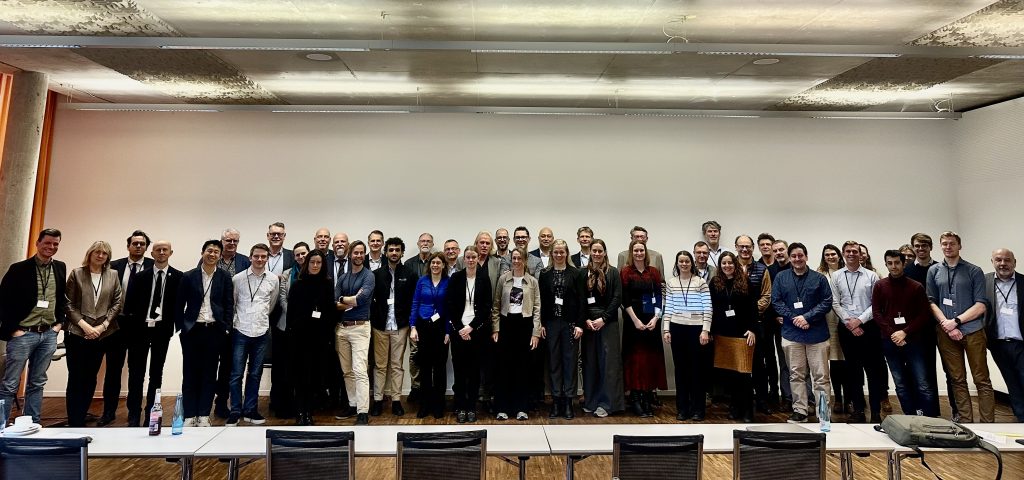
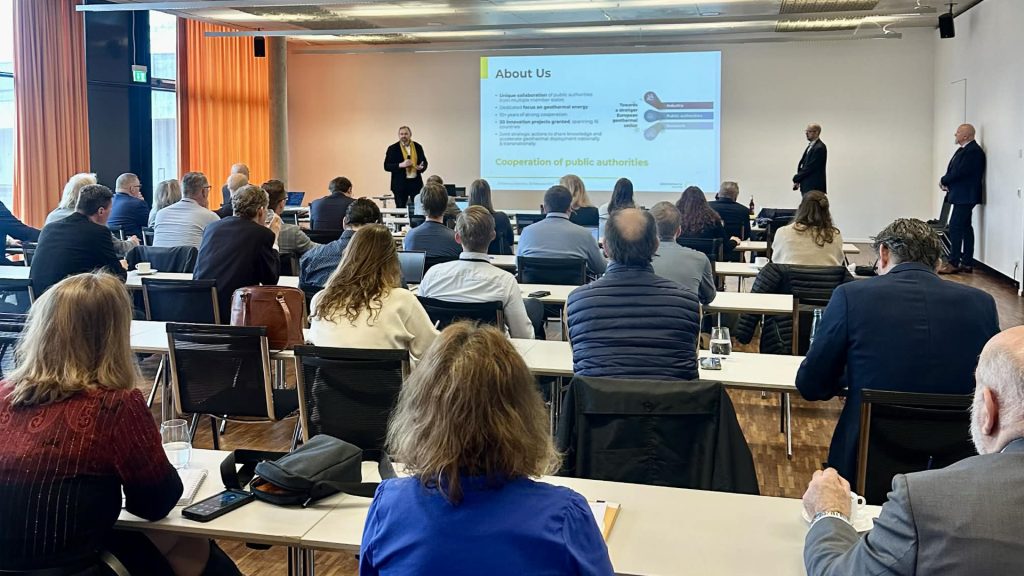
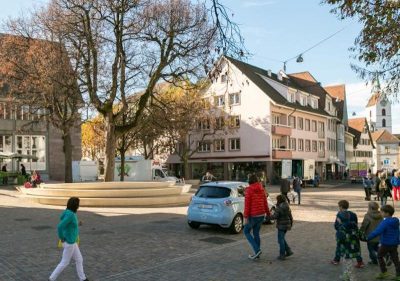
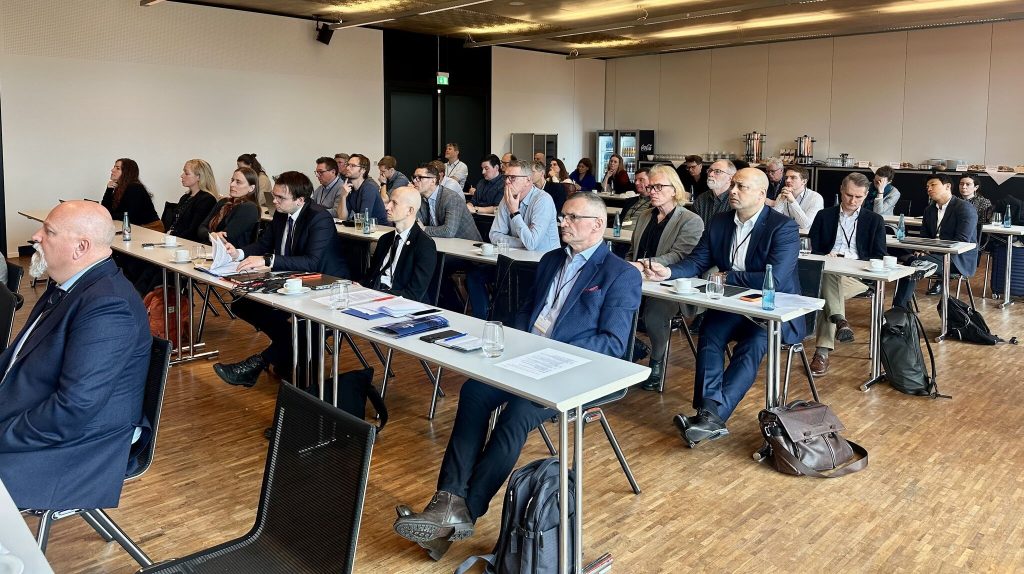
On 25 February 2026, more than fifty experts, policymakers, and project developers from across Europe convened in Offenburg, Germany, for a GEOTHERMICA workshop dedicated entirely to low-temperature and medium-depth geothermal energy. Held in conjunction with GeoTHERM, the continent’s premier geothermal trade fair, the event brought together national programme owners, researchers, and practitioners whose collective experience now spans more than a dozen countries and hundreds of projects at various stages of development, from early exploration to the operation of district heating systems supplying thousands of homes.
The gap between potential and reality
The challenge is well-documented but easy to underestimate. Geothermal district heating currently accounts for less than 3% of Europe’s total district heating output, despite a continental subsurface that holds enough thermal energy to heat tens of millions of homes.
The barriers are not, for the most part, geological. Investors face high upfront drilling costs with uncertain subsurface returns. Permitting regimes vary so widely between member states that developers effectively start from scratch in every new country. And national energy and climate plans have, until recently, treated geothermal as an afterthought.
The picture is shifting. Geothermal district heating grew by 4.6% between 2023 and 2024, reaching nearly 1,000 ktoe of output across Europe. In December 2024, EU member states endorsed geothermal explicitly for the first time, calling on the European Commission to develop incentive mechanisms, financial risk guarantees, and streamlined permitting frameworks. Furthermore, the Commission launched a call for evidence and public consultation on a Heating and Cooling Strategy, directly linked to a European Parliament resolution on geothermal energy, effective from January 18, 2024.
The foundations of a European Geothermal Alliance are being laid. Momentum is building, but the gap between Europe’s geothermal potential and its deployed capacity remains vast. The question the Offenburg workshop set out to answer was concrete: which specific approaches, technologies, and governance models are working on the ground?
National strategies: Three models, one direction
The workshop opened with national vision presentations from the Netherlands, Germany, and Iceland – three countries at markedly different stages of the low-temperature geothermal journey, yet converging on the same conclusion.
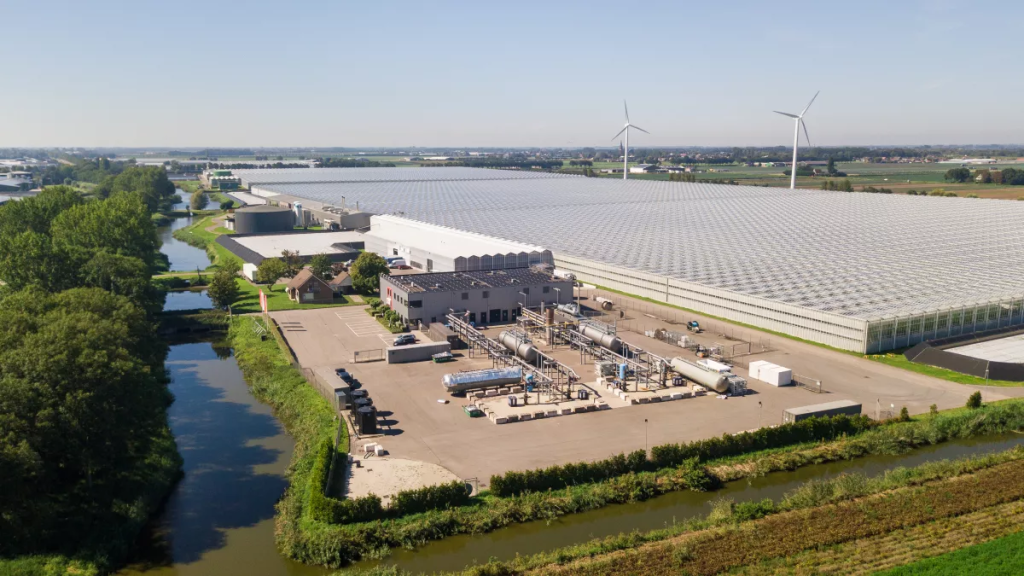
The Netherlands presented the most developed national programme. Building on two decades of activity in greenhouse horticulture, which drove the sector’s earliest commercial growth, Dutch Geothermal is now diversifying into urban district heating and industrial heat supply. With over 1 GWt of geothermal heating capacity expected by the end of the decade, the Netherlands has demonstrated that a dedicated national programme with clear targets, a structured permitting framework, and risk-sharing instruments can take low-temperature geothermal from niche to mainstream.
Germany’s presentation mapped both the opportunity and the gap. More than 150 geothermal projects are currently in planning across the country. Still, the distribution is uneven: the deep hydrothermal systems of Bavaria have long dominated the national conversation, while the sedimentary formations of northern and southern Germany, capable of supporting medium-depth systems at 400–1,500 metres, have been systematically underexplored. New geological research is changing that assessment, and the projects now emerging from Hamburg to the Rhine Valley suggest that Germany’s medium-depth potential is both larger and more accessible than previously recognised.
Iceland’s contribution offered a different kind of evidence: clear ambition, supported by proof. More than 90% of Icelandic homes are heated by geothermal energy, but the country aims to bring into the geothermal family those houses that still rely on other sources for their district heating. Iceland’s session explored the frontier of that success, specifically, what becomes possible when lower-temperature resources in areas previously considered marginal, including parts of the Westfjords and the Reykjanes Peninsula, are re-evaluated using modern heat pump systems and updated resource modelling.
The lesson for Europe is clear: technical thresholds that once ruled out low-temperature resources are no longer fixed.
Showcase projects: From demonstration to district-scale delivery
The afternoon sessions moved from strategy to specifics, with seven showcase projects from six countries illustrating what low-temperature and medium-depth geothermal deployment looks like at the time of implementation.
In Hamburg, a medium-depth geothermal system is extracting thermal water at 48°C from a depth of 1,300 metres in the Wilhelmsburg district. Two four-stage heat pumps with a combined output of 8 MW boost that temperature to the 75–85°C required by the existing district heating network, enabling the system to supply more than 6,000 households with near-carbon-free heat. The project, backed by €22.5 million from the German Federal Ministry of Economics and built as part of the real laboratory IW3, is a textbook example of how public investment in risk reduction unlocks private confidence in medium-depth resources that conventional project finance would not otherwise touch.
Geneva presented a contrasting but complementary picture. The integration of a low-temperature hydrothermal resource into the canton’s district heating infrastructure exposed the specific challenge of low-flow-rate aquifers: the resource temperature is adequate, but the economics depend on managing reservoir-level uncertainty across a portfolio of wells rather than on individual project returns. Switzerland’s GEothermies programme is building exactly that kind of portfolio approach, and Geneva’s experience is informing the design of risk instruments that other Swiss cantons and, through GEOTHERMICA, other European regions can adapt.
Ireland’s presentation documented a transition from demonstration to systemic deployment in a country that had no commercial geothermal output a decade ago. The island of Ireland now has operational low-temperature projects, a regulatory framework that explicitly recognises geothermal energy, and a pipeline of projects supported by the technical knowledge accumulated through GEOTHERMICA-linked work.
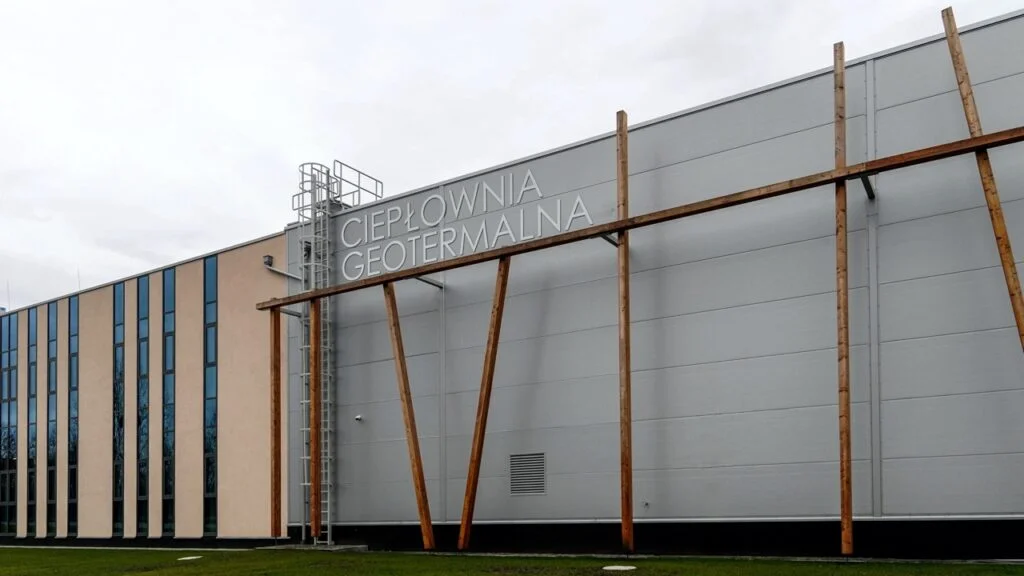
Poland added weight to Central Europe’s growing geothermal ambitions: with approximately 200 MW of geothermal district heating capacity already in operation and strong state financial backing for further development, Poland’s trajectory points to a much larger role in its post-coal heating transition. Austria rounded out the showcase sessions with a presentation on medium-temperature geothermal solutions that reuse existing underground infrastructure, pointing toward a future where legacy assets become part of the low-carbon heat supply rather than stranded liabilities.
Innovation, regulation, integration, and the path forward
The workshop’s afternoon discussions moved beyond individual projects to the systemic conditions that determine whether low-temperature geothermal can scale across Europe. Three themes dominated: the potential of innovation, the fragmentation of national regulatory frameworks, the challenge of integrating geothermal into existing and new district heating infrastructure
On regulation, the consensus was clear: the absence of a harmonised permitting pathway across the EU creates friction that disproportionately affects smaller developers and new-entrant countries. The EU Council’s December 2024 conclusions, calling for a European Geothermal Alliance and updated financial instruments, provide a policy opening. But translating that mandate into workable national frameworks requires the kind of comparative knowledge exchange that GEOTHERMICA is structured to provide.
On integration, the Hamburg and Geneva showcases offered complementary lessons. Where district heating infrastructure already exists, medium-depth geothermal can plug in with relatively modest network upgrades if the temperature output is boosted by heat pumps. Where infrastructure is being built from scratch, geothermal can be designed in from the start, but only if developers have access to subsurface data early enough in the planning process to make it technically and financially viable.
Regarding innovation it became clear that there is still plenty of innovation potential with regards to temperature geothermal. Innovations can bring cost down, broaden applicability and reduce risks. International knowledge exchange and cooperation through bi- or multilateral joint projects and calls was widely seen as the direction in to proceed.