Portland State University (PSU) has been selected to lead a collaborative research team that aims to use AI to reduce the cost of identifying prospective sites for Enhanced Geothermal Systems (EGS) in the United States.
The AI Regionalization and Informed Siting for Enhanced Geothermal Systems (ARISE) project is one of the first chosen under the US Department of Energy’s Genesis Mission. Along with PSU, the project is being executed with Stanford University, the US Geological Survey, and 400C Energy. The multidisciplinary team offers expertise in geosciences, energy, economics, and machine learning.
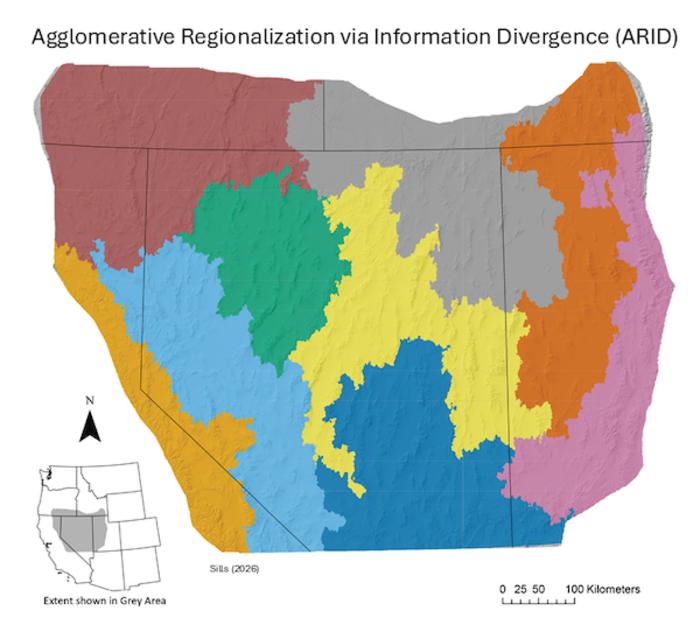
The team is combining three tools its members have already built. A Stanford model predicts underground temperature across the country. A second Stanford model turns a range of possible temperatures into a range of possible electricity prices, so uncertainty shows up in dollars instead of degrees. PSU’s contribution is an algorithm called ARID, which sorts the country into zones that are geologically similar. The ARID model divides the United States into regions with similar geologies, thus discretizing the modeling work for improved precision.
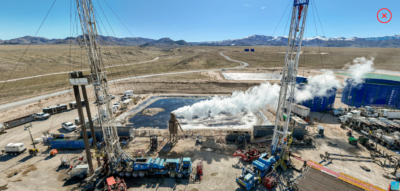
Among the project’s deliverables is a new underground temperature map for Oregon. The team will test the system against real measurement records from the DOE-funded Utah FORGE research site, replaying the site’s history and comparing what the AI would have recommended with what the engineers there actually chose to do. The goal is to narrow the range of cost estimates for the siting of EGS project by at least 10% compared to the method currently in use.
“Deciding where to make valuable new measurements has always relied heavily on expert judgment,” said Erick Burns, a research hydrologist with the U.S. Geological Survey who has co-led the USGS geothermal machine learning team with Lipor since 2021. “What is new here is a way to test whether machine learning can improve data collection strategies while optimizing both information content and cost savings.”
“Geothermal has enormous potential, but the cost of finding out what is underground has held it back,” added Roland Horne, professor of energy science and engineering at Stanford University and director of the Stanford Geothermal Program. “We’re looking forward to taking the next step to making geothermal energy more widely available.”