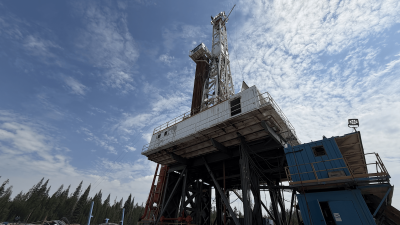
The Utah Frontier Observatory for Research in Geothermal Energy (Utah FORGE) has begun an extended circulation test at its pair of production and injection wells to valuate the long-term performance of an Enhanced Geothermal System (EGS). The test is expected to last upwards of four months.
“This extended circulation will allow us to study heretofore unknown variables required to ensure long term EGS production remains commercially viable,” says Dr. Kristie McLin, Principal Investigator of Utah FORGE. “Although major advancements have been achieved in the past few years, there is still a great deal we do not know about thermal breakthrough and water loss over time.”
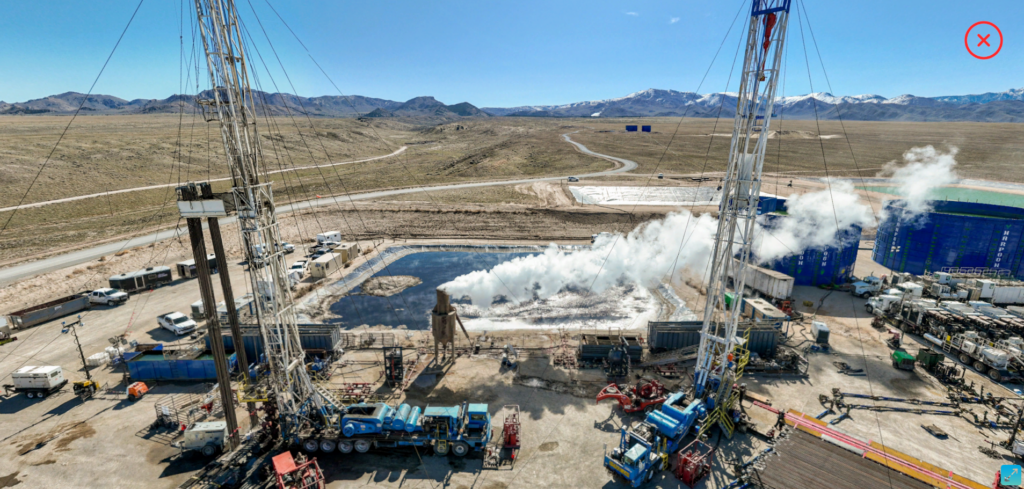
The plan includes an initial injection of five barrels per minute (bpm), stepped up to 7.5 bpm, finally a ramp-up to 10 bpm over approximately 48 hours to ensure system stability. This closed-loop system of cooler, non-potable water pumped into the injection well (16A) and brought back to the surface through the production well (16B) at a rate of 10 bpm, will continue for roughly 90 days. The possibility of circulation being extended to 120 days is being considered.
The extended circulation test will allow the team to evaluate reservoir performance under continuous flow, as well as the water treatment dosages to prevent scaling and corrosion.
This latest circulation builds on the project’s earlier findings. In April 2024, the production and injection wells were successfully stimulated by perforating the steel casing in the wells and pumping water into them under pressure. This process created the fracture network that formed the reservoir. The stimulation was followed in August of that year by a commercial scale circulation. During this 30-day test, water was injected at a consistent rate of 420 gallons per minute. Nearly 90% of the produced fluid was recovered and the temperature remained at approximately 370 °F (187 ºC).
“The positive results achieved by the project over the past few years have been very beneficial to the industry,” Dr. McLin says. “However, there is still so much we do not know. This extended circulation will provide answers to the pressing questions about thermal decline and water loss, allowing geothermal companies to continue growing and to flourish.”
The stimulation strategies and best practices established by Utah FORGE through the years of drilling, stimulation, and testing have contributed to laying the foundation for the current era of EGS projects, which is on the verge of breaking into commercial-scale operations. The legacy of Utah FORGE will continue to contribute to the industry, thanks in no small part to the fact that all the technical data from the project have been made publicly available.
RELATED: Carrying on the legacy of geothermal innovation at the Utah FORGE project
Source: Email correspondence