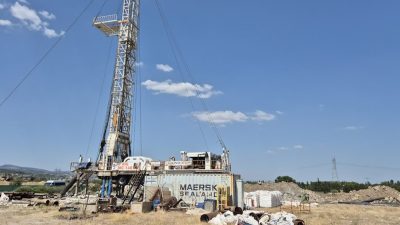
The EU co-funded TRANSGEO project has come to a conclusion, generating valuable insights on the opportunities for repurposing disused oil and gas boreholes for geothermal energy generation in the Central Europe region. To this end, Prof. Dr. Hannes Hoffmann of the GFZ Helmholtz Centre for Geosciences and working group leader of the TRANSGEO project shared some of the conclusions from the initiative.
Launched in 2023, the TRANSGEO project aimed to develop concepts and technologies to show ways for an effective repurposing of oil and gas infrastructure. The project involved 11 partner institutions across Germany, Austria, Hungary, Croatia, and Slovenia. It was officially concluded in April 2026.
As Prof. Hoffmann explains, repurposing old oil and gas wells addresses one of the key challenges of geothermal energy by not having to drill new deep geothermal wells. If such a system can be developed, it presents a valuable opportunity for hydrocarbon production regions. For instance, in Germany, the regions considered included Saxony-Anhalt, Mecklenburg-Western Pomerania, Brandenburg, Baden-Württemberg and Bavaria.
Factors determining the economic viability of repurposing oil and gas wells
Despite a huge inventory of old oil and gas boreholes, the majority of them are no longer fit for repurposing. In the case of Germany, most of the 20,000 deep wells identified by the study were either already completely sealed or were several decades old. There were also legal uncertainties concerning liability which would have made any repurposing project more complex.
Of the 1 to 10% of boreholes that can be technically reused, there were still other factors to be considered in determining economic viability. Based on the results of the TRANSGEO project, three factors must converge:
- A technically safe and relatively new borehole
- Suitable geological conditions
- A nearby heat demand
The project results can benefit municipalities, public utilities, and energy suppliers who are looking to expand and diversify their heating strategies. It also provides guidance to policymakers and administrators. Ultimately, creating opportunities for geothermal energy supply provides additional options for a local, stable, and climate-friendly heat supply.
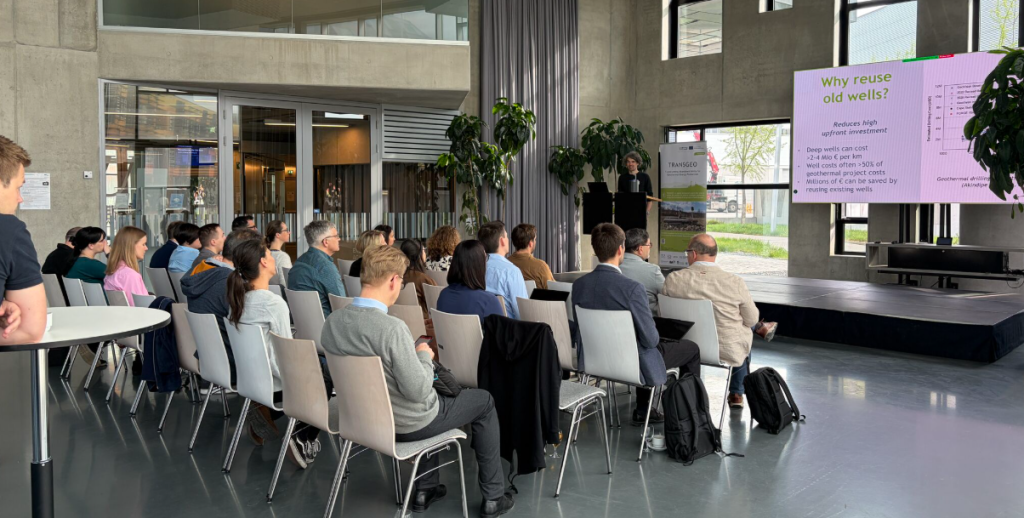
Pilot project in Germany
As part of the TRANSGEO project, the team did an extensive inventory of drilling data, geological assessment of potential heat reservoirs, technical tests of reusability, and modeling of the expected heat output. Economic and legal framework were also examined, notably at eight pilot sites, three of which were in Germany.
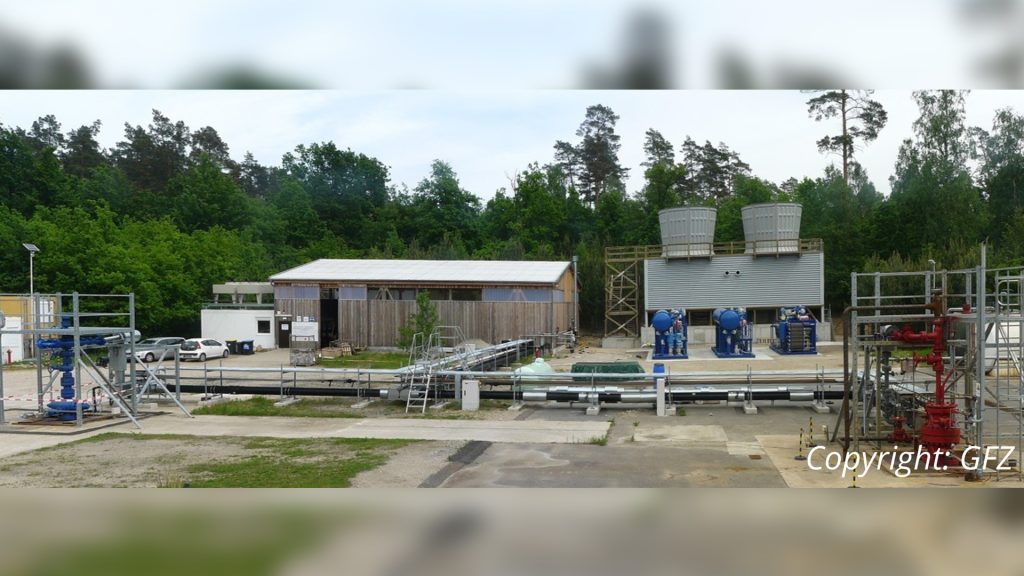
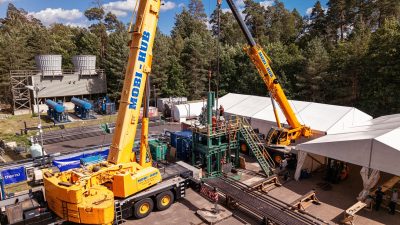
One demonstration project at the GFZ geothermal research site in Groß Schönebeck in Brandenburg, Germany will be commissioned in the coming summer, in a joint effort with Danish start-up Green Therma. This pilot aims to evaluate heat production from deep, closed geothermal probes using an innovative vacuum-insulated double-pipe system.
Source: Interreg