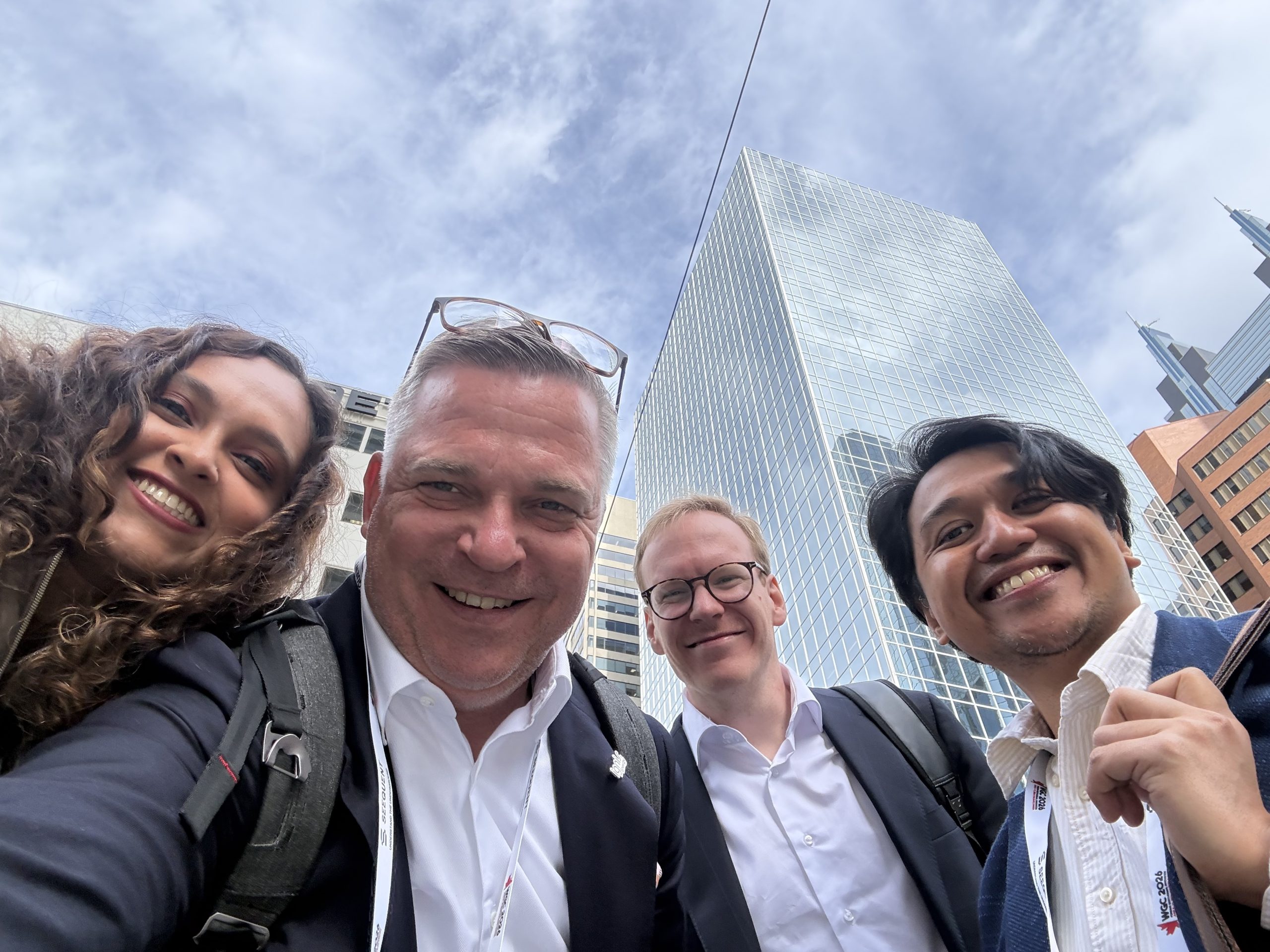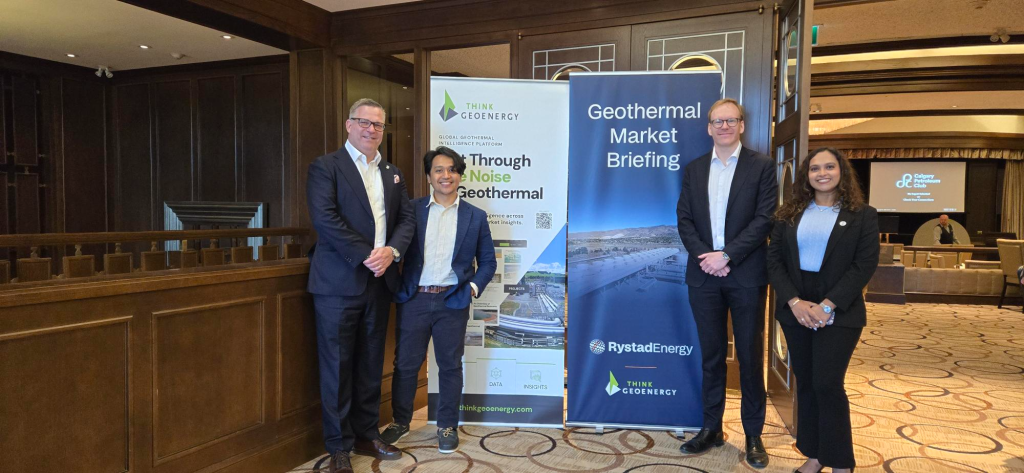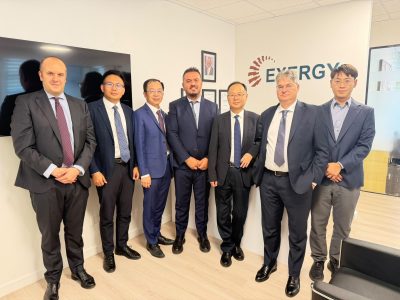
A joint breakfast briefing hosted by Rystad Energy and ThinkGeoEnergy during the World Geothermal Congress 2026 in Calgary highlighted how the geothermal sector is entering a new phase, one increasingly defined by project execution rather than market awareness.
Held on the sidelines of the congress, the breakfast meeting brought together industry leaders, investors, developers, and technology providers to discuss the findings of the recently published report, Geothermal at an Inflection Point: Market Dynamics, Technology Evolution, and Growth Pathways.
The event marked the culmination of discussions between Rystad Energy and ThinkGeoEnergy that have taken place over the past two years through industry conferences, market discussions, and ongoing engagement with stakeholders across the geothermal sector.
Those conversations ultimately led to a collaboration on a joint market report and the organisation of the breakfast briefing in Calgary, graciously lead by Rystad Energy.
Bringing together complementary perspectives
While Rystad Energy contributes a global energy market perspective backed by extensive data and market intelligence, ThinkGeoEnergy brings nearly two decades of close engagement with geothermal projects, companies, investors, and policymakers worldwide.
The objective of the collaboration was to combine these perspectives and provide a realistic assessment of where the geothermal market stands today and what factors will determine its future growth.
“We’re proud to have co-published Geothermal at an Inflection Point: Market Dynamics, Technology Evolution, and Growth Pathways,” said Henning Bjorvik, Partner and Head of Renewables Research at Rystad Energy.
“The report bridges market intelligence and on-the-ground industry insight to give a fuller picture of where geothermal stands today.”
The report concludes that geothermal is gaining strategic relevance as global energy markets increasingly seek firm, low-carbon solutions for both power generation and heating applications.

Demand drivers continue to strengthen
Several themes discussed during the breakfast session reflected the report’s findings.
Electricity demand continues to grow rapidly, driven by data centres, digital infrastructure, electrification, and industrial expansion. At the same time, governments, utilities, and industrial users are seeking reliable energy sources that can support decarbonisation objectives while strengthening energy security.
Participants also discussed how improvements in drilling performance, reservoir understanding, project development models, and financing structures are helping improve project economics and attract new sources of capital.
On the heating side, geothermal is attracting increasing attention as municipalities and utilities seek alternatives to volatile fossil fuel markets and look for pathways to decarbonise district heating systems.
These developments are contributing to a growing perception that geothermal is becoming increasingly bankable across both conventional and next-generation geothermal projects.
Industry perspectives from across the value chain
A panel discussion brought together representatives from across the geothermal ecosystem.
Attendees heard insights from Fervo Energy on the company’s recent initial public offering, as well as perspectives from RBC Capital Markets, which has played a key role in geothermal project financing and acted as a joint bookrunner on the Fervo IPO.
Additional contributions came from FutEra Power, which shared perspectives on geothermal development opportunities in Canada, and from Ormat Technologies, which discussed market developments, enhanced geothermal systems (EGS), and the role of technology innovation in scaling geothermal deployment.
The discussion reinforced a recurring theme emerging throughout the World Geothermal Congress: the foundations for geothermal growth have strengthened considerably, but successful delivery remains the industry’s primary challenge.

From visibility to implementation
The report notes that geothermal’s momentum is being supported by stronger policy frameworks, improving project finance structures, and increasing recognition of the technology’s ability to provide both clean electricity and low-carbon heat.
However, project development remains highly dependent on local conditions, regulatory frameworks, permitting timelines, drilling performance, and access to financing.
As a result, growth is unlikely to be uniform across regions or technologies.
The consensus emerging from both the report and the Calgary discussion was clear. The geothermal sector has largely moved beyond proving its relevance. The focus is increasingly shifting toward delivering projects at scale and translating growing market interest into installed capacity.
ThinkGeoEnergy extends its thanks to Rystad Energy, particularly Henning Bjorvik, Alexandra Gerken, Shruti Raghuram and the wider Rystad team, for the collaborative effort behind both the report and the event. Appreciation is also extended to the panelists and participants who contributed their time and perspectives during a busy week at the World Geothermal Congress. It has been an absolute pleasure
The full report, Geothermal at an Inflection Point: Market Dynamics, Technology Evolution, and Growth Pathways, is available through the ThinkGeoEnergy publications page.