Icelandic geothermal and renewable energy producer HS Orka could be heading towards an ownership change, with British infrastructure investor Ancala Partners reportedly preparing for a possible sale of its 50% interest in the company.
Icelandic business publication Innherji reports that preparations have started for a potential transaction that could be worth tens of billions of Icelandic krónur. No buyer, valuation, adviser or timetable has been disclosed. Innherji/Vísir report
The investor is understood to be Ancala Partners, whose managed funds hold 50% of HS Orka. The other half is held by Jardvarmi slhf., an investment vehicle representing 13 Icelandic pension funds.
ThinkGeoEnergy understands that the prospect of an ownership change has been discussed within Icelandic business and energy circles for several months. The Innherji report now brings the potential transaction into the public domain. Neither HS Orka nor Ancala has announced a sale process.
A different HS Orka from 2019
Ancala entered HS Orka in 2019 through Ancala Infrastructure Fund II, following a wider ownership restructuring involving Canadian renewable energy company Innergex and Jarðvarmi.
Innergex ultimately sold its 53.9% interest for USD 299.9 million. Ancala subsequently agreed to acquire 50% of HS Orka from Jarðvarmi, leaving the company under the 50/50 ownership structure that remains in place today. ThinkGeoEnergy covered the transaction at the time. ThinkGeoEnergy’s 2019 coverage of the HS Orka transaction
HS Orka has changed considerably since then.
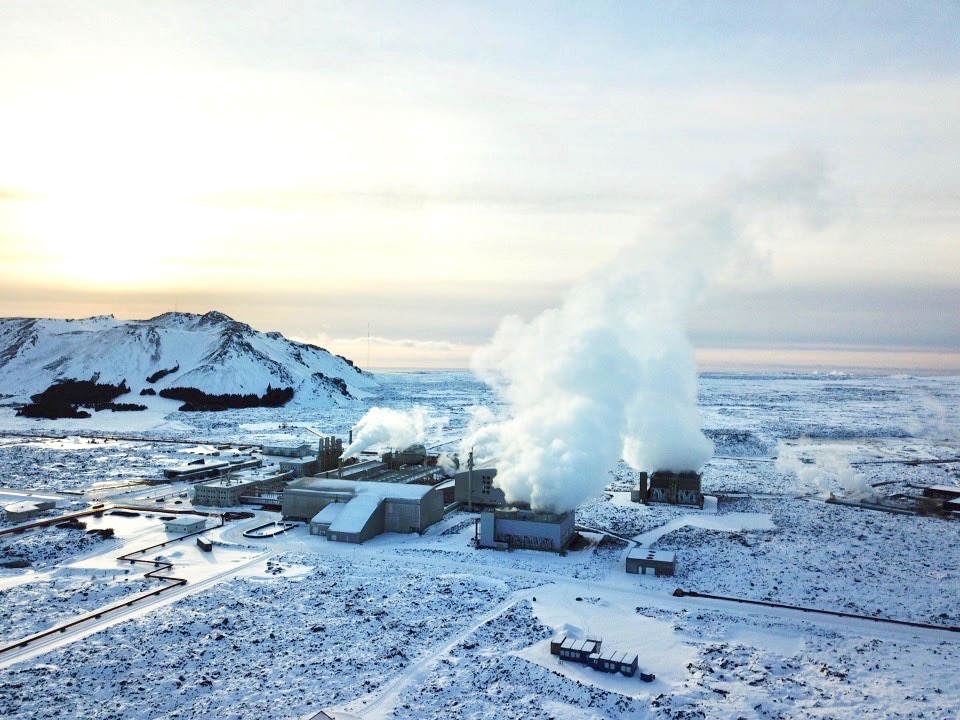
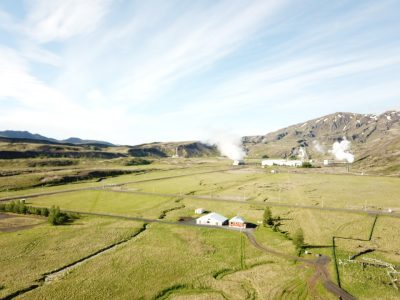
The Reykjanes geothermal power plant was expanded by 30 MW to 130 MW in 2023, using heat from the existing geothermal production without the need for additional production wells.
At Svartsengi, HS Orka commissioned a new 55 MW generating unit in December 2025 as part of a major refurbishment and expansion. HS Orka put the cost of the project at just over ISK 14 billion, approximately USD 116 million at current exchange rates.
The expansion was carried out during an extraordinary period of seismic activity and repeated volcanic eruptions on the Reykjanes Peninsula. Protective embankments built around the Svartsengi area have repeatedly diverted lava away from the power plant. The nearby Blue Lagoon is also located within the protected area, although lava has crossed roads and areas outside the embankments. HS Orka completed the Svartsengi expansion on schedule and within budget despite the disruption.
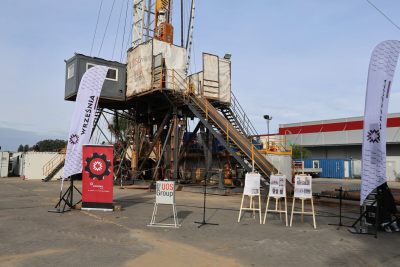
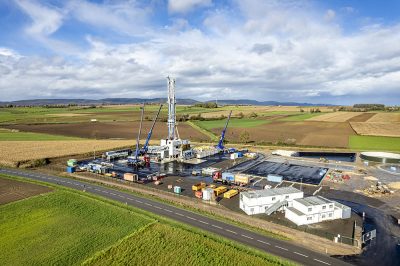
Development has continued elsewhere. HS Orka completed its first deep exploration well, KR-10, at Sveifluháls in the Krýsuvík geothermal area in 2025. The well reached a measured depth of around 2,600 metres, with initial measurements indicating substantial geothermal heat. A second exploration phase started in 2026, with two further wells planned near Lake Kleifarvatn to assess the area’s potential for both hot water and electricity production.
HS Orka is also advancing plans for geothermal utilisation at Eldvörp, close to Svartsengi, where future production could make use of infrastructure at the existing power plant.
The expansion is visible in the company’s financial results. HS Orka reported revenue of around ISK 15.7 billion (ca USD 130m) in 2025 and record EBITDA of ISK 6.5 billion (ca USD 54m). Total assets reached ISK 89.6 billion (ca USD 740m). HS Orka’s 2025 results
A more complex geothermal investment story
The growth has also required substantial capital. At the end of 2025, HS Orka reported ISK 34.0 billion (ca USD 280m) in interest-bearing debt together with a subordinated shareholder loan of around ISK 6.6 billion (ca USD 54m). The company completed a USD 290 million equivalent green refinancing in 2024.
None of this provides evidence for why Ancala may now be considering a sale. There has been no public statement linking a possible transaction to fund performance, return expectations or the timing of Ancala Infrastructure Fund II.
It does, however, illustrate why geothermal does not always fit neatly into a simple infrastructure investment story.
Since 2019, HS Orka has increased generation capacity, invested in new plants and geothermal exploration, expanded geographically and delivered record operating results. At the same time, those developments have required significant capital and financing.
That combination is characteristic of the longer investment cycles involved in geothermal development, where drilling, resource development and plant expansion can continue well after the initial acquisition of an operating asset.
Should a sale proceed, it would therefore provide an interesting test of how investors value a substantially expanded operating geothermal portfolio after several years of investment and development.