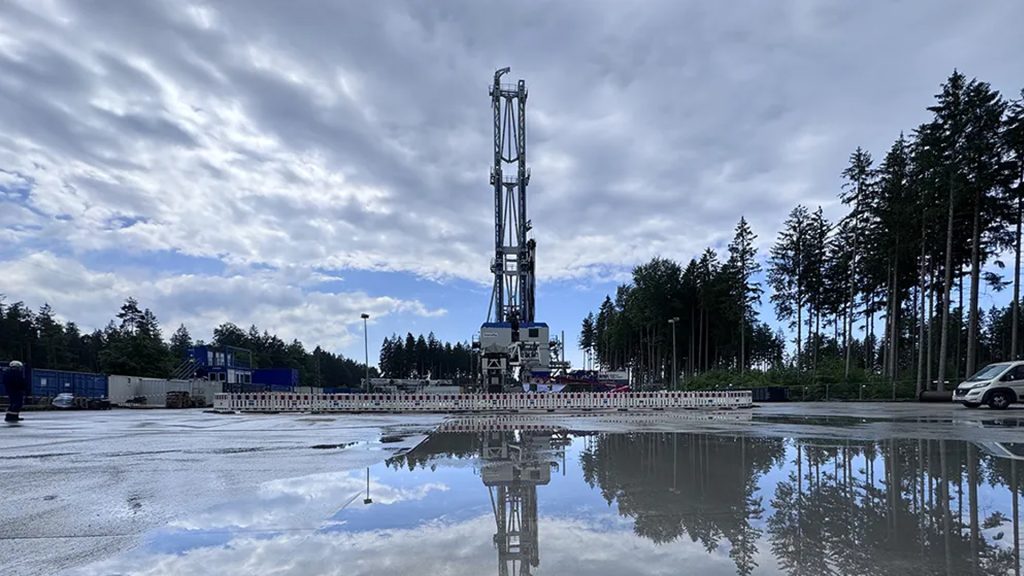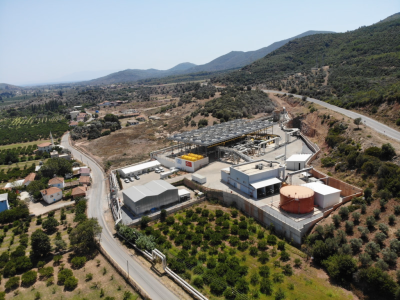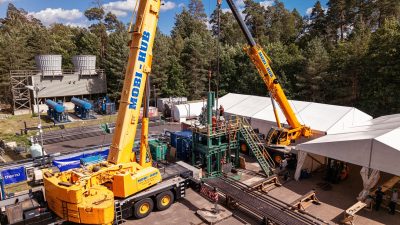
Germany has taken a significant step toward scaling geothermal heat with the launch of a new KfW funding programme that combines concessional loans with drilling risk coverage for deep geothermal projects.
As of 18 December 2025, project developers and municipalities can submit documentation for the pre-assessment of projects under the new KfW-Förderkredit Geothermie, a financing instrument developed by Germany’s development bank KfW together with Munich Re and the Federal Ministry for Economic Affairs and Energy.
This funding program has been announced already by the last government, and has now finally been launched for real.
Financing and risk coverage combined
The programme is designed to address two of the main barriers to deep geothermal deployment in Germany: upfront drilling costs and subsurface risk.
On the financing side, the KfW provides low-interest loans to support geothermal drilling projects from depths of 400 metres and below. Eligible applicants include municipalities, municipal utilities, and private project developers involved in supplying renewable heat. Per project, loans of up to EUR 25 million are available, with a maximum term of five years.
The loan programme is structured as a promotional credit, with interest rates below market conditions and repayment terms aligned with the early, high-risk phase of geothermal development.
Risk mitigation is provided through a combination of insurance coverage and public backing. Munich Re insures between 30 and 70 percent of the loan amount, subject to project-specific assessment. For the remaining, uninsured portion, the KfW offers a partial debt waiver in the event of damage, such as unsuccessful drilling, under the same conditions as defined in the insurance contract. Through this structure, project sponsors can effectively secure up to 100 percent of the loan amount against drilling risk.
The coverage focuses on the so-called “findability” of the geothermal resource, meaning whether a drilled well successfully accesses a reservoir with sufficient temperature and flow rate. By combining concessional financing with insurance-backed risk sharing, the programme aims to improve bankability and reduce the exposure of municipalities and utilities during the exploration phase.
Drilling risk mitigation through insurance-backed coverage
In parallel, the programme introduces a structured mechanism to mitigate drilling risk, a long-standing challenge for geothermal financing.
Munich Re conducts an upfront assessment of each project to evaluate insurability. The coverage focuses on the so-called “findability” of the geothermal resource, meaning whether a drilled well successfully accesses a reservoir with sufficient temperature and flow rate. If drilling does not meet the defined success criteria, part of the financial loss can be compensated. MunichRe insures 30 to 70% of the loan amount. For the non-insured part, KfW – in case of no success – will provide a partly loan
By combining concessional financing with risk coverage, the programme aims to improve bankability and crowd in private capital. According to KfW, this structure allows drilling risk to be shared between public funding, insurers, and project developers, rather than remaining fully on the balance sheet of municipalities or utilities.
Over an initial three-year period, at least 65 geothermal projects are expected to be supported under the scheme.
Budget framework and leverage effect
Federal budget funds of EUR 49.5 million have been allocated over a four-year period to support the programme. According to KfW and the Bundesverband Geothermie e.V., this budget framework is designed to enable geothermal investments in the billion-euro range by leveraging private and municipal capital.
The German Geothermal Association views the programme as a key building block for improving investment conditions in the sector, particularly when combined with the planned geothermal acceleration legislation.
“Thanks to seismic campaigns by federal states and project developers, subsurface data quality is improving in many regions,” said Gregor Dilger, Managing Director of the Bundesverband Geothermie e.V. “With the new geothermal loan, the remaining drilling risk is distributed across several shoulders, removing one of the last major hurdles for expanding geothermal heat in Germany.”
Role in municipal heat planning
The programme is explicitly linked to Germany’s municipal heat planning framework, under which local authorities must identify and implement pathways to decarbonise heat supply.
Geothermal energy is increasingly regarded as a base-load heat source that can operate independently of weather conditions and imported fuels, while supporting domestic value creation and long-term supply security.
KfW has confirmed that documentation for the pre-assessment of projects can be submitted immediately.
More information on the programme is available via the KfW here.
Source: Press release by KfW and Bundesverband Geothermie