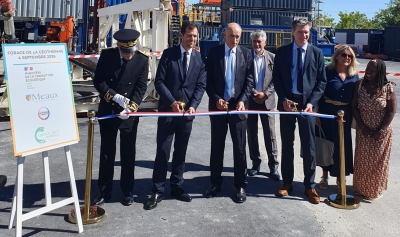
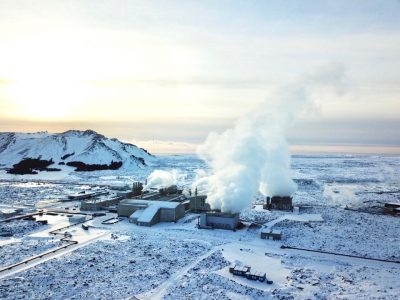
The ambitious geothermal district heating project in the city of Szeged in Hungary, which was kicked off back in the fall of 2018, has now been officially completed with the construction of the last heating district in Rokus II.
Geothermal energy now constitutes part of the heating supply to 95% of Szeged’s 27,000 apartments connected to the district heating network. A total of nine geothermal systems have been built, covering districts including Sziler and Tarjan. The local district heating company Szeged Távfuto Kft. (SZETAV) has invested a total of HUF 5 to 6 billion (approx. USD 15 to 18 million) over the last 8 years to modernize its heating plants and make them compatible with geothermal energy.
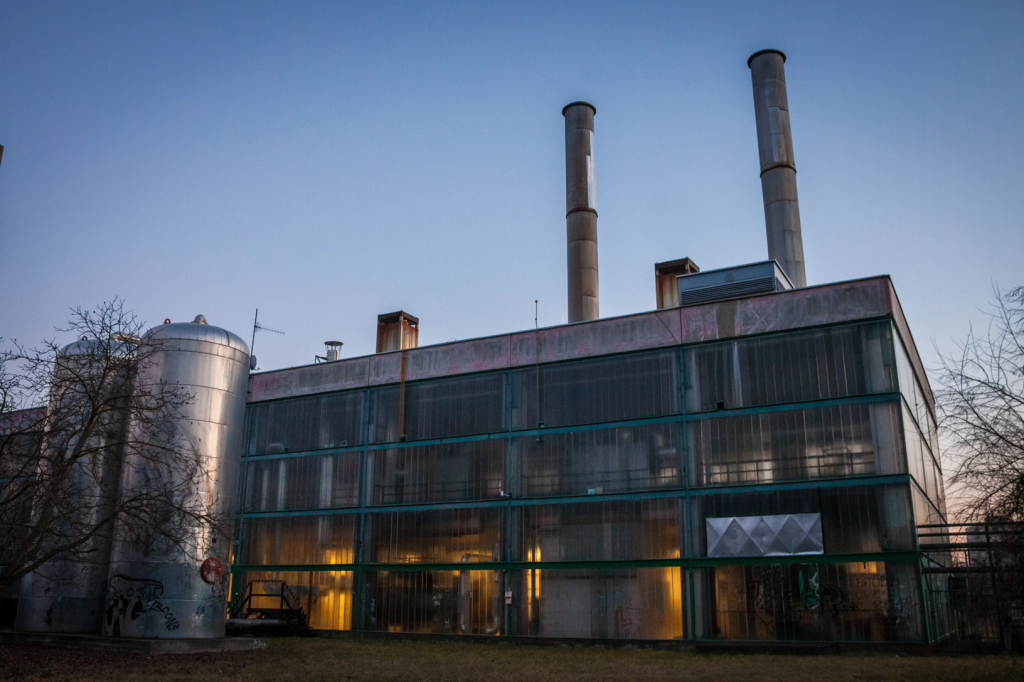
The Rokus geothermal heating plant draws thermal fluids from a depth of between 1675 and 1950 meters, at temperatures of 93 – 94 °C and an average flowrate of 80 cubic meters per hour. The project cost a total of HUF 1.7 billion, 60 percent of which was covered by EU funding.
The shift to geothermal has reduced the gas consumption of the district heating company by 10 million cubic meters by year, and lowered CO2 emissions by up to 20,000 tones per year. Gábor Bozsó, technical manager of SZETAV, states that natural gas consumption can be further reduced by fine-tuning the system, improving the insulation of houses, and using heat pump systems. As ThinkGeoEnergy reported in 2022, the residents of Szeged have been benefiting from reduced energy bills even at the early phase of the development process of the geothermal heating project.
Beyond just securing a stable source of sustainable heating, Geo Hoterm Kft, along with the city district heating company, has undertaken a project that aims to reduce methane gas emissions from subsequent geothermal operations. With the support of the Swiss Fund, gas separator equipment will be installed at the production wells of the nine geothermal systems which will separate the methane from the thermal fluids. The project is scheduled to be completed by April 2027 and replace an additional 1.8 million cubic meters of natural gas per year.