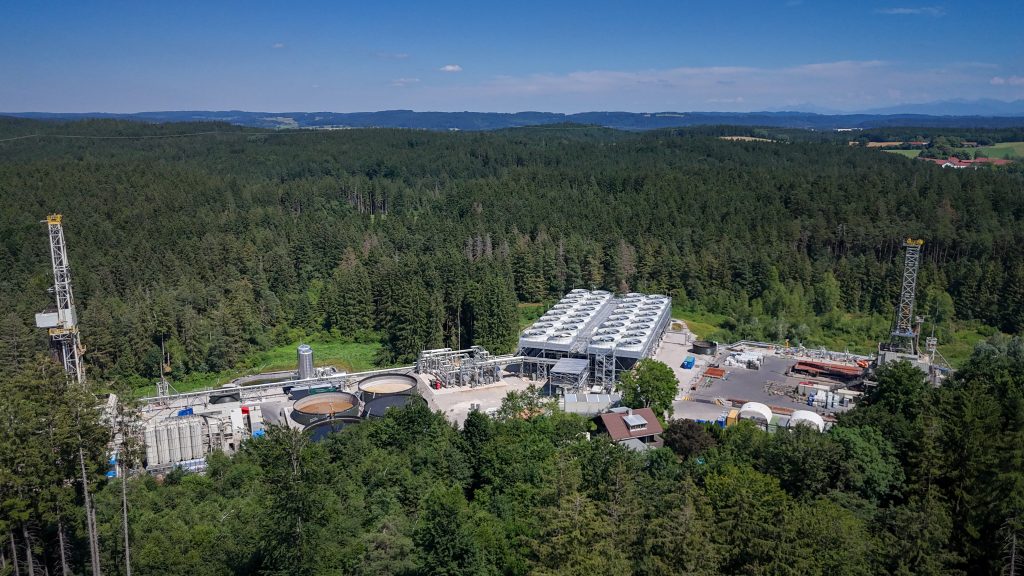
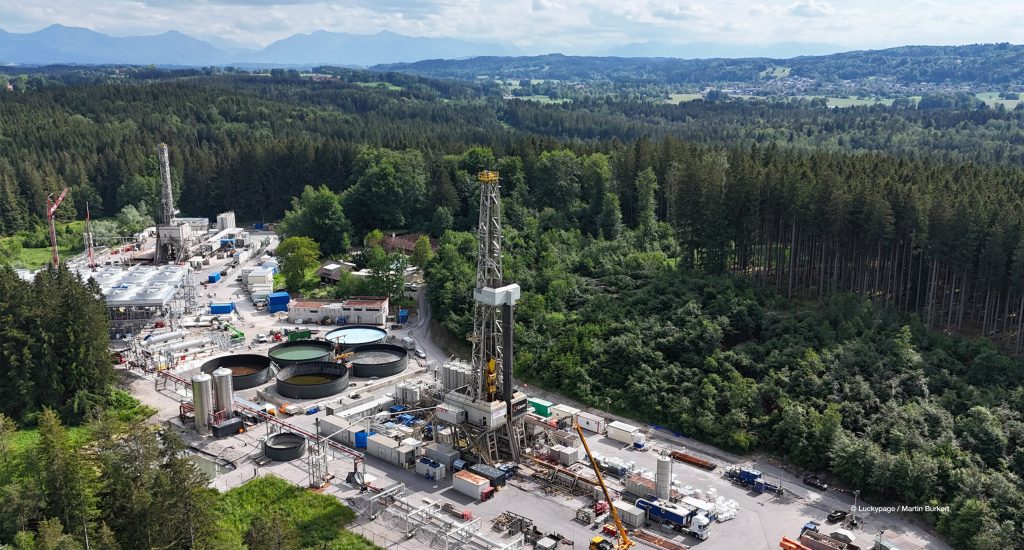
The last few months have been a rather challenging period for Eavor Technologies. Following the company’s announcement of the first electricity being produced in the Geretsried site in Bavaria, Germany, a recent report by Geo Expro has emerged that indicates the challenges of scaling a first-of-a-kind geothermal system. Only six of the planned twelve lateral pairs in the first Eavor-Loop were completed, with only a portion of those contributing meaningfully to flow. Thus, the output of the Geretsried site stands at only between 0.5 to 2.0 MWe gross power generation, with practically no power delivered to the grid.
These developments inevitably raised questions about the future of the company and the viability of closed-loop geothermal systems.
Yet Eavor insists that the story unfolding in Geretsried is about technological maturation. In a recently published technical update, the company argued that the core physics of its closed-loop geothermal concept have now been proven, even if execution challenges prevented the project from reaching its original targets. Eavor maintains that Geretsried remains the first successful demonstration that a large-scale closed-loop geothermal system can generate both heat and electricity.
In this interview with ThinkGeoEnergy, Eavor President and CEO Mark Fitzgerald outlined how the company intends to move forward. The path ahead centers on applying lessons learned at Geretsried, improving execution, pursuing strategic partnerships, and gradually expanding into heat and power markets where closed-loop geothermal may offer unique advantages.
Clarifying Eavor’s role in the Geretsried project
One of the strongest messages Fitzgerald sought to communicate was that Eavor is not abandoning the Geretsried project. “We at Eavor are committed to the completion of Geretsried,” Fitzgerald said. “We are not stepping away from Geretsried. Let me be clear on that.”
That clarification comes after widespread industry discussion surrounding Eavor’s changing business strategy. Reports suggesting that the company intended to step away from operating the project created the impression that Eavor might be distancing itself from the German development altogether. Fitzgerald emphasized that this interpretation is inaccurate.
According to Fitzgerald, Eavor’s ownership position and commitment to completing the project remain unchanged. However, the company’s approach to future drilling campaigns may be different.
The first loop at Geretsried represented what Eavor considers a first-of-a-kind demonstration project. The objective was to prove that the company’s Eavor-Loop concept could function as designed: circulating fluid through a sealed underground heat exchanger, harvesting geothermal heat without relying on naturally permeable reservoirs or hydraulic stimulation.
“The purpose of Geretsried and Loop One was to show the physics,” Fitzgerald explained. “It was to show that the thermal delivery, the thermosiphon expectations, the Rock-Pipe expectations, were within the scope of what we expected in the design.” According to the technical update published by Eavor, the operating loops are performing within modeled parameters for heat extraction and circulation.
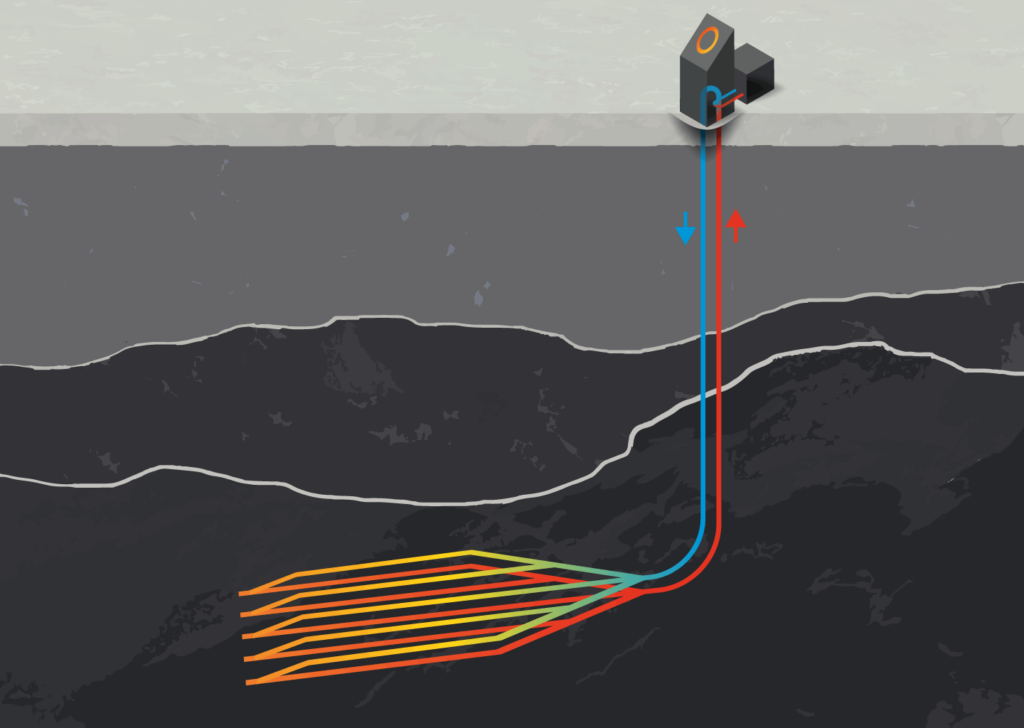
As Fitzgerald said, the challenge was in execution. To complete the full Geretsried development, Eavor originally planned four separate Eavor-Loops, each consisting of twelve lateral pairs connecting two deep vertical wells. However, drilling complications during Loop One forced the company to scale back the first loop to six laterals instead of twelve.
Fitzgerald is aware that the pressure is now on the company to learn from these mistakes and deliver perfectly on the drilling of Loop Two. “We know that Loop Two must be executed flawlessly,” Fitzgerald said. “People need to look and say, okay, the physics worked, the design worked, and now I see a credible path to cost competitiveness and commerciality.”
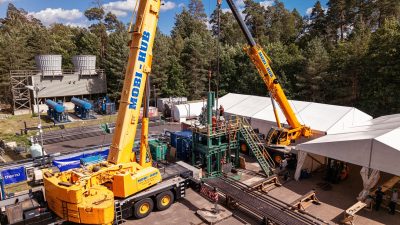
As a result, Eavor is exploring partnerships with organizations that possess extensive drilling and project execution expertise. Fitzgerald described the strategy as reducing execution risk while allowing Eavor to remain deeply involved in engineering and technology development. The company still maintains drilling equipment and technical teams at the site and intends to proceed with additional loops as quickly as practical.
Lessons and learnings – Building a better loop
The technical update released by Eavor provides perhaps the most transparent assessment of the company’s challenges to date. Rather than attributing shortcomings to the technology itself, the company identifies a series of operational and execution-related issues that complicated drilling and completion activities.
According to Fitzgerald, the most significant issue originated from a poor cement job in the vertical wells. “The poor cement job on the verticals resulted in the transference of cuttings and debris into the laterals,” Fitzgerald explained. “That was really the root of all the problems.”
The contamination created drilling complications that prevented the company from efficiently completing all planned lateral pairs. Eavor believes these problems can largely be avoided in future projects through modifications to cement formulations, drilling mud systems, and completion procedures. These changes have already been incorporated into future planning.
Eavor also believes that the Geretsried project generated valuable operational knowledge. Fitzgerald noted that substantial improvements were achieved even within the first drilling campaign. By the time the team progressed from the first lateral to the sixth, drilling performance had improved dramatically. Eavor reported that penetration rates approximately doubled while the length drilled per run increased by three to four times.
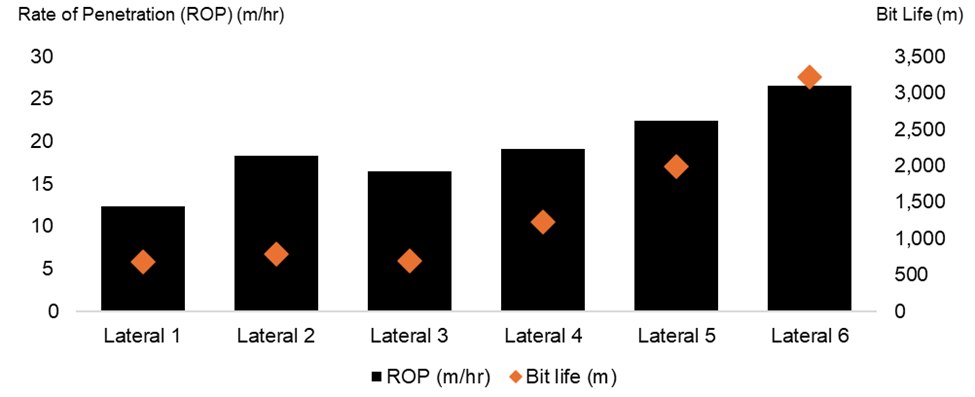
For Fitzgerald, these gains resemble the learning curves that transformed unconventional oil and gas development over the past two decades. “This is exactly the same process that unconventional resource development has gone through,” he said.
Another critical lesson involves the long-term operating characteristics of closed-loop systems. One of Eavor’s key commercial arguments is that the technology can achieve low operating costs once installed. Unlike conventional geothermal developments, where production decline may require makeup wells, reservoir management, or reinjection optimization, Eavor’s system functions as a sealed heat exchanger.
According to Fitzgerald, major operating expenses associated with fluid production, reinjection, water treatment, and pumping can largely be avoided. “We don’t have to input energy to make energy,” Fitzgerald explained. “The thermosiphon is the natural energy input for us.”
The company expects some thermal decline during the first five years of operation before temperatures stabilize. Its internal models suggest relatively stable thermal output over several decades thereafter, assuming wellbore integrity remains intact. While maintenance activities such as refreshing Rock-Pipe sections may still be required, Eavor believes long-term operating costs will remain substantially lower than other geothermal approaches.
A new commitment to transparency
The experience at Geretsried has also influenced how Eavor communicates with the industry. Fitzgerald acknowledged that the company is making a deliberate effort to be more transparent about both successes and setbacks as the technology matures.
“What we’re doing, and being more transparent, and myself becoming much more available to share the story and where we’re going, is reinforce exactly that point,” Fitzgerald said, referring to the reality that first-of-a-kind energy technologies inevitably face challenges on the path to commercialization. Rather than focusing solely on milestones achieved, Eavor’s recent technical update openly detailed the drilling difficulties, completion issues, and operational lessons encountered during the construction of Loop One.
For Fitzgerald, transparency serves a broader purpose than simply addressing questions about Geretsried. The company wants stakeholders to understand the distinction between challenges in execution and the underlying performance of the closed-loop system itself. By publishing detailed technical data and discussing both successes and shortcomings, Eavor hopes to provide investors, utilities, policymakers, and the geothermal industry with a clearer understanding of where the technology stands today and what remains to be accomplished.
As the company moves into Loop Two and future commercial projects, Fitzgerald indicated that this more open approach to communicating progress and setbacks will continue.
Exploring greater depths and other markets
While Geretsried remains Eavor’s immediate focus, the company is already looking toward broader commercial opportunities.
The technical update presents an ambitious vision: continued technological improvement leading eventually toward what Eavor calls “geothermal anywhere” — electricity generation below US$75/MWh in average geothermal gradients through deeper drilling and continued learning-curve improvements. Achieving that vision depends heavily on drilling deeper, and thus accessing higher temperatures and greater thermal output.
However, Fitzgerald emphasized that Eavor does not intend to pursue dramatic increases in depth overnight. Instead, the plan is to progress into greater depths progressively. “I don’t think it’s in our best interest to suddenly move from 4,000 meters to 8,000 meters or more,” he noted
Each successive loop will be designed to improve both efficiency and depth while maintaining manageable execution risk. The company’s technical teams are already modeling how deeper geological conditions may affect drilling, Rock-Pipe performance, and long-term well stability. Particular attention is being paid to changing rock behavior as drilling transitions from brittle formations into more ductile environments at greater depth.
Beyond the Geretsried project, Eavor sees three primary commercial markets emerging.
The first is the European heat sector. District heating remains a major decarbonization challenge across Europe, and Eavor believes its technology may already be cost-competitive in certain heat applications. The company remains engaged in discussions with utilities and potential offtakers regarding future developments, although Fitzgerald declined to provide specific details.
The second priority is Japan. Eavor’s Japanese investors provide a natural pathway into a country increasingly concerned about energy security and the need for reliable low-carbon power generation. Unlike conventional geothermal systems, Eavor’s technology does not require highly productive hydrothermal reservoirs. Fitzgerald believes this flexibility could make closed-loop geothermal attractive in parts of Japan where traditional geothermal development faces geological, social, or environmental constraints.
The third opportunity lies in the United States. The rapid growth of artificial intelligence and hyperscale data centers is driving unprecedented demand for firm, carbon-free power. Numerous geothermal developers are pursuing this emerging market, and Eavor intends to position itself among them.
A success scenario for Eavor
When asked what success would look like for Eavor five to ten years from now, Fitzgerald outlined a vision that is notably more measured and gradual than some of the industry’s earlier expectations. The immediate goal would be to prove commercial competitiveness through disciplined execution and continued technological improvement.
“First and foremost is move down the learning curve, execute flawlessly, and show that we are a commercial comparator,” Fitzgerald said.
Once again, the conversation loops back to Geretsried. Successful completion of additional loops in Geretsried would demonstrate not only that the technology works, but that Eavor can systematically improve performance and reduce costs with repetition. In many ways, Loop Two may become more important than Loop One because it must validate the company’s ability to adapt from setbacks and incorporate lessons learned.
As the technical update clarifies, Eavor’s strategy, since its 2018 pitch deck, has always been to shift towards a technology licensing model over time. Rather than becoming a large-scale project developer with its own drilling fleets and construction divisions, the company sees itself as a technology provider, engineering partner, and licensor.
“We believe that leveraging the expertise that exists in the world in terms of project development and executing these projects, paired with our know-how and innovation expertise, gives us the highest probability of success,” Fitzgerald explains.
The company still intends to remain deeply involved in projects, with Fitzgerald stressing that innovation requires direct participation in deployment and operations. Eavor’s engineers must continue learning from each installation if the technology is to evolve. What Eavor appears to be seeking is a hybrid model: maintaining control over technology and engineering while partnering with organizations better suited for large-scale project execution.
If successful, Fitzgerald envisions a company that by the mid-2030s plays a meaningful role across several major energy markets. Closed-loop geothermal could become a significant contributor to European district heating, Japanese geothermal power generation, and the baseload electricity market in the United States.
Whether that vision becomes reality will depend largely on what happens next in Geretsried. The first loop demonstrated that the concept works. The next phase must demonstrate that it can be built repeatedly, reliably, and economically. Only then can Eavor lay claim to turning this engineering achievement into a scalable energy business.