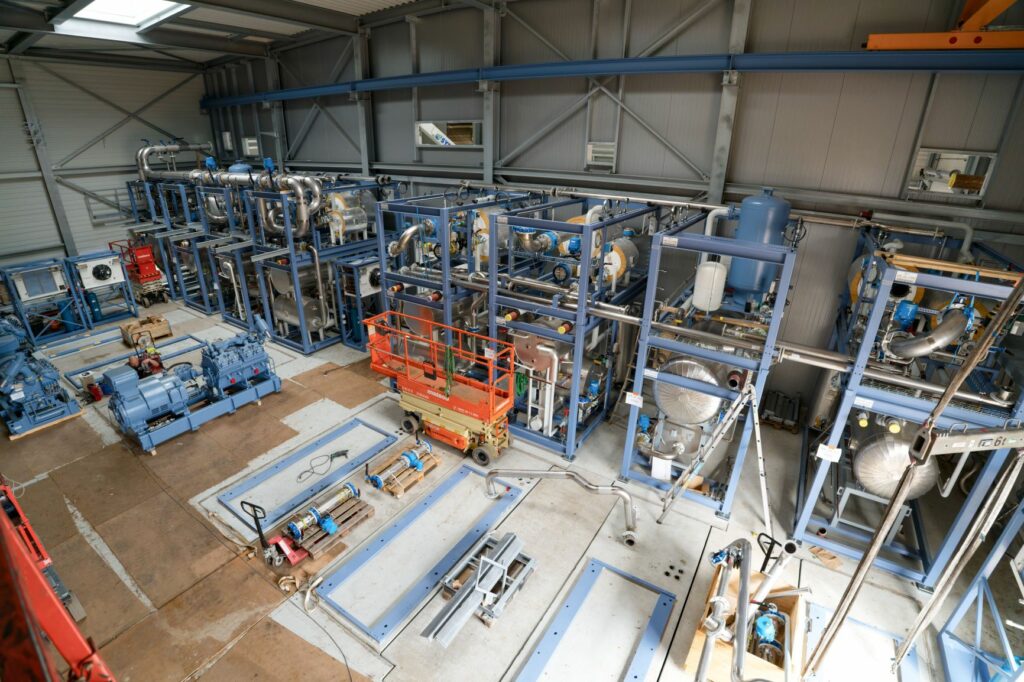
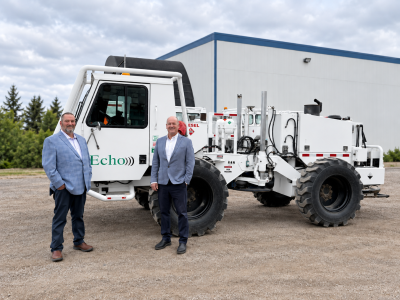
The geothermal heating project in the district of Wilhelmsburg in Hamburg, Germany continues its steady progress, with the latest updates indicating that the heat pumps have already been deliver and installed on site. Moreover, the project team has conducted testing of the electrical submersible pumps (ESP), which will soon be installed at the production well.
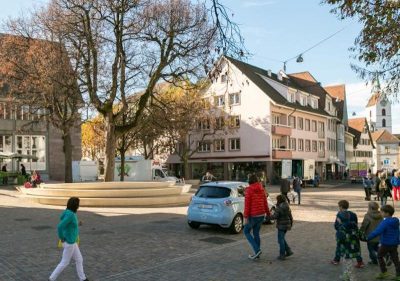
Plans for a geothermal heating plant in Wilhelmsburg were initially announced back in 2019, eventually leading to the drilling of two wells from 2021 to 2022. Following a successful production test, the project proceeded to the construction of both the heating network and the heating plant. Construction of the heating plant topped out earlier this year.
The project is being developed by Integrierte WärmeWende Wilhelmsburg (IW3), a consortium of Hamburger Energiewerke together with its subsidiary Hamburg Energie Geothermie GmbH (HEGeo), CONSULAQUA, Hamburg Institut Research gGmbH (HIR), Hochschule für Angewandte Wissenschaften Hamburg (HAW) and the Christian-Albrechts-Universität zu Kiel (CAU)
A central element of the project is the use of two four-stage heat pumps with cascaded design. The water from the boreholes is supplied at about 48 ºC, which then has to be increased to 75 to 85 ºC before it can be supplied to the heating network. Each of the four compressor stages of the heat pumps handles a smaller temperature increase step, which allows for the heating output to be adjusted accordingly to the actual demand. It also adds a layer of reliability, as individual steages can be shut down for maintenance while the other components continue to supply heat.
The heat pumps, designed and manufactured in Netzchkau in Saxony, have now been delivered and installed on site. These will then go through final mechanical inspection and commissioning.
Inspection of ESP system
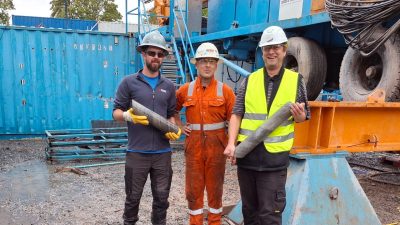
Meanwhile, members of the project team witnessed the testing of the ESP system at the Halliburton site in Emmen, Netherlands. Hydraulic performance was evaluated at different flowrates and pressures. Other components, such as the digital sensors and remote monitoring capabilities, were also tested and monitored.
The sand filtration of the ESP is especially crucial given that the geothermal fluids in Wilhelmsburg come from a fine-grained sandstone layer. This was addressed by a combination of a multi-stage filtration system and a high-flow inlet design that keeps fine sand away from the motor.
The ESP will be prepared for transportation and is expected to arrive at the Wilhelmsburg site by August or September. This will be installed at a depth of 450 meters at the production well. The water level at the production well is already at 50 meters below ground level due to its natural pressure, so the ESP only needs to provide a small amount of lift, thus keeping the ESP’s electricity consumption low.